
Apanteles
Apanteles militaris
Description
How to identify
Apanteles militaris is a species of parasitic wasp belonging to the family Braconidae. It is a small, slender insect, often black in color, known for its role as an endoparasitoid.
The adult wasp features delicate, transparent wings and a specialized ovipositor. This organ is used by the female to lay her eggs directly into the bodies of host larvae, typically caterpillars.
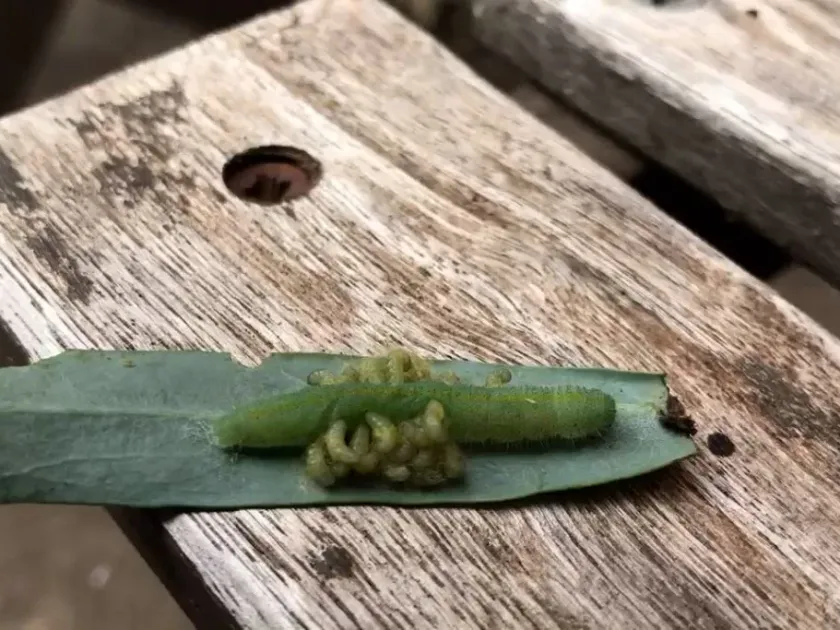
The larvae develop entirely inside the host, feeding on its internal tissues without killing it immediately, which ensures the survival of the host until the parasitoid is ready to pupate.
Upon reaching maturity, the larvae exit the host and spin small, white, silk-like cocoons, which are often found in clusters on the surface of plants.
This species is highly efficient due to its specialized lifecycle, which is finely tuned to the developmental stages of its specific caterpillar hosts.
What it damages
Contrary to the label of a pest, Apanteles militaris acts as a crucial natural enemy of various agricultural pests, particularly those from the Noctuidae family.
It helps in controlling populations of destructive caterpillars that feed on cereal crops, vegetables, and other cultivated plants, effectively acting as a biological pesticide.
By parasitizing host larvae, the wasp prevents them from causing further damage to crops, as infected caterpillars lose their appetite and eventually die.
The presence of this parasitoid can significantly reduce the need for synthetic insecticide applications by maintaining pest populations below economic injury levels.
Therefore, it is considered an essential component of sustainable agriculture and integrated pest management (IPM) programs.
When it appears
The activity of adult Apanteles wasps begins in late spring when temperatures rise and host larvae become available in the environment.
The lifecycle is multivoltine, meaning several generations can occur within a single growing season, depending on the climatic conditions of the region.
Peak activity typically coincides with the presence of early-instar caterpillars, which are the most vulnerable to parasitism by the female wasps.
As the season comes to a close, the insects enter diapause, overwintering as pupae inside their cocoons or within sheltered areas in crop residues.
The presence of flowering weeds near fields is vital for adult survival, as they rely on nectar as their primary source of energy.
Signs of infestation
The most visible sign of Apanteles militaris presence is the emergence of clusters of white cocoons on or near infested plants.
Heavily parasitized caterpillars appear sluggish and stunted, showing a significant decrease in their feeding activity before eventually succumbing to the parasites.
A noticeable decline in pest populations following an outbreak is often a primary indicator that natural biological control is actively occurring.
Close inspection of host remains or dying caterpillars often reveals the exit holes left by the maturing wasp larvae as they leave to pupate.
In fields where this wasp is established, the severity of crop damage is generally lower compared to fields where the parasitoid is absent or suppressed.
Control measures
The primary control measure regarding Apanteles militaris is conservation; farmers should prioritize practices that support their survival.
Avoid the use of broad-spectrum insecticides that can kill non-target beneficial insects, especially during the peak flight period of the wasps.
Planting buffer strips with nectar-producing flowers provides the necessary resources for adult wasps, increasing their lifespan and reproductive success.
Adopting an integrated pest management approach allows for the coexistence of beneficials and crop protection, focusing on monitoring rather than indiscriminate spraying.
When chemical intervention is unavoidable, choose selective pesticides that have minimal impact on parasitoid populations and are safe for beneficial wasps.
Taxonomy
- Latin name
- Apanteles militaris
- Order
- Hymenoptera
- Family
- Braconidae
- EPPO code
- APANML
Discussion
No discussions yet — be the first.