
Apanteles melittaearum
Apanteles melittaearum
Description
How to identify
Apanteles melittaearum belongs to the Braconidae family, within the order Hymenoptera. This tiny insect is characterized by its life as an endoparasite.
The adult insect is a small wasp, typically measuring only a few millimeters in length. It possesses a dark body color, typical of many species within the Microgastrinae subfamily.
The life cycle of this insect is inextricably linked to its hosts—caterpillars of various Lepidoptera species. A fertilized female deposits her eggs directly into the host larva's body using an ovipositor.
The larvae of the parasite develop within the host's organism, feeding on its hemolymph and fat body tissues. This process is highly specialized and extremely effective for the survival of the parasite.
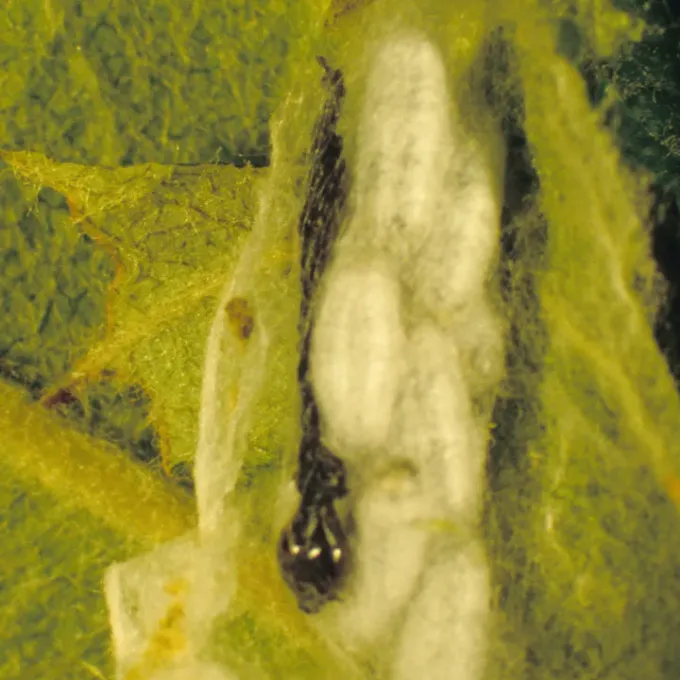
Upon completing their development, the larvae emerge from the host and pupate on the surface or near the host, forming characteristic white or yellowish cocoons.
What it damages
Although the species itself is an entomophage, its activity in an agronomic context influences the populations of various Lepidoptera that affect agricultural crops.
Targeted hosts include butterfly larvae that feed on the leaves and reproductive organs of vegetable, fruit, and field crops.
The impact on the agroecosystem lies in the parasite's potential to affect populations of other beneficial insects or display hyperparasitism.
The presence of large numbers of cocoons on crops can indirectly signal a massive reproduction of insects, necessitating agronomic monitoring of the situation.
The extent of the impact on crop yields is determined by the balance between parasite and host populations in a specific growing region.
When it appears
The activity of adult Apanteles melittaearum depends directly on the temperature regime and the availability of active host caterpillar stages.
The most intense appearance period occurs during the spring and summer, coinciding with the peak activity of phytophages in orchards and fields.
The insect completes several generations per growing season, allowing it to effectively regulate the population levels of subsequent pest generations.
During the winter, individuals usually remain in a diapause stage inside cocoons or in other protected niches within the agroecosystem.
Weather conditions, such as humidity and temperature, have a decisive influence on the development speed of each individual generation.
Signs of infestation
The primary sign of the insect's presence is the clustering of small cocoons found in groups near dead or dying caterpillars.
Caterpillars infected by Apanteles larvae often stop feeding, lose mobility, and display clear signs of emaciation.
On the surface of affected caterpillars, one can notice characteristic holes through which the parasite larvae emerged to pupate.
When inspecting plants, attention should be paid to the condition of the caterpillars: lethargy and changes in natural pigmentation are vital diagnostic criteria.
- Presence of white cocoons on leaves.
- Dead caterpillars covered in larval exuviae.
- Reduction in foliage damage rates caused by caterpillars.
Control measures
The plant protection strategy should be based on preserving biological diversity and minimizing the use of broad-spectrum insecticides.
The application of chemical agents should be strictly limited to periods when parasite activity is at its lowest to avoid disrupting natural pest control.
An effective method involves establishing refugia—areas planted with nectar-rich flowers that attract adult parasitic hymenopterans.
It is essential to conduct regular monitoring of pest and parasite populations to make informed decisions regarding the necessity of field treatments.
Integrated Pest Management (IPM) is the preferred approach, as it accounts for the biological characteristics of Apanteles melittaearum and helps maintain pest populations below the economic damage threshold.
Taxonomy
- Latin name
- Apanteles melittaearum
- Order
- Hymenoptera
- Family
- Braconidae
- EPPO code
- APANMM
Discussion
No discussions yet — be the first.