
Apanteles marginiventris
Apanteles marginiventris
Description
How to identify
Apanteles marginiventris is a species of parasitic wasp belonging to the Braconidae family, which are well-known natural enemies of many agricultural pests.
The adult wasp is small, typically measuring 2 to 3 millimeters, with a dark body and transparent wings, making it difficult to spot without professional training.
Females are equipped with a specialized ovipositor that allows them to pierce the skin of their caterpillar hosts and lay eggs directly inside them.
The species is highly valued in biological control programs due to its efficiency and high rate of success in parasitizing various lepidopteran larvae.
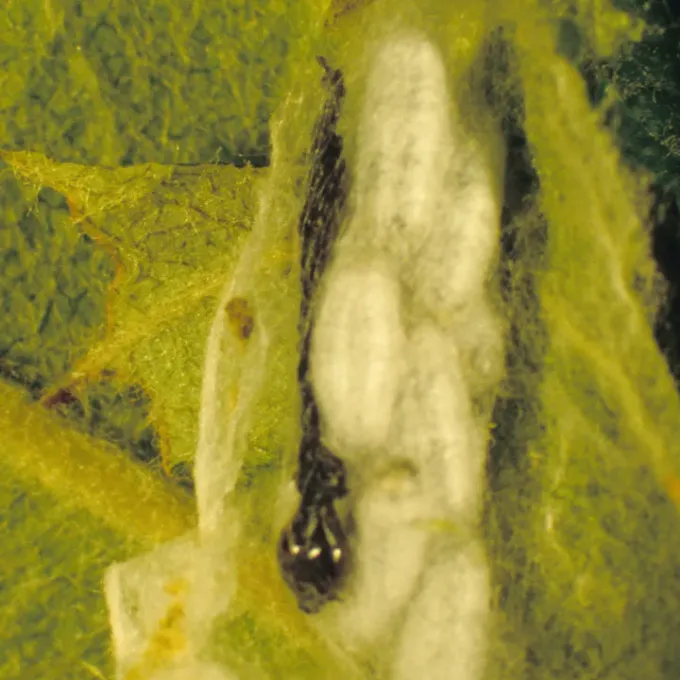
Researchers identify these wasps by examining the specific cocoons left behind after the larvae emerge from the host and pupate in the environment.
What it damages
Apanteles marginiventris does not cause any damage to plants; on the contrary, it acts as a protector of various agricultural crops.
The host range of this wasp includes several destructive species of armyworms and cutworms, which are known to decimate soybean, cotton, and corn fields.
By consuming these pests from the inside, the parasitoid larvae prevent the insects from reaching maturity and causing widespread leaf damage to the host plants.
Their presence significantly reduces the population of destructive caterpillars, which serves as a natural defense mechanism for the crops.
Therefore, farmers should consider these wasps as allies rather than pests, as they provide a cost-effective and environmentally friendly way to manage infestations.
When it appears
The active season for these parasitoids begins in the spring, coinciding with the first emergence of host caterpillars in the field.
Populations tend to reach their peak in mid-summer when the density of lepidopteran larvae is highest, providing ample opportunity for parasitism.
As the wasps can complete multiple generations in a single growing season, they offer a consistent and long-term protection during the critical stages of plant growth.
In late autumn, the adults and pupae enter a dormant phase to survive the winter, typically sheltering in the soil or beneath plant debris.
Understanding their seasonal activity helps farmers time their field operations in a way that minimizes disruption to these beneficial insects.
Signs of infestation
The presence of Apanteles marginiventris is often indicated by the decline in vigor of caterpillars found on the underside of crop leaves.
Affected caterpillars often exhibit reduced movement or feeding activity as they are gradually consumed by the developing wasp larvae.
Small white cocoons found near the remains of dead or paralyzed caterpillars are the most reliable visual evidence of the wasp's activity in the area.
A noticeable decrease in overall pest pressure on crops, even without intervention, is another strong sign of a healthy parasitoid population.
Field scouting for these cocoons is a standard practice for agronomists to determine if biological controls are naturally suppressing pest outbreaks.
Control measures
To maximize the benefits of Apanteles marginiventris, it is essential to implement conservation biological control strategies in agricultural management.
- Reduce the use of broad-spectrum insecticides that are toxic to parasitoid wasps.
- Plant nectar-rich border crops to provide necessary food resources for adult wasps.
- Practice reduced tillage to protect overwintering sites in the soil.
- Use integrated pest management (IPM) to ensure that control measures target only the pests.
- Promote field heterogeneity to support diverse populations of natural enemies.
Preserving these beneficial organisms is a key strategy for sustainable farming and reduces reliance on heavy chemical inputs over time.
Taxonomy
- Latin name
- Apanteles marginiventris
- Order
- Hymenoptera
- Family
- Braconidae
- EPPO code
- APANMG
Discussion
No discussions yet — be the first.