
Apanteles maculitarsis
Apanteles maculitarsis
Description
How to identify
Apanteles maculitarsis is a hymenopteran insect belonging to the Braconidae family. These tiny wasps are primarily known for their role as endoparasitoids, which are vital for natural ecosystems and agricultural fields.
The adult stage is characterized by small dimensions, typically dark coloration, and specific wing venation patterns common to braconid wasps. Precise identification often requires taxonomic keys due to the existence of many cryptic species within the genus.
The life cycle involves an egg-larval stage inside the host, followed by pupation outside the host's body. The parasitoid develops within the host larva, consuming non-essential tissues first to keep the host alive as long as possible.
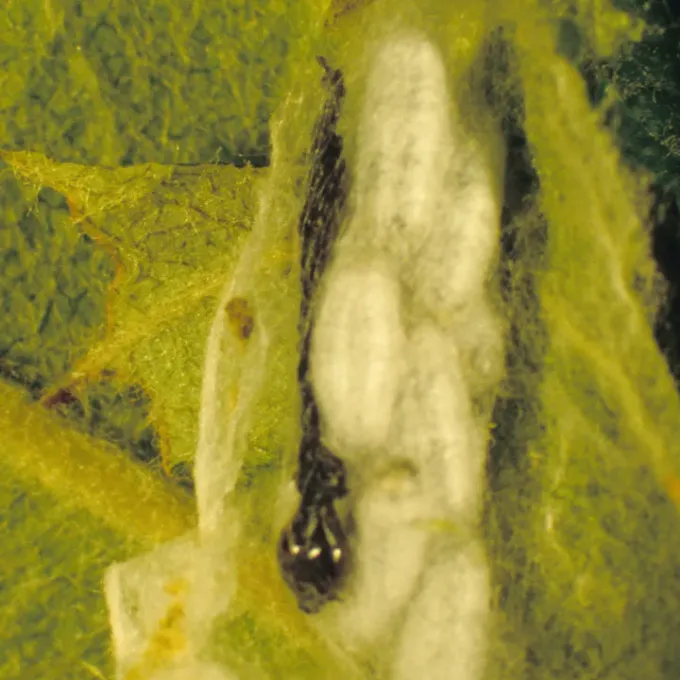
Once the larva completes its development, it exits the host to spin a silk cocoon. These white or yellowish cocoons are often found clustered on plant leaves, marking the site where a pest caterpillar was killed.
These wasps are highly effective at locating hosts through chemical cues emitted by plants damaged by caterpillars, making them efficient natural enemies in diverse crop environments.
What it damages
Apanteles maculitarsis is not a plant pest; it is a beneficial organism. It provides critical ecosystem services by regulating the populations of various Lepidoptera species that cause significant damage to crops.
It targets a wide range of hosts, including various moth larvae that feed on foliage, stems, and fruits of vegetables, cereals, and industrial crops. By parasitizing these pests, it prevents outbreaks that could otherwise lead to severe yield losses.
The secondary economic impact occurs when agricultural mismanagement, such as overuse of insecticides, eliminates these wasps. This removal of natural control results in rapid pest resurgence and increased crop damage.
Farmers benefit from the presence of this insect as it represents a form of free, sustainable biological pest control, reducing the total reliance on synthetic chemicals for field management.
Recognizing the presence of parasitoid cocoons is a signal to a grower that biological control is currently functioning, which often allows for a reduction in scheduled pesticide applications.
Control measures
Managing fields to favor Apanteles maculitarsis involves preserving its habitat and food sources for adults, specifically floral nectar from surrounding weeds or cover crops.
Integrated Pest Management (IPM) strategies should prioritize selective pesticides that do not harm these beneficial wasps. Avoid blanket spraying, especially during the peak emergence times of adult wasps.
Maintaining non-crop areas, such as hedgerows and wildflower strips, serves as a reservoir for these parasitoids, allowing them to recolonize crop fields after any necessary interventions.
Regular scouting is essential to distinguish between pest infestations and the presence of parasitized larvae, ensuring that farmers do not treat fields where biological control is already successful.
- Utilize selective insecticides instead of broad-spectrum ones.
- Establish flowering margins to support adult wasp longevity.
- Monitor parasitism rates in caterpillar populations before spraying.
Taxonomy
- Latin name
- Apanteles maculitarsis
- Order
- Hymenoptera
- Family
- Braconidae
- EPPO code
- APANMC
Discussion
No discussions yet — be the first.