
Apanteles lymantriae
Apanteles lymantriae
Description
How to identify
Apanteles lymantriae is a small parasitoid wasp belonging to the Braconidae family, known for its specific role in regulating the populations of the gypsy moth.
These wasps are minute, measuring only a few millimeters in length, making them difficult to spot during routine field inspections without careful observation.
The species has evolved a highly specialized reproductive strategy, targeting the larvae of the gypsy moth (Lymantria dispar) with high precision.
As a solitary or gregarious parasitoid, the female wasp uses her ovipositor to inject eggs directly into the host's body during its vulnerable larval stages.
The morphology of the wasp is adapted for navigating through dense forest canopy and finding host larvae through chemical signals emitted by the plants they feed on.
What it damages
This organism is not a pest; on the contrary, it is a highly beneficial biological control agent that limits the damage caused by gypsy moth caterpillars.
Gypsy moth larvae are voracious defoliators, capable of destroying vast areas of hardwood forests, orchards, and urban landscaping.
By parasitizing these larvae, Apanteles lymantriae directly reduces the survival rate of the moth population and mitigates severe deforestation.
In agricultural settings, the presence of these wasps contributes to integrated pest management (IPM) programs, reducing the reliance on toxic synthetic chemicals.
Encouraging the presence of this parasitoid is essential for maintaining a healthy balance between leaf-eating insects and their natural predators.
When it appears
The life cycle of the wasp is synchronized with the development of its host, ensuring that larval stages are available for infestation at the right time.
Adult wasps typically emerge in the late spring and early summer, coinciding with the peak period of gypsy moth larval activity.
Development occurs internally within the host, protecting the wasp from environmental stressors during its growth phases.
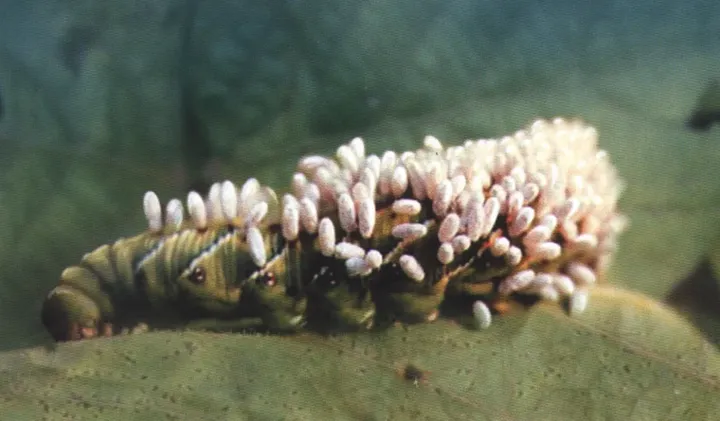
Pupation takes place outside the host’s body, often near the remains, where the wasp forms its characteristic white cocoons.
The timing of each generation is highly dependent on regional temperatures and the phenology of the host plant species.
Signs of infestation
The most reliable sign of Apanteles lymantriae activity is the appearance of small, silken, white or yellowish cocoons attached to the skin or near the dead remains of a caterpillar.
Infected larvae often exhibit sluggish movement, cessation of feeding, and eventual mortality as the parasitoid larvae complete their development.
- Clusters of small cocoons found on tree trunks or foliage.
- Reduced defoliation in areas with high wasp activity.
- Empty caterpillar skins, indicating the wasp larvae have already emerged to pupate.
Observing dead caterpillars in unusual locations can indicate that the parasitoid has successfully completed its cycle.
Regular monitoring of caterpillar density compared to the number of visible cocoons provides a clear picture of the suppression level achieved.
Control measures
Preservation of this wasp species is the primary control strategy; avoiding the use of broad-spectrum pesticides is critical to their survival.
Implementing selective pest control measures allows natural enemies like Apanteles lymantriae to thrive and provide continuous ecosystem services.
Maintaining diverse habitats, including floral resources, provides necessary nectar for adult wasps, increasing their lifespan and reproductive success.
Integrated management plans should prioritize biological agents, utilizing pesticides only as a last resort and selecting those with low impact on non-target species.
Field studies have shown that in the absence of indiscriminate spraying, this parasitoid can contribute significantly to the long-term decline of outbreak populations.
Taxonomy
- Latin name
- Apanteles lymantriae
- Order
- Hymenoptera
- Family
- Braconidae
- EPPO code
- APANLY
Discussion
No discussions yet — be the first.