
Apanteles
Apanteles impurus
Description
How to identify
Apanteles impurus is an endoparasitic wasp belonging to the family Braconidae. It is a highly specialized insect known for its role in regulating the populations of various caterpillar species.
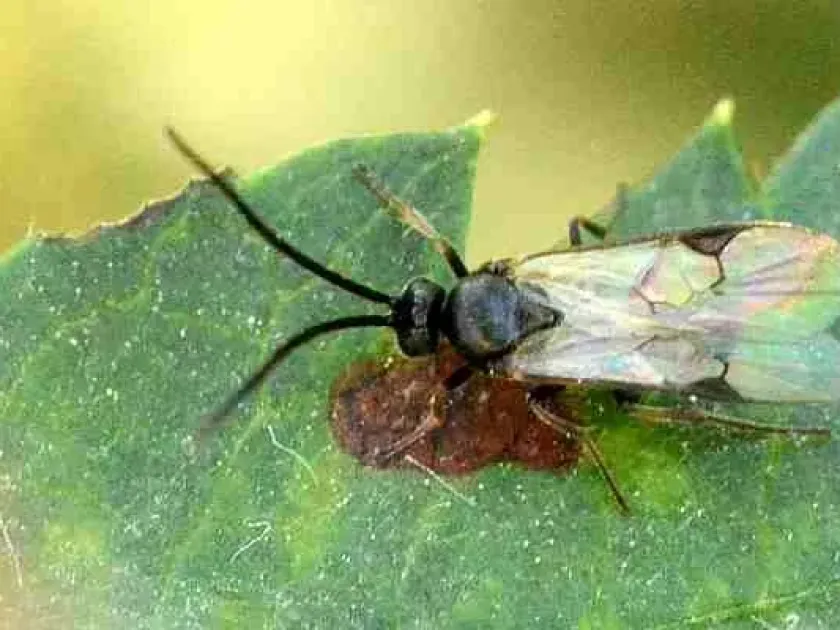
The adult form is a small, dark-colored wasp. Due to complex taxonomic revisions, many species previously classified under the genus Apanteles are now often reassigned to Cotesia.
The life cycle is strictly tied to its host. The female wasp inserts her eggs directly into the body of a lepidopteran larva using a sharp ovipositor.
Once inside, the larvae hatch and feed on the host's hemolymph and fat bodies, carefully avoiding vital organs to keep the caterpillar alive during their development.
When mature, the larvae emerge through the host's cuticle and spin small, protective cocoons on the surface of the plant, where they pupate and eventually emerge as adults.
What it damages
It is crucial to clarify that Apanteles impurus is not a plant pest. On the contrary, it acts as a valuable biological control agent in agricultural settings.
These wasps target various caterpillars that feed on crops, effectively reducing the damage caused by these pests without the need for synthetic chemicals.
There is no evidence of Apanteles damaging crops; its behavior is focused solely on its host insects, contributing to the health of the agrosystem.
The economic value of this wasp lies in its ability to suppress pest outbreaks, which helps farmers maintain higher crop quality with fewer chemical interventions.
Therefore, the presence of these wasps is an indicator of an ecological balance that serves the interests of sustainable and profitable crop production.
When it appears
The activity of adult Apanteles typically coincides with the presence of host caterpillars during the spring and summer months.
The number of generations per year depends on climate and the availability of hosts, with rapid development cycles occurring in warmer temperatures.
In mid-summer, a new generation can emerge within a few weeks, allowing the population to grow rapidly if a high density of host larvae is present.
As the season draws to a close, the parasitoids prepare for winter, typically by entering a state of diapause as pupae or within the host remains.
Proper environmental management ensures that these wasps emerge at the correct time to tackle the first generations of agricultural pests.
Signs of infestation
The most visible sign of Apanteles activity is the presence of clusters of tiny, white or yellowish cocoons, often found near the carcass of a withered caterpillar.
Infected host larvae usually show signs of lethargy and stop feeding shortly before they die, serving as a clear indicator of successful parasitization.
Observers might notice localized areas where caterpillar populations have suddenly declined, which is often a result of successful wasp activity.
The presence of empty cocoons on leaves or stems indicates that a new generation of beneficial wasps has successfully emerged and will continue the cycle.
Field scouting during warm, sunny days often reveals the adults in flight, searching for host larvae to parasitize, indicating high natural protection levels.
Control measures
Because Apanteles is an essential beneficial insect, no control measures against it are needed; rather, management should focus on its conservation.
To preserve these populations, farmers should minimize the use of broad-spectrum insecticides that harm beneficial insects and disrupt natural biological control.
- Avoid spraying during peak wasp activity.
- Use selective, environmentally friendly pesticides.
- Plant nectar-rich flowers to support adult wasps.
- Implement Integrated Pest Management (IPM) strategies.
- Maintain buffer zones with diverse vegetation.
Providing access to nectar sources is vital, as it increases the lifespan and reproductive capacity of the adult wasps, making them more effective at pest control.
Adopting these conservation strategies allows growers to harness the natural power of Apanteles to maintain crop health and promote sustainable agriculture.
Taxonomy
- Latin name
- Apanteles impurus
- Order
- Hymenoptera
- Family
- Braconidae
- EPPO code
- APANIM
Discussion
No discussions yet — be the first.