
Apanteles fumiferanae
Apanteles fumiferanae
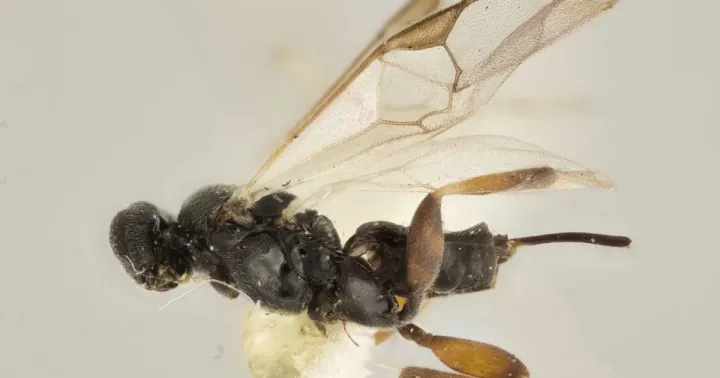
Description
How to identify
Apanteles fumiferanae is a small parasitic wasp belonging to the family Braconidae. It is a highly specialized endoparasitoid known for its role in regulating the populations of various moth larvae in forest ecosystems.
The adult insect is small, typically black, and possesses delicate wings suitable for maneuverable flight within dense forest canopies. Their antennae are highly sensitive, enabling them to detect the specific chemical cues emitted by their hosts.
The life cycle involves the female wasp laying eggs inside the body of a host caterpillar. The larvae then develop as endoparasites, feeding on the internal tissues of the caterpillar while avoiding vital organs to keep the host alive during their development.
Taxonomically, this species is classified within the order Hymenoptera. As a specialist entomophage, its primary function is to maintain ecological balance by limiting the spread of host species that would otherwise damage forest health.
Understanding the biology of this wasp is essential for foresters and entomologists involved in biological control programs. It serves as a natural indicator of ecosystem resilience and health.
What it damages
It is crucial to state that Apanteles fumiferanae is not a crop pest; rather, it is a highly beneficial insect that serves as a natural enemy to one of the most destructive forest pests, the spruce budworm.
The spruce budworm causes severe defoliation of coniferous trees, which can lead to mass tree mortality if left unchecked. By parasitizing these caterpillars, the wasp directly contributes to the reduction of the pest population.
The wasp's larvae consume the caterpillar from the inside, ultimately causing its death. This process prevents the pest from reaching its adult reproductive stage, thus curbing the next generation of defoliators.
The level of impact this wasp has on the spruce budworm population is significant during outbreak years. By lowering host density, it helps forest stands to recover and reduces the long-term impact of insect attacks.
Protecting these wasps is an essential part of sustainable forest management. Their presence reduces the reliance on synthetic chemicals, providing a more ecologically balanced solution to forest health issues.
When it appears
The seasonal activity of Apanteles fumiferanae is strictly synchronized with the development stages of its host, the spruce budworm. Adults emerge in spring or summer, aligning with the presence of susceptible host larvae.
Temperature and humidity are critical environmental factors influencing the activity of these wasps. Optimal conditions lead to higher rates of parasitism and more efficient suppression of pest populations during the summer months.
As the season progresses, the wasps undergo several generations, provided there is a continuous supply of host caterpillars. This synchronicity is vital for the survival of the wasp population throughout the year.
During the winter, the wasps enter a dormant stage, often inside cocoons or within the remains of their host in the forest leaf litter. This strategy ensures they can survive adverse weather conditions until the next growing season.
When spring arrives, the cycle initiates once more, with adults emerging to find new hosts. This natural cycle is a cornerstone of forest ecology, maintaining the numbers of budworms at manageable levels.
Signs of infestation
The most reliable sign of the presence of Apanteles fumiferanae is the discovery of white, silk-like cocoons near dead or dying spruce budworm larvae on branches. These cocoons are clear evidence of successful parasitism.
Infected caterpillars often display sluggish behavior and cease feeding earlier than healthy individuals. A field inspection looking for larvae that are stationary or discolored can indicate active parasitism.
Specialists often use dissection methods in laboratories to determine the rate of parasitism in a given area. Finding larvae of the wasp inside the host confirms the presence of this beneficial species.
Another sign is the reduction of damaged buds and needles on trees in areas where the wasp population is high. While indirect, this health improvement is a hallmark of effective biological control by the wasp.
Monitoring the flight period of adults using small traps can also provide valuable data. High numbers of captured adults indicate a healthy population capable of providing significant natural suppression of pests.
Control measures
There is no "control" needed for Apanteles fumiferanae, as it is a beneficial insect. Instead, the management strategy focuses on conservation and fostering conditions that promote its survival and activity.
To preserve these wasps, it is essential to avoid the use of broad-spectrum insecticides, especially during the active flight periods of the adults. Selective and targeted treatments should be prioritized.
Creating and maintaining diverse forest habitats, including flowering plants, provides necessary nectar sources for adult wasps. This supplemental feeding increases their longevity and search efficiency.
Integrated forest management plans should incorporate the biological impact of this species. If natural parasitism rates are sufficient, chemical intervention can be significantly reduced or avoided entirely.
Education is a key component; forest managers should be trained to recognize and protect these wasps rather than treat them as pests, ensuring that natural biological regulation is maintained.
Taxonomy
- Latin name
- Apanteles fumiferanae
- Order
- Hymenoptera
- Family
- Braconidae
- EPPO code
- APANFM
Discussion
No discussions yet — be the first.