
Apanteles
Apanteles fulvipes
Description
How to identify
Apanteles (Apanteles fulvipes) is a tiny insect belonging to the order Hymenoptera and the family Braconidae. These insects are classified as parasitoid wasps, usually measuring only a few millimeters in length.
The adult wasp is characterized by a dark-colored body and transparent wings with a distinct vein pattern. The females possess a specialized ovipositor for laying eggs within their hosts.
It is crucial to note that in agricultural science, Apanteles is considered a beneficial insect rather than a plant pest. It acts as a primary parasitoid for various caterpillar species.
The larvae of this wasp develop internally within the caterpillar host, feeding on its tissues before emerging to pupate, which eventually leads to the host's death.
This specialized lifestyle makes Apanteles one of the most significant agents in natural population control for many agricultural pests.
What it damages
Apanteles does not damage crops. It does not consume plant tissues, stems, leaves, or seeds, and its presence poses absolutely no threat to agricultural productivity.
Quite the opposite, its ecological role is extremely beneficial. By parasitizing caterpillar pests, it directly reduces the amount of defoliation in grains, vegetables, and fruit crops.
The feeding activity of the parasitoid larvae effectively halts the growth and development of the pest larvae, thereby saving the crops from significant yield loss.
Agricultural systems that support healthy populations of Apanteles typically experience lower pest pressure and require fewer chemical interventions.
Thus, Apanteles is a valuable natural resource for sustainable farming, functioning as a silent guard for the crops.
When it appears
The seasonal activity of Apanteles begins in the spring, once temperatures are sufficiently high to support the emergence of adults from their overwintering stage.
During the summer months, several generations of the parasitoid can develop, closely synchronized with the life cycles of their host caterpillars.
As autumn approaches and temperatures drop, the wasp enters a state of diapause, typically overwintering as a pupa protected by a tough, silken cocoon.
These cocoons are often found attached to plant debris or soil surfaces, providing protection against winter cold and moisture.
The rate of development is heavily influenced by ambient temperature and the availability of host larvae required for the completion of the wasp's life cycle.
Signs of infestation
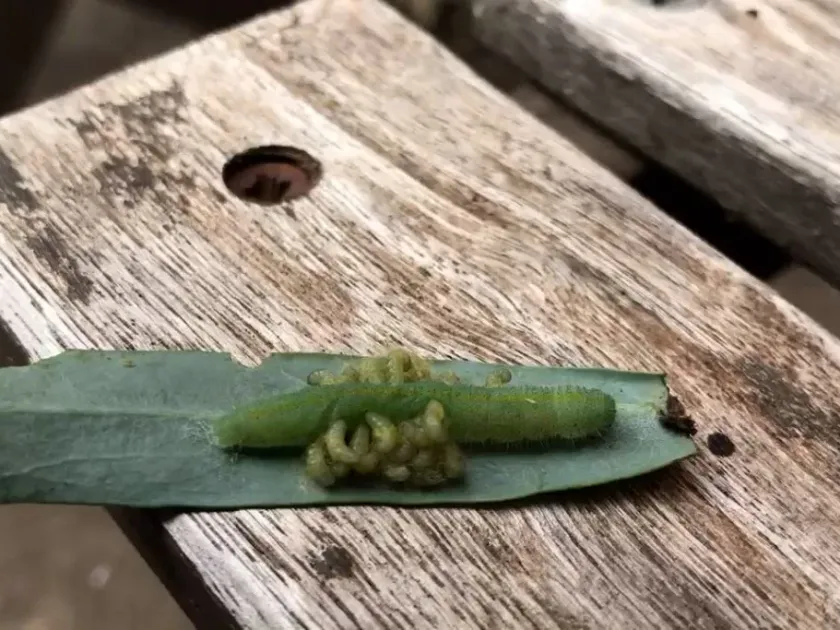
The primary sign of Apanteles activity in a field is the presence of parasitized caterpillars, often covered in small, yellowish-white clusters of cocoons.
Many growers mistakenly identify these cocoons as eggs of a harmful pest, but they are actually the pupation sites of the beneficial wasp larvae.
Parasitized caterpillars become lethargic, show stunted growth, and eventually stop feeding entirely, which is a strong indicator of successful biological control.
Once the larvae emerge from the host to pupate, the host dies, leaving behind the distinctive cluster of cocoons on the surface of the plant or soil.
Finding these clusters is a positive sign that natural pest suppression is occurring and that chemical spraying might be unnecessary or counterproductive.
Control measures
Conservation is the best management strategy for Apanteles. Protecting their populations should be a priority for any integrated pest management (IPM) program.
Growers should minimize the use of broad-spectrum insecticides, which often cause higher mortality rates among beneficial parasitoids than among the target pests.
Maintaining floral strips or hedgerows around fields provides essential nectar sources, which significantly increases the lifespan and fertility of adult wasps.
Selecting biorational or selective pesticides that do not harm natural enemies is highly recommended to maintain ecological balance in the field.
- Avoid preventive spraying of crops.
- Establish flower-rich field margins.
- Monitor for parasitized hosts before making treatment decisions.
Taxonomy
- Latin name
- Apanteles fulvipes
- Order
- Hymenoptera
- Family
- Braconidae
- EPPO code
- APANFU
Discussion
No discussions yet — be the first.