
Apanteles
Apanteles femoratus
Description
How to identify
Apanteles (Apanteles femoratus) is a member of the Braconidae family, order Hymenoptera. This tiny insect is widely recognized by entomologists not as a pest, but as a vital natural enemy of various caterpillar species.
The adult form is a small, black parasitic wasp measuring only a few millimeters. Its slender body and sharp ovipositor are perfectly adapted for finding and parasitizing lepidopteran larvae.
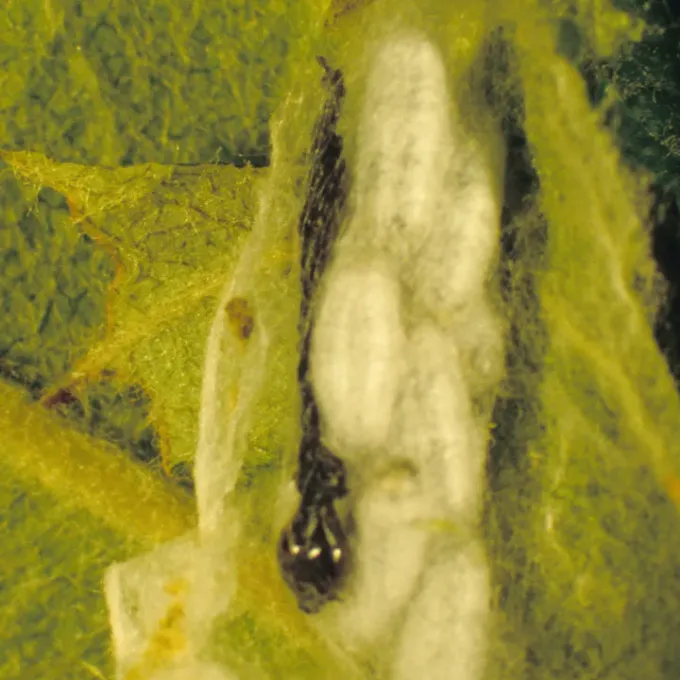
As an endoparasitoid, the wasp lays its eggs inside the body of a host caterpillar. The developing larvae feed internally, eventually emerging to spin protective cocoons around the host.
The life cycle involves complete metamorphosis. Their evolutionary strategy is strictly tied to the life cycle of specific hosts, making them highly efficient at controlling pest outbreaks.
Distinguishing Apanteles from true plant pests is essential for farmers. Misidentifying this beneficial insect leads to unnecessary pesticide use, which harms the balance of the ecosystem.
What it damages
Apanteles does not cause damage to plants. It is a biological control agent that targets agricultural pests, such as cutworms, cabbage worms, and various other moths that feed on crops.
By parasitizing these larvae, Apanteles prevents the total destruction of plant leaves, flowers, and fruits, effectively acting as an unpaid laborer for the farmer.
The main threat to Apanteles comes from broad-spectrum insecticides. When these chemicals are applied, they kill the parasitoids alongside the pests, often leading to a resurgence of the target pests due to the loss of natural control.
Maintaining a healthy population of this parasitoid is a key element of Integrated Pest Management (IPM). It allows for stable and long-term crop protection.
The economic value of this species lies in its ability to reduce the population density of pests, thereby reducing the need for intensive chemical applications.
When it appears
The active flight period of Apanteles aligns with the presence of host larvae in the field. This generally spans from late spring to early autumn, depending on local temperatures.
Multiple generations can occur throughout the growing season, provided there is a continuous availability of suitable hosts for the parasitoids to lay their eggs.
Activity is most pronounced on warm, sunny days. During adverse weather conditions, such as strong winds or prolonged rain, the movement of adult wasps is significantly restricted.
Late-season activity often results in higher rates of parasitism, helping to decrease the pest population that would otherwise overwinter in the soil or crop debris.
Overwintering typically happens at the pupal stage, encased in cocoons situated in sheltered areas near where the host was last seen.
Signs of infestation
The most visible indicator of Apanteles activity is the presence of dying or sluggish caterpillars with small, white or yellowish silk cocoons attached to their bodies.
Farmers walking their fields might notice these cocoons as a cluster of small structures on the foliage, often surrounding a shriveled, non-feeding caterpillar.
Finding these cocoons indicates that the caterpillar has already been neutralized by the parasitoid and will not cause further damage to the crop.
If these signs are prevalent, it is a strong indicator that natural biological control is effective and that chemical intervention is likely unnecessary.
Monitoring for these specific signs is a critical practice for farmers who prioritize sustainable and biological pest control methods.
Control measures
There are no control measures against Apanteles, as it is a highly beneficial species. Instead, farm management should focus on creating an environment that supports its survival and reproduction.
- Reduction in the use of non-selective, harmful pesticides.
- Planting flowering borders to provide nectar sources for adult wasps.
- Preserving natural habitat patches near fields to serve as refugia.
- Using targeted, eco-friendly biological control products.
- Conducting field inspections to monitor for the presence of natural enemies.
Taxonomy
- Latin name
- Apanteles femoratus
- Order
- Hymenoptera
- Family
- Braconidae
- EPPO code
- APANFE
Discussion
No discussions yet — be the first.