
Apanteles
Apanteles expulsus
Description
How to identify
Apanteles (Apanteles expulsus) belongs to the order Hymenoptera and the family Braconidae. It is a group of small parasitoid wasps that are essential for natural pest suppression.
Adult wasps are typically 3–5 mm in length, characterized by a slender, dark-colored body and a specific wing venation pattern common to braconids.
The larvae are internal parasites of various lepidopteran caterpillars, effectively using them as a source of nutrition to complete their development.
Correct identification often requires expert microscopic examination of the morphological structures to distinguish between closely related species in the field.
These insects are highly valued in integrated pest management because they provide free, natural control of caterpillars that otherwise damage crops.
What it damages
Apanteles is not a plant pest. In fact, it is a significant beneficial insect that targets the larvae of moths and butterflies that feed on agricultural crops.
The hosts for these wasps include various cutworms, loopers, and armyworms that are responsible for significant defoliation in vegetables and field crops.
By consuming the internal tissues of the host caterpillar, the wasp larvae prevent the host from causing further damage to the crops.
Misidentifying this helpful insect as a pest often leads to unnecessary chemical applications that can disrupt the natural ecological balance.
Modern agronomists prioritize the presence of these parasitoids as an indicator of a balanced and sustainable farming system.
When it appears
The activity of Apanteles is closely tied to the lifecycle of its host populations, typically occurring throughout the main growing season.
Adult wasps are most active during warm months when they search for host caterpillars to lay their eggs inside, ensuring the next generation is secured.
The lifecycle is relatively short, allowing for several generations within a single season, which helps maintain continuous pressure on pest populations.
As the season progresses toward autumn, the larvae often pupate inside their characteristic cocoons, preparing to overwinter in soil or debris.
Understanding the synchronization between the wasp's emergence and the host's lifecycle is crucial for maximizing the effectiveness of biological control.
Signs of infestation
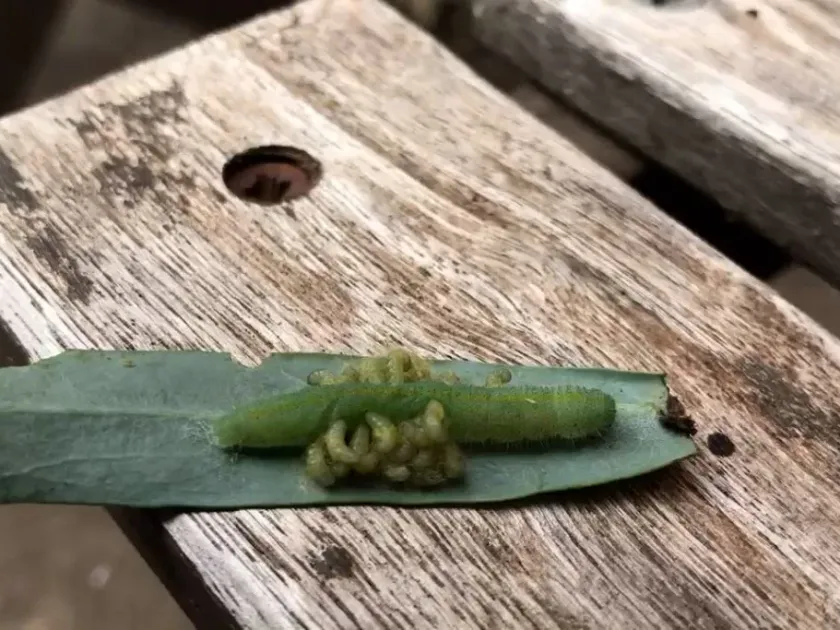
The most visible sign of Apanteles activity is the presence of clusters of white or yellow silk cocoons attached to the remains of a caterpillar.
Affected caterpillars become lethargic, stop feeding, and ultimately die as the parasitic larvae emerge to spin their cocoons.
Farmers may observe these cocoons on plant foliage, which serves as a clear indicator that natural control is actively suppressing pest populations.
If you see parasitized caterpillars on your crops, it is a sign that chemical intervention may not be necessary for that specific pest outbreak.
Monitoring for these signs can help growers save money on insecticides and promote a healthier ecosystem on their land.
Control measures
The best strategy for "managing" Apanteles is to conserve its population by reducing the use of broad-spectrum insecticides on the farm.
Planting flower strips or nectar-rich borders around fields provides adult wasps with the energy they need to hunt for pests effectively.
Integrated Pest Management (IPM) practices should be used, selecting selective pesticides that are safe for beneficial wasps and target only specific pests.
Maintaining ground cover and minimizing heavy tillage can help provide overwintering sites for the larvae, ensuring a healthy population for the next year.
By protecting these natural allies, farmers can achieve long-term, sustainable control over many lepidopteran pests without relying on harsh chemicals.
Taxonomy
- Latin name
- Apanteles expulsus
- Order
- Hymenoptera
- Family
- Braconidae
- EPPO code
- APANEX
Discussion
No discussions yet — be the first.