
Apanteles erionotae
Apanteles erionotae
Description
How to identify
Apanteles erionotae is a small species of parasitic wasp belonging to the Braconidae family, known for its role as a specialized natural enemy.
Adult wasps are characterized by their slender, black bodies, usually measuring between 3 and 5 millimeters in length, allowing them to navigate foliage with ease.
They possess thin, filamentous antennae that are highly sensitive, aiding the females in locating hosts hidden within rolled banana leaves.
This species is a solitary or gregarious endoparasitoid, depending on the stage of the host, meaning its larvae develop inside the body of the host caterpillar.
Identification typically requires expert entomological verification, as many species within the Apanteles genus exhibit very similar morphological features.
What it damages
It is important to note that Apanteles erionotae does not cause damage to crops; rather, it is a highly beneficial insect in an agricultural setting.
It specifically targets the banana leaf folder (Erionota thrax), a pest that rolls banana leaves and feeds on the tissue, significantly reducing plant vigor.
By parasitizing the larvae of the leaf folder, the wasp prevents the completion of the pest's life cycle, effectively limiting its population density.
This biological intervention helps maintain the leaf area index, ensuring that banana plants can photosynthesize efficiently and produce healthy fruit.
In regions where the banana leaf folder is a major pest, the presence of this parasitoid is a critical factor in preventing widespread crop loss.
When it appears
The activity cycle of Apanteles erionotae is intrinsically linked to the presence and developmental stages of its host, the banana leaf folder.
In tropical environments, where temperature remains stable, the parasitoid can maintain multiple generations throughout the year to track host availability.
Peak emergence and hunting activity usually coincide with the warmer and more humid months when host reproduction is at its highest point.
Developmental timing is synchronized with the host, ensuring that the female wasp has access to suitable larval instars for egg deposition.
Seasonal fluctuations in host density directly impact the population dynamics of the parasitoid, which is highly efficient at adapting to prey scarcity.
Signs of infestation
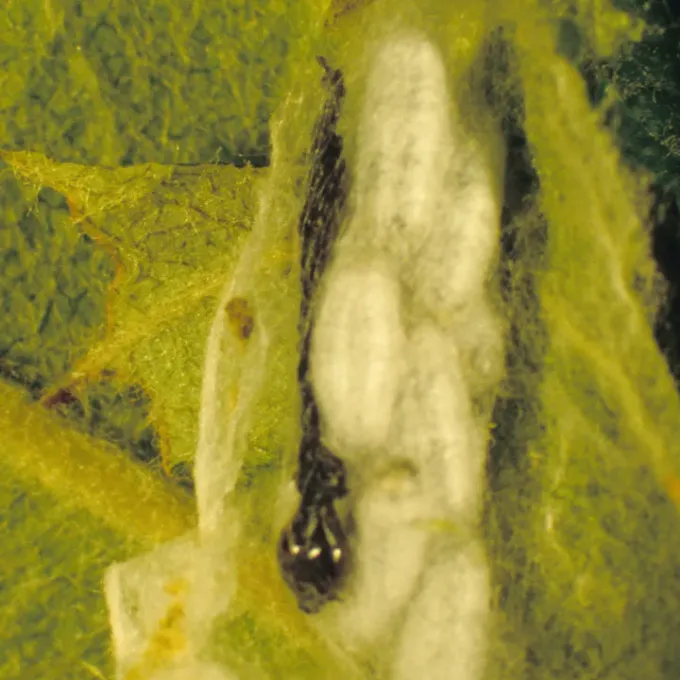
The most reliable sign of the presence of Apanteles erionotae is the appearance of tiny, white or yellowish silken cocoons within the leaf shelters.
These cocoons are formed by the wasp larvae after they emerge from the deceased or moribund caterpillar of the banana leaf folder.
Evidence of parasitism is often found inside the characteristic leaf rolls created by the pest, which serve as a protected micro-environment.
A sudden decline in the active population of leaf folders, accompanied by the sight of wasp cocoons, is a clear indicator of successful biological control.
Field scouts should look for dead larvae that appear shriveled or covered in these clusters of small cocoons as proof of the parasitoid's efficacy.
Control measures
To preserve and encourage the population of Apanteles erionotae, farmers must adopt integrated pest management practices that prioritize biological control.
The avoidance of broad-spectrum insecticides is crucial, as these chemicals are often lethal to the parasitoid wasps and can lead to secondary pest outbreaks.
Enhancing the biodiversity of the agroecosystem by planting flowering shrubs can provide essential nectar sources for adult wasps, increasing their longevity.
- Minimize the use of synthetic insecticides during high-activity seasons
- Implement biological-based sprays only when strictly necessary
- Establish floral buffers to support beneficial insect populations
- Regular monitoring of leaf folders to assess parasitism rates
Integrating these strategies ensures that the natural regulatory power of the parasitoid is fully utilized, reducing reliance on chemical inputs.
Taxonomy
- Latin name
- Apanteles erionotae
- Order
- Hymenoptera
- Family
- Braconidae
- EPPO code
- APANER
Discussion
No discussions yet — be the first.