
Apanteles dioryctriae
Apanteles dioryctriae
Description
How to identify
Apanteles dioryctriae is a small insect belonging to the order Hymenoptera and the family Braconidae. It acts as a beneficial entomophage, serving as a natural regulator of harmful insect populations.
The adult is a tiny parasitic wasp, typically measuring only a few millimeters in length. It possesses a compact, dark-colored body typical of the genus Apanteles.
The life cycle of this wasp is strictly linked to its hosts—caterpillars of specific moth species. It leads a parasitic lifestyle during its larval stage, which makes it a critical link in natural pest control.
Unlike pests, these wasps do not damage plants, so their presence in orchards or forests is entirely safe for the vegetation.
Identifying this species in the field is difficult due to its microscopic size and requires laboratory analysis of morphological characteristics by an entomologist.
What it damages
It is important to emphasize that Apanteles dioryctriae is not a plant pest. On the contrary, it provides significant benefits by destroying caterpillars that damage coniferous and deciduous trees.
The primary hosts for this wasp are pyralid moths, specifically species of the genus Dioryctria, which damage buds, shoots, and cones of coniferous trees, thereby reducing their productivity.
By reducing the numbers of these harmful caterpillars, the wasp helps preserve seed yields and maintain the overall health of forest ecosystems.
In biological pest control, this species is recognized as an effective agent that helps suppress mass outbreaks of pests without the need for synthetic pesticides.
Therefore, this insect should be regarded as a valuable ally in agriculture and forestry, rather than an organism that requires management or control.
When it appears
The development of the wasp is fully synchronized with the life cycle of its hosts. Depending on the climatic zone, it can produce several generations during a single growing season.
Adult wasps are most active during the flight period of the host moths, when they search for suitable caterpillars to lay their eggs.
The insects typically overwinter in the larval or cocoon stage, either inside or near the remains of the deceased host, which provides them with reliable protection.
The emergence of adults in spring depends on the accumulation of effective temperatures, ensuring their arrival aligns with the emergence of the first generation of pests.
For successful survival of adult wasps, the presence of flowering plants in the vicinity is crucial, as they require nectar for energy and increased longevity.
Signs of infestation
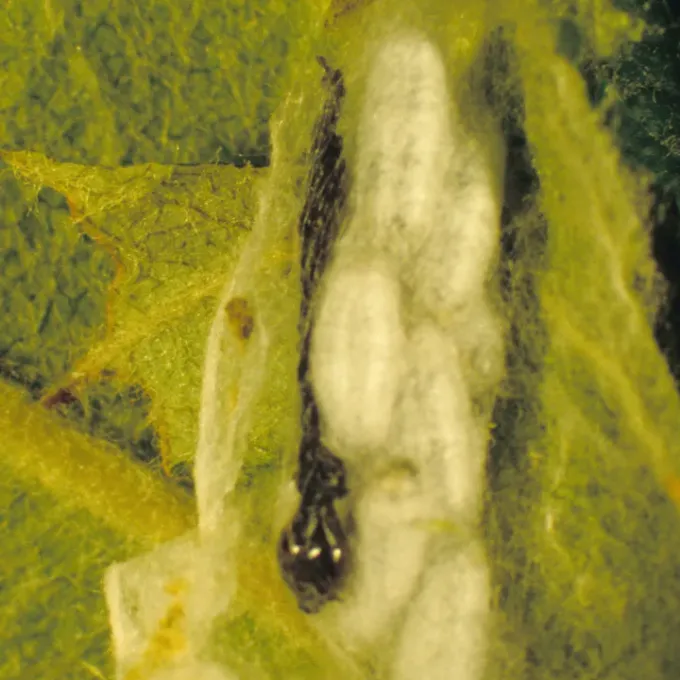
The presence of Apanteles dioryctriae in a pest population is indicated by the presence of characteristic tiny cocoons near the dead caterpillars.
After completing their feeding inside the host's body, the wasp larvae emerge and spin white or cream-colored silky cocoons, often clustered together.
Microscopic examination of the dead caterpillars reveals the larvae of the parasite inside, which have almost completely consumed the internal organs of the pest.
A reduction in the overall damage to shoots or cones in a specific area is a clear indicator that these entomophages are successfully performing their ecological role.
If you observe mass mortality of moth caterpillars, with small exit holes on their skin and clusters of white cocoons nearby, it is a sign of active colonization by this beneficial species.
Control measures
No control measures against Apanteles dioryctriae are necessary; instead, agricultural and forest management should focus on its conservation.
The primary strategy is to avoid or minimize the use of broad-spectrum insecticides, which kill beneficial entomophages along with the target pests.
It is recommended to preserve natural areas with flowering vegetation near forest edges and fields, as this promotes the growth of parasitic wasp populations.
If pest control becomes necessary, preference should be given to selective biological products that have minimal impact on the beneficial insect fauna.
Integrated Pest Management (IPM) should be based on continuous monitoring: if the parasite population is high, chemical intervention may be unnecessary and counterproductive.
Taxonomy
- Latin name
- Apanteles dioryctriae
- Order
- Hymenoptera
- Family
- Braconidae
- EPPO code
- APANDO
Discussion
No discussions yet — be the first.