
Apanteles
Apanteles chilonis
Description
How to identify
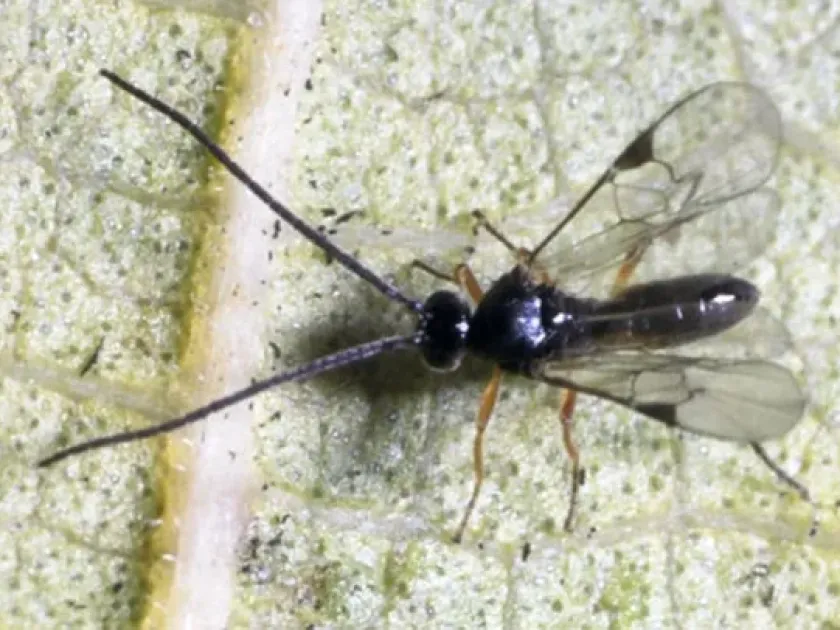
Apanteles (Apanteles chilonis) is a highly specialized parasitoid wasp belonging to the Braconidae family within the order Hymenoptera. Unlike pests, this insect is a crucial ally in agricultural ecosystems, acting as a natural enemy of stem borers.
The adult wasp is tiny, typically measuring only 3 to 5 millimeters in length, with a predominantly black, slender body. They possess clear wings and are characterized by rapid, erratic flight patterns among crop foliage.
Identification in the field is most successful when observing the host larvae. Female wasps use their ovipositor to lay eggs directly into the bodies of caterpillars, which are then consumed by the developing wasp larvae.
Agricultural experts often identify the presence of this beneficial insect by spotting clusters of white or pale-yellow silken cocoons attached to the larvae or found within the tunnels made by stem borers.
Because of their small size and cryptic behavior, Apanteles are often overlooked; however, their impact on pest population dynamics is significant and highly valued in biological control programs.
What it damages
Apanteles does not cause any damage to plants; it is exclusively a parasitoid. Its biological activity is centered on controlling populations of lepidopteran pests, particularly rice stem borers and similar species.
The larvae of the wasp develop inside the host caterpillar, gradually consuming its internal tissues. This biological process effectively terminates the pest before it can reach the reproductive stage.
By drastically reducing the number of active stem borer larvae, Apanteles prevents the physical destruction of crop stems, which in turn reduces secondary damage like fungal pathogens that enter through pest-created holes.
As a biological agent, Apanteles provides a sustainable solution for minimizing crop yield losses. Its presence is an indicator of a balanced and healthy agricultural ecosystem.
Farmers who leverage the activity of this parasitoid can reduce their reliance on chemical insecticides, ensuring lower production costs and safer food products for consumers.
When it appears
The seasonal activity of Apanteles is directly linked to the life cycles of the stem borer populations they parasitize. Adult wasps emerge in the spring as temperatures rise and host larvae become available.
Throughout the growing season, multiple generations of Apanteles can occur, depending on the climatic region and the availability of hosts in the fields.
Peak activity usually aligns with the primary breeding periods of the host moths, allowing the wasp to exert maximum pressure on the pest population during critical growth stages of the crops.
As the season nears its end and temperatures drop, the wasps undergo a diapause state, often overwintering as pupae within their cocoons hidden in crop debris or soil.
Successful pest suppression depends on the synchronization of the wasp's life cycle with the pest, which is why environmental monitoring is essential for effective biological management.
Signs of infestation
The most prominent sign of Apanteles activity is the discovery of parasitized larvae. These caterpillars are often sluggish, show signs of internal tissue loss, and may have numerous white cocoons covering their exterior.
When inspecting fields, a significant reduction in the number of actively feeding larvae within plant stems indicates that the parasitoid is effectively performing its function.
Visual inspections of stalks may reveal empty cocoons, indicating that the new generation of wasps has already emerged to continue the cycle of parasitism.
In addition, a gradual decrease in the trap counts of adult moths in pheromone monitoring setups often correlates with high levels of Apanteles activity in the vicinity.
- White silken cocoons on caterpillars;
- Lethargic behavior of host larvae;
- Reduced damage symptoms in stems;
- Empty cocoons indicating successful emergence.
Control measures
To conserve Apanteles populations, farmers should avoid the use of broad-spectrum insecticides, which are often fatal to these beneficial parasitoids.
The adoption of Integrated Pest Management (IPM) practices, including the use of selective, biorational pesticides, is essential to maintain the wasp population.
Preserving natural habitats, such as field margins with diverse vegetation, provides necessary shelter and supplemental food sources for adult wasps, enhancing their survival rates.
Timing of necessary chemical applications should be managed carefully based on pest monitoring data to ensure that the most active periods of the parasitoid's life cycle are avoided.
By promoting a landscape that supports beneficial insects, growers can achieve long-term pest regulation and maintain the productivity of their crops in an environmentally responsible manner.
Taxonomy
- Latin name
- Apanteles chilonis
- Order
- Hymenoptera
- Family
- Braconidae
- EPPO code
- APANCH
Discussion
No discussions yet — be the first.