
Apanteles carposinae
Apanteles carposinae
Description
How to identify
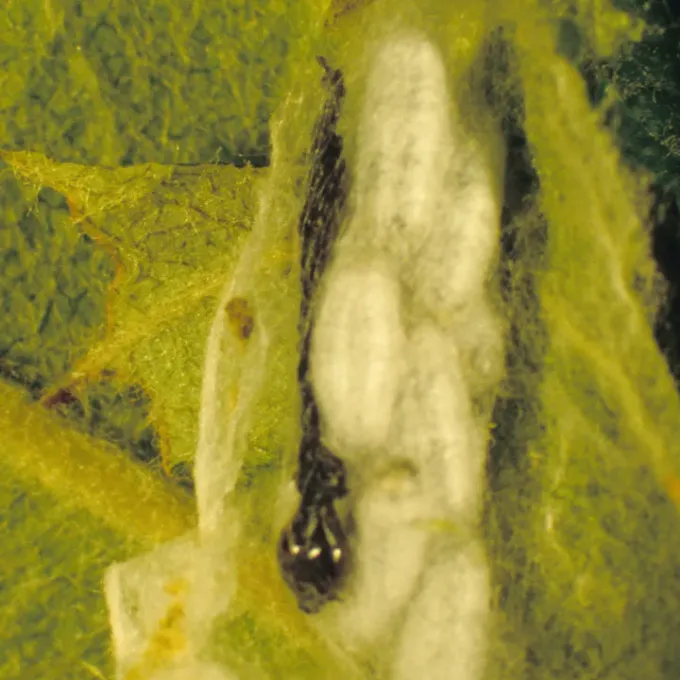
Apanteles carposinae is a tiny parasitoid wasp belonging to the family Braconidae, recognized for its role in natural pest control.
The adult is small with dark coloration and translucent wings, adapted specifically to hunt larvae hidden inside fruits.
Females are equipped with an ovipositor designed to locate and parasitize host larvae effectively within fruit tissue.
The development of the wasp occurs as an endoparasite, meaning the larva grows inside the body of the host pest.
This species is highly specialized, making it a reliable and efficient agent for biological pest management in orchards.
What it damages
It is crucial to clarify that Apanteles carposinae is a beneficial insect and does not cause any damage to plants or crops.
Its primary host is the peach fruit moth (Carposina sasakii), a major pest affecting various fruit species.
The peach fruit moth larvae bore into fruits such as apples, pears, peaches, and plums, significantly reducing market value.
By parasitizing these larvae, Apanteles carposinae acts as a natural guardian, preventing widespread infestation.
Supporting the population of this wasp helps reduce the reliance on synthetic chemical insecticides in commercial fruit production.
When it appears
The lifecycle of the wasp is perfectly synchronized with the emergence and developmental stages of the peach fruit moth.
The first generation of wasps typically emerges in spring, coinciding with the beginning of the pest's activity cycle.
Multiple generations occur throughout the growing season, providing extended protection for ripening fruits.
The wasps remain active as long as host larvae are present and accessible for parasitization within the fruit.
Wintering occurs in the pupal stage, usually within a protective cocoon nestled in soil or sheltered bark crevices.
Signs of infestation
The most visible sign of successful wasp activity is a marked decrease in the number of larvae-infested fruits.
While the wasps themselves are too small to be easily spotted, their impact is evident in the reduction of crop loss.
In research settings, experts confirm their presence by dissecting pest larvae to look for wasp larvae inside.
Another indicator is the presence of empty cocoons near dead or paralyzed host larvae inside the fruit or soil.
A decline in the overall population of the peach fruit moth over consecutive seasons is a strong indicator of successful establishment.
Control measures
Management strategies focus on habitat preservation rather than eradication, as this wasp is a valuable ally.
Avoid broad-spectrum insecticide sprays that can indiscriminately kill these beneficial insects during peak activity.
Implement integrated pest management (IPM) practices to maintain a healthy environment for parasitoid wasps.
- Planting nectar-rich flower strips to provide food for adult wasps.
- Switching to selective biological agents when pest control is necessary.
- Monitoring pest populations to ensure chemical interventions are targeted and minimal.
Sustainable orchard management relies on preserving these natural controllers to ensure long-term productivity and health.
Taxonomy
- Latin name
- Apanteles carposinae
- Order
- Hymenoptera
- Family
- Braconidae
- EPPO code
- APANCS
Discussion
No discussions yet — be the first.