
Apanteles caniae
Apanteles caniae
Description
How to identify
Apanteles caniae is a member of the Braconidae family within the order Hymenoptera. This tiny insect acts as a specialized parasitoid, playing a crucial role in regulating insect populations.
The adult form appears as a small, black wasp with translucent wings. Due to its miniature size—often only a few millimeters in length—detection in the field requires close inspection.
The life cycle encompasses egg, larval, pupal, and adult stages. The larval stage is the most critical for agricultural purposes, as larvae develop inside a host organism.
Distinguishing Apanteles caniae from other Hymenoptera is essential, as many members of the genus are beneficial entomophages that keep herbivorous pest populations in check.
While larvae are parasitic and consume the host's tissue, the adult wasps feed primarily on nectar from flowers, making the presence of flora vital for their survival.
What it damages
It is important to emphasize that Apanteles caniae is frequently identified as a beneficial insect, acting as a natural enemy to various lepidopteran pest larvae.
However, in certain agricultural settings, its presence might disrupt integrated pest management programs if it parasitizes other beneficial insects that are more efficient at control.
The species affects various host larvae found on fruit, vegetable, and field crops, making it a significant biological agent within the local ecosystem.
Direct damage to plant tissues is virtually non-existent, as this species does not consume plant matter; its impact is strictly related to its interaction with host pests.
Potential economic damage is limited to scenarios where it competes with other essential biocontrol agents, requiring professional observation during the growing season.
When it appears
Adult activity typically aligns with the emergence periods of the lepidopteran hosts they parasitize, usually occurring during the height of the growing season.
Peak activity levels correspond with the most vulnerable developmental stages of the pest larvae, ensuring successful survival and reproduction of the next generation.
Multiple generations can occur throughout the season, heavily influenced by regional climatic patterns and the availability of suitable host populations.
Overwintering usually takes place in the pupal stage within silk cocoons found in soil or plant debris, allowing the population to persist through colder periods.
Spring activity correlates with rising temperatures and the onset of plant vegetation, which triggers the emergence of the first seasonal generation of hosts and their parasitoids.
Signs of infestation
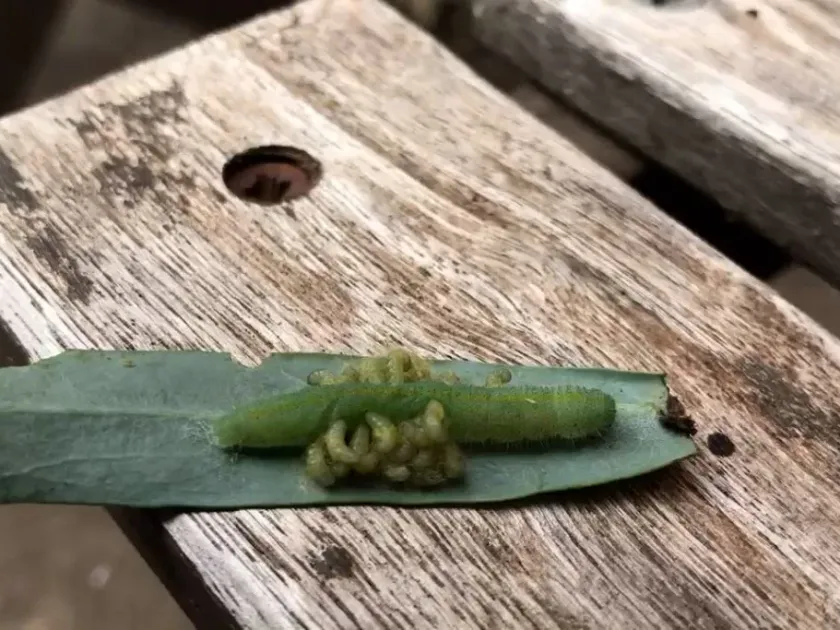
Key signs of Apanteles caniae presence include the observation of small silk cocoons attached either to the carcass of a dead larva or to the surrounding plant foliage.
Host larvae infested by these wasps exhibit decreased feeding behavior, reduced mobility, and a noticeable stagnation in their overall growth patterns.
Close inspection of leaf undersides may reveal empty pupal cases, serving as a reliable indicator that adult wasps have successfully emerged and are active nearby.
A reduction in the number of lepidopteran larvae on treated crops often serves as a primary indicator of successful biocontrol activities performed by this species.
Monitoring efforts usually involve visual assessments of plant samples to estimate the rate of parasitization among target pest populations.
Control measures
Active control of Apanteles caniae is rarely recommended, as it is generally considered a highly valuable natural ally in biological pest management systems.
To preserve these beneficial populations, farmers should avoid the indiscriminate use of broad-spectrum insecticides that could cause significant harm to local entomophages.
Maintaining ecological diversity, such as planting strips of flowering vegetation, supports adult wasps with necessary nectar, encouraging their persistence in the area.
When pest control is required, selecting environmentally friendly and species-specific biological products will help minimize negative impacts on the wasp population.
Integrated plant protection strategies focus on protecting these natural inhabitants to maintain long-term biological balance and sustainable agricultural outcomes.
Taxonomy
- Latin name
- Apanteles caniae
- Order
- Hymenoptera
- Family
- Braconidae
- EPPO code
- APANCI
Discussion
No discussions yet — be the first.