
Apanteles
Apanteles cacoeciae
Description
How to identify
Apanteles cacoeciae is a species of parasitic wasp belonging to the Braconidae family within the Hymenoptera order. These insects are minute, often measuring only a few millimeters in length.
Adult wasps are characterized by their dark bodies and transparent wings with distinct venation. Despite their small size, they are highly efficient predators of specific lepidopteran larvae.
The biology of this wasp is strictly tied to its role as an endoparasitoid. Females are equipped with specialized ovipositors used to deposit eggs into the body of a host larva.
Upon hatching, the larvae feed on the host's internal tissues. This feeding behavior is fatal to the host but provides essential nutrients for the development of the wasp.
The life cycle involves four distinct stages: egg, larva, pupa, and adult. The synchronization with the host's lifecycle is a critical aspect of their survival strategy.
What it damages
Apanteles does not cause direct damage to plants; instead, it acts as a natural control agent. It targets leafroller larvae, which are significant pests in agricultural settings.
The crops most affected by leafrollers include apples, pears, and stone fruits. These pests damage buds, leaves, and fruits, leading to decreased yields and tree vigor.
By parasitizing these larvae, Apanteles effectively lowers the pest population in an orchard without the need for human intervention or chemical spraying.
However, the loss of these wasps due to excessive pesticide use often leads to rapid resurgence of leafroller populations, confirming the wasp's value as a beneficial insect.
Farmers who manage to preserve Apanteles populations often see improved orchard health and a reduced need for broad-spectrum insecticide applications.
When it appears
The activity of Apanteles begins in early spring, coinciding with the emergence of the first generation of leafroller larvae after winter hibernation.
Throughout the growing season, multiple generations of the wasp can occur. Each generation is timed to overlap with the presence of host larvae available for parasitization.
Adult activity peaks during warm and sunny conditions, which are ideal for the wasp to actively search for hosts within the dense foliage of fruit trees.
As autumn approaches, the development slows down, and the wasps enter a diapause phase to survive the winter. They typically overwinter in cocoons located in sheltered bark cracks.
Temperature and humidity play major roles in the success rate of each generation, influencing the overall population density of the wasp throughout the year.
Signs of infestation
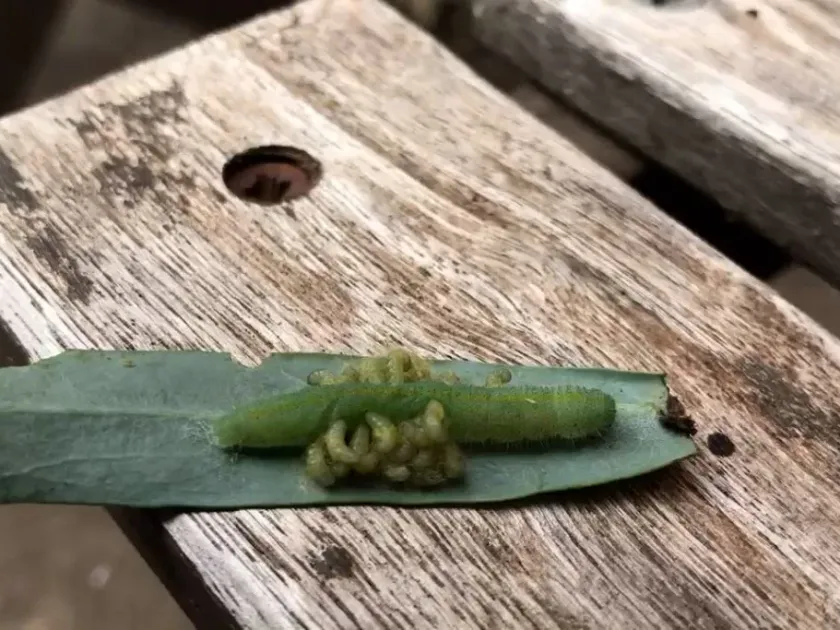
The most visible sign of Apanteles activity is the discovery of dead or lethargic leafroller larvae covered in small, white or yellowish silken cocoons.
These clusters of cocoons indicate that the wasp larvae have completed their development inside the host and have emerged to pupate externally.
The host larva itself usually stops feeding, becomes immobilized, and eventually dies as a direct result of the parasitic infestation by the wasp larvae.
Seeing these cocoons on the leaves or branches is a clear indicator of successful biological control occurring naturally within your orchard environment.
Absence of these signs in high-infestation areas suggests a lack of natural biological control, indicating a need for more selective pest management strategies.
Control measures
To support Apanteles populations, growers should prioritize integrated pest management (IPM) strategies that minimize the use of broad-spectrum pesticides.
Selecting bio-rational insecticides that are toxic to leafrollers but harmless to beneficial parasitoids is the most effective approach for sustaining their population.
Providing nectar sources by planting cover crops or wildflower strips around the orchard edges gives adult wasps the necessary fuel for energy and egg production.
Orchard sanitation practices should be handled with care to avoid destroying overwintering sites, such as debris or bark crevices where cocoons may reside.
By balancing chemical control with the encouragement of natural parasitoids, farmers can ensure a healthier ecosystem and a more sustainable production of fruit crops.
Taxonomy
- Latin name
- Apanteles cacoeciae
- Order
- Hymenoptera
- Family
- Braconidae
- EPPO code
- APANCA
Discussion
No discussions yet — be the first.