
Apanteles cacao
Apanteles cacao
Description
How to identify
Apanteles cacao belongs to the order Hymenoptera and the family Braconidae. It is a tiny insect that acts as a specialized parasitoid rather than a plant pest.
Adults are small wasps, typically dark in color, featuring the thin antennae and specific wing venation patterns characteristic of the genus.
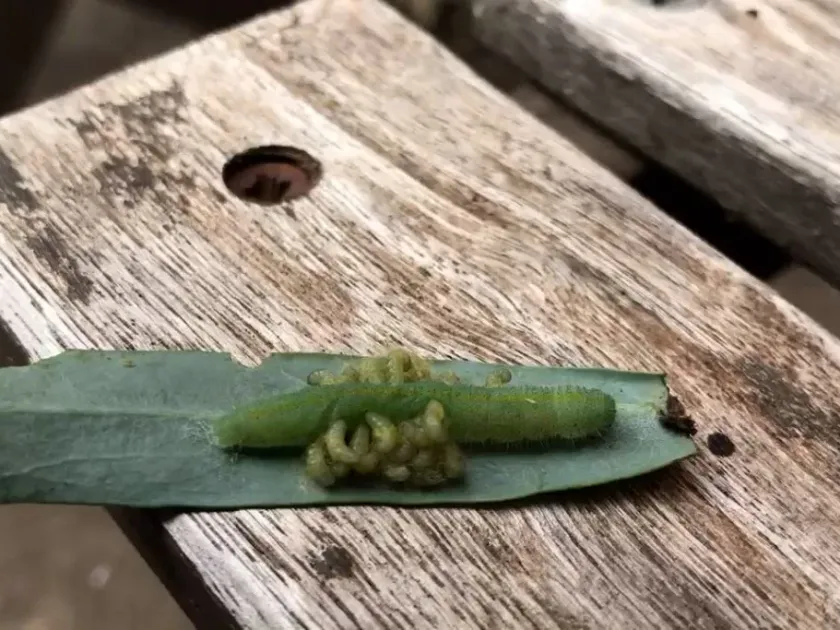
The larval stage occurs entirely within the host's body, making it difficult to detect without dissecting the host caterpillar.
Pupae are usually formed as small, white or cream-colored cocoons, often attached to the remains of the host or nearby leaf surfaces.
This species has evolved to identify and parasitize specific Lepidoptera larvae in tropical environments, serving as a critical component of the local entomofauna.
What it damages
Strictly speaking, Apanteles cacao is not a phytophagous pest; it does not consume cacao plant tissues directly. Its economic impact is positive, as it regulates the populations of damaging insects on cacao plantations.
The species is primarily found in cacao (Theobroma cacao) ecosystems, where it parasitizes caterpillars of various leaf-rollers and loopers.
By acting as a parasitoid, it limits the number of larvae that would otherwise feed on the leaves, buds, and pods of the cacao tree.
Despite its beneficial role, its presence can be threatened by the excessive use of broad-spectrum insecticides, which destabilizes the ecological balance.
Therefore, the object should be viewed as a natural biological control agent rather than a pest, contributing to the health of the plantation.
When it appears
The activity of Apanteles cacao is closely tied to the lifecycle of its host caterpillars. In tropical regions, this occurs nearly year-round.
Population peaks of adults coincide with periods of high humidity and stable temperatures that favor the reproduction of the host larvae.
At the beginning of the rainy season, when cacao foliage experiences vigorous growth, the Apanteles population grows in tandem with the pest density.
During drier spells, the insect persists in the pupal stage, protected by plant debris or the host's remains.
The optimal temperature for development is approximately 25-28 degrees Celsius, matching the typical microclimate of a cacao grove.
Signs of infestation
The primary sign of its presence is the discovery of caterpillars with white cocoons attached to their cuticle while they are still in the canopy.
Host larvae become sluggish, cease feeding, and eventually die, which effectively halts any further foliage damage.
Close observation reveals small emergence holes on the bodies of dead caterpillars, indicating where the larvae exited to pupate.
A high number of "mummified" or parasitized caterpillars in the tree crown is a reliable indicator of effective biological control.
A noticeable decrease in leaf damage following the appearance of these parasitoids suggests a successful natural suppression of pest populations.
Control measures
Because Apanteles cacao is a beneficial parasitoid, specific control measures against it are unnecessary; instead, agronomic practices should focus on its conservation.
The most important conservation method is to limit the use of highly toxic contact insecticides that indiscriminately kill beneficial insects.
Integrated Pest Management (IPM) strategies are recommended, prioritizing selective bio-insecticides that target specific pests without harming the parasitoid.
Maintaining non-crop vegetation around plantations is vital to provide refugia and alternative hosts, ensuring the long-term survival of the parasitoid population.
- Avoid preventative chemical sprayings.
- Utilize selective biological agents.
- Monitor the population of natural enemies.
- Maintain high levels of ecological biodiversity.
Taxonomy
- Latin name
- Apanteles cacao
- Order
- Hymenoptera
- Family
- Braconidae
- EPPO code
- APANCC
Discussion
No discussions yet — be the first.