
Apanteles
Apanteles breviventris
Description
How to identify
Apanteles (Apanteles breviventris) is a genus of wasps within the order Hymenoptera, belonging to the family Braconidae.
These are small, slender insects, typically black or dark brown, often observed searching for hosts in various agricultural fields.
The life cycle of these wasps is strictly parasitic, meaning they depend on host insects to complete their development.
While often grouped with insects in agricultural contexts, they are classified as beneficial entomophages rather than crop pests.
Identifying specific species within the Apanteles genus is complex and often requires detailed taxonomic examination.
What it damages
Apanteles wasps do not feed on plants and are not considered pests; they do not damage crops or consume foliage.
Instead, they act as natural predators of various lepidopteran larvae, effectively reducing pest pressure in the field.
The presence of these wasps is highly desirable for farmers as they provide free biological control of potential crop destroyers.
Potential harm is only indirect, occurring when broad-spectrum pesticide use inadvertently eliminates these natural allies.
Integrated Pest Management (IPM) strategies emphasize the preservation of these wasps to maintain a natural ecological balance.
When it appears
Adult activity of the wasp begins in the spring, driven by increasing temperatures and daylight hours.
Several generations typically occur throughout the growing season, aligning with the life cycles of their caterpillar hosts.
They overwinter as larvae inside small cocoons sheltered within plant debris or protected soil layers.
Activity levels are highest during mid-summer, providing natural suppression of caterpillar populations during critical crop growth stages.
Environmental conditions, particularly humidity and temperature, significantly influence the emergence and success rates of each generation.
Signs of infestation
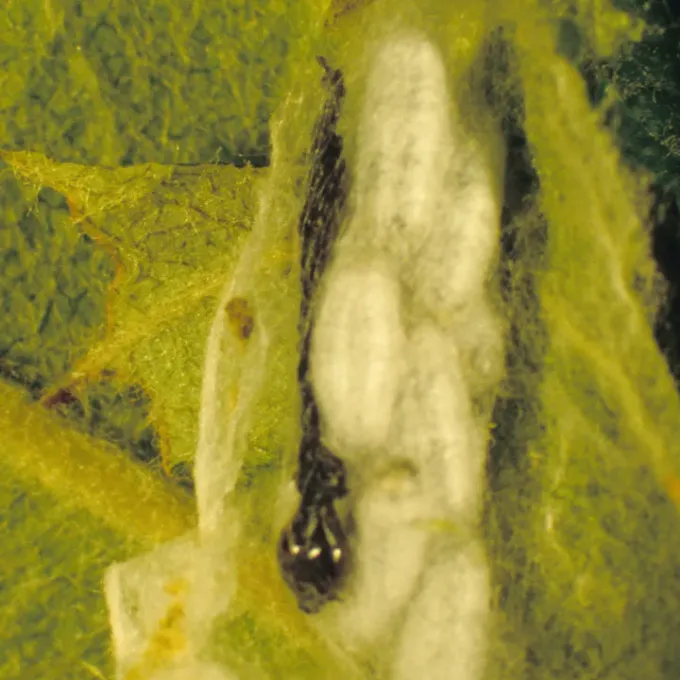
The most visible indicator of Apanteles activity is the presence of clusters of small, white or yellowish silk cocoons near or on paralyzed caterpillars.
There are no leaf-feeding symptoms or crop damage associated with this insect, as it does not target plants.
The observation of mummy-like host remnants is a primary sign of successful parasitism in the field.
Small exit holes found on cocoons indicate that the adult wasps have emerged successfully to continue their life cycle.
Field scouting for these mummies helps agronomists estimate the effectiveness of natural biological control in specific plots.
Control measures
Control measures for Apanteles focus entirely on conservation and habitat enhancement rather than eradication.
Avoid the use of non-selective insecticides that can be lethal to beneficial parasitoids alongside the target pests.
Implementing IPM encourages the use of selective biorational pesticides to protect the existing population of natural enemies.
Providing flowering borders or cover crops serves as a source of nectar, which is essential for the survival of adult wasps.
- Reduction of chemical pesticide applications.
- Retention of hedgerows and non-crop vegetation.
- Strategic timing of field maintenance to protect pupal stages.
Taxonomy
- Latin name
- Apanteles breviventris
- Order
- Hymenoptera
- Family
- Braconidae
- EPPO code
- APANBV
Discussion
No discussions yet — be the first.