
Apanteles
Apanteles brachymeria
Description
How to identify
Apanteles is a genus of small, non-stinging wasps belonging to the family Braconidae, known for their critical role as parasitoids in nature.
These wasps are typically very small, ranging from 3 to 5 mm in length, and are usually characterized by their dark or black coloration.
They are endoparasitoids, meaning the larvae develop inside the bodies of their hosts, primarily larvae of lepidopteran species (butterflies and moths).
The female wasp uses a slender ovipositor to inject her eggs into the body of the host caterpillar, effectively ensuring the survival of her offspring.
Due to their highly specialized life cycles, they act as natural controllers that maintain the balance of insect populations in various habitats.
What it damages
Apanteles wasps are not considered plant pests; rather, they are highly beneficial allies in agricultural and horticultural ecosystems.
They target and successfully parasitize many destructive caterpillar species that feed on crops like brassicas, tomatoes, and various fruit trees.
By consuming the internal tissues of the pest larvae, the Apanteles larvae stop the caterpillars from feeding, thereby reducing damage to the host plant.
Their presence is a form of natural biological pest control, which decreases the total volume of foliage and crop loss caused by leaf-eating insects.
Farmers who observe these wasps in their fields should consider them as an asset rather than an enemy to be eradicated.
When it appears
The seasonal occurrence of Apanteles is tightly linked to the life cycle of the lepidopteran hosts they parasitize throughout the year.
Adult wasps typically emerge in the spring, coinciding with the first appearance of active caterpillar generations in the fields.
Multiple generations can occur throughout the growing season, allowing the wasp population to respond to various outbreaks of host caterpillars.
Overwintering usually occurs as a larva or pupa protected within small silk cocoons, often attached to the remains of the host or nearby plants.
The timing of their activity is crucial, as early-season establishment of these wasps can prevent severe mid-season pest infestations.
Signs of infestation
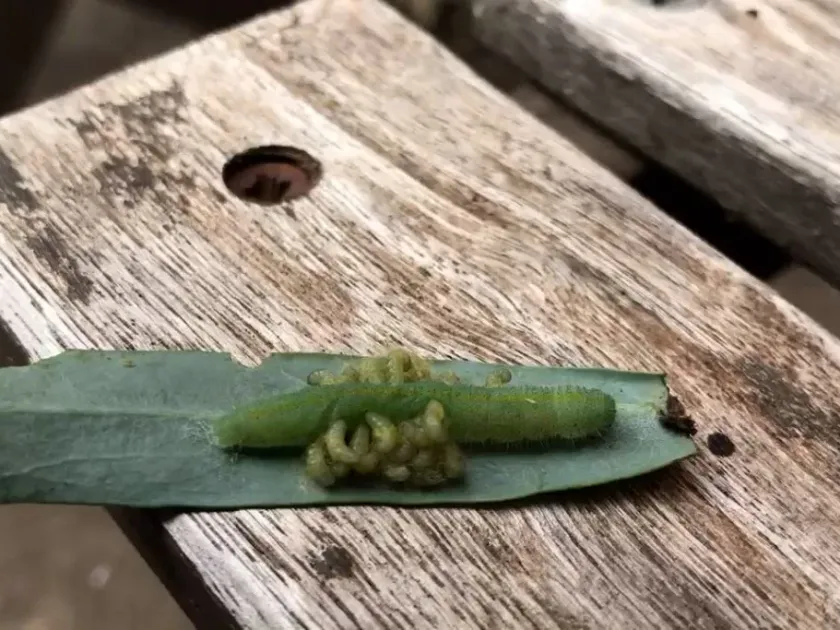
The most distinctive sign of Apanteles activity is the presence of clusters of small, white or yellow silk cocoons attached to caterpillars.
The host caterpillar often becomes lethargic, ceases feeding, and may appear shrunken or discolored as the larvae complete their development inside.
Once the parasitoid larvae emerge to pupate, the host caterpillar is usually killed or rendered unable to cause further crop damage.
Visual confirmation of these silk clusters on leaves or stems is a clear indicator that a biological suppression event is occurring.
Gardeners and growers should look for these white cotton-like clusters as a signal that the natural control of pests is currently working.
Control measures
To maximize the benefits of Apanteles, the primary goal for the grower is to conserve their populations by reducing harmful human interference.
The avoidance of broad-spectrum synthetic insecticides is the most effective way to ensure the survival and success of these parasitoids.
Implementing Integrated Pest Management (IPM) strategies allows for the targeted control of pests without eliminating the beneficial wasp population.
Providing nectar-rich flower strips near crop fields can support adult wasps, as they require carbohydrates for energy and longevity.
- Minimize the use of pyrethroid or neonicotinoid pesticides.
- Use selective biological pesticides when treatment is absolutely necessary.
- Maintain hedgerows or uncultivated areas to provide overwintering sites.
- Monitor for parasitoid presence before deciding on pest intervention.
Taxonomy
- Latin name
- Apanteles brachymeria
- Order
- Hymenoptera
- Family
- Braconidae
- EPPO code
- APANBM
Discussion
No discussions yet — be the first.