
Apanteles
Apanteles balteatae
Description
How to identify
Apanteles is a large genus of parasitoid wasps belonging to the family Braconidae. These insects are typically small, usually ranging from a few millimeters in length, and are often black or dark brown in color.
Adult wasps possess well-developed wings which enable them to search for suitable hosts efficiently across agricultural landscapes.
Positive identification at the species level usually requires specialized microscopic analysis of wing venation and body structure by an entomologist.
The larvae are internal parasites that develop within the bodies of Lepidoptera caterpillars. They are specially adapted to consume their host from the inside without immediately killing it.
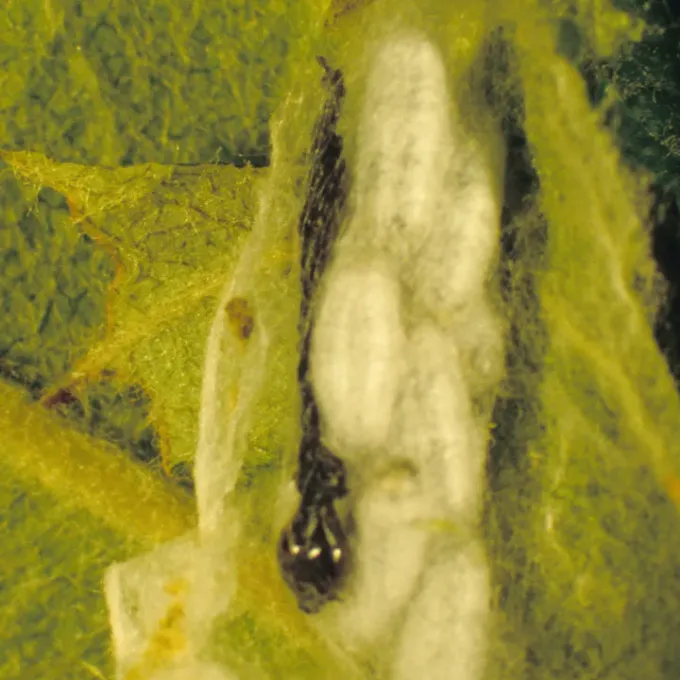
The most visible stage of their life cycle in the field is the formation of silk cocoons, which are often grouped together in masses on or near the remains of the host caterpillar.
What it damages
It is critical to note that Apanteles is not a plant pest; rather, it is a highly beneficial parasitoid that provides essential biological control against agricultural pests.
These wasps target a wide range of harmful caterpillars, including armyworms, cutworms, and various leaf-feeding moth larvae that damage crops.
By parasitizing large numbers of larvae, Apanteles significantly reduces pest population density, protecting crops like vegetables, grains, and legumes.
Their economic value is immense, as they provide a natural suppression of pest outbreaks, often reducing the need for chemical intervention.
Indiscriminate use of broad-spectrum pesticides often leads to the destruction of these beneficial wasps, resulting in secondary pest outbreaks that are harder to manage.
When it appears
The seasonal activity of Apanteles typically begins in the spring, synchronized with the emergence of host caterpillar generations in the field.
Multiple generations can occur throughout the growing season, with the development cycle closely linked to the availability of host larvae.
Peak activity is observed during the periods when host caterpillars are in their early larval stages, as these are the most suitable for parasitization.
Towards late summer and autumn, the population of these parasitoids often reaches a high level, effectively limiting pest numbers before the winter dormancy.
They typically overwinter as pupae within their cocoons, hidden in leaf litter, soil crevices, or protected areas within the field environment.
Signs of infestation
The primary sign of Apanteles presence is the discovery of cocoons or the exit holes of larvae on the body of a host caterpillar.
Parasitized caterpillars often become lethargic, stop feeding, and ultimately die as the wasp larvae emerge to pupate outside the host body.
Clusters of small, white or yellowish silken cocoons found on leaves or near host remains indicate that the pest population has been successfully attacked.
Observing a reduction in leaf damage in areas where these cocoons are present is a strong indicator of successful biological control in action.
Field scouts should be trained to recognize these signs as part of an integrated pest management program to avoid unnecessary chemical applications.
Control measures
As Apanteles is a beneficial insect, management strategies should focus on conservation and enhancement rather than control of the insect itself.
Farmers should minimize the use of broad-spectrum insecticides, particularly during times of peak wasp activity, to ensure their survival.
Planting nectar-rich flower strips around crop fields provides essential nutrition for adult wasps, which significantly increases their longevity and reproductive capacity.
Maintaining field margins and reducing tillage can help preserve overwintering sites, ensuring a stable population of the parasitoid from one season to the next.
- Use selective pesticides that are less harmful to beneficial parasitoids.
- Establish floral strips to provide food sources for adult wasps.
- Incorporate biological monitoring into your standard field scouting procedures.
Taxonomy
- Latin name
- Apanteles balteatae
- Order
- Hymenoptera
- Family
- Braconidae
- EPPO code
- APANBA
Discussion
No discussions yet — be the first.