
Apanteles
Apanteles albipennis
Description
How to identify
Apanteles albipennis belongs to the order Hymenoptera and the Braconidae family. It is widely recognized as a beneficial entomophagous insect rather than a crop pest, playing a crucial role in natural pest suppression.
The adult form is a tiny parasitic wasp with a body length typically ranging between 3 to 4 millimeters. Its appearance is generally dark, making it difficult to spot in dense foliage or complex field environments.
The most distinctive feature is its long antennae, which females use to detect chemical signals from their hosts. They possess transparent wings with a subtle dark tint characteristic of many braconid species.
The larval stage is entirely internal, developing within the host organism. This hidden lifestyle protects the larvae from external threats until they are ready to pupate.
These wasps are highly mobile and efficient at searching for hosts across large agricultural areas, making them invaluable assets in integrated pest management strategies.
What it damages
Apanteles albipennis does not damage crops; instead, it provides essential ecosystem services by parasitizing the caterpillars of harmful moths and butterflies.
Its primary hosts are cutworms and armyworms, which are known to cause severe damage to vegetables, grains, and various technical crops.
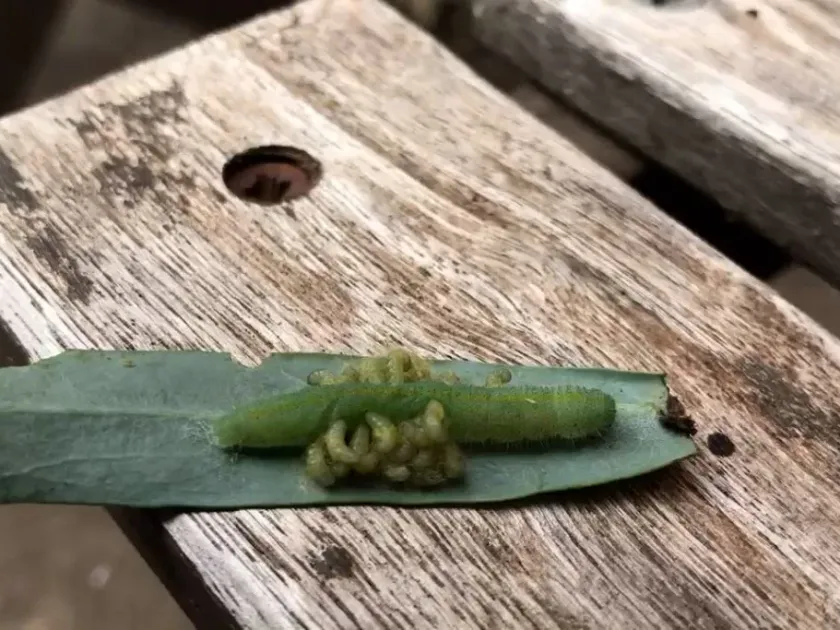
By laying eggs directly into the caterpillar host, the wasp larvae consume the internal tissues, ultimately causing the host's death before it can reach the adult stage.
Infected caterpillars stop feeding almost immediately, which provides immediate protection for the crops even before the parasitic wasp's lifecycle is complete.
Encouraging these natural enemies reduces reliance on synthetic insecticides, leading to more sustainable and cost-effective agricultural production.
When it appears
The active season for these wasps begins in early spring as temperatures rise, allowing adults to emerge from their overwintering sites.
Population density typically peaks during the summer months, aligning with the highest development cycles of many leaf-eating lepidopteran pests.
Multiple generations can occur within a single growing season, ensuring persistent control of pest populations across the duration of the crop's development.
As temperatures drop in autumn, the wasps enter a dormant stage, usually overwintering as cocoons within crop residues or organic matter in the soil.
The developmental speed of each generation is highly dependent on ambient environmental factors, particularly temperature fluctuations and air humidity levels.
Signs of infestation
The presence of Apanteles in an area can be determined by observing changes in the pest population rather than looking for damage to the plants.
A key indicator is the observation of sluggish or moribund caterpillars that have ceased their feeding activities and exhibit reduced mobility.
Often, clusters of small white or yellow silk cocoons can be found attached to the remains of dead caterpillars, indicating successful parasitism.
A noticeable decline in pest damage over a field despite the presence of pests is a strong signal that natural biocontrol agents are at work.
The emergence of these cocoons is the most reliable visual evidence that the wasp population is actively suppressing the local pest density.
Control measures
As a beneficial species, the strategy for Apanteles is conservation, not eradication. Agronomists should focus on enhancing their habitat and survival rate.
- Restrict the use of broad-spectrum insecticides during the wasps' peak activity periods to prevent collateral damage.
- Plant floral margins or strips around fields to provide nectar sources for adult wasps.
- Leave crop residues undisturbed in certain areas to facilitate the overwintering of pupae.
- Adopt selective pest management techniques that target specific pests while sparing beneficial insects.
- Implement integrated pest management (IPM) practices to maintain a balanced agroecosystem.
Taxonomy
- Latin name
- Apanteles albipennis
- Order
- Hymenoptera
- Family
- Braconidae
- EPPO code
- APANAL
Discussion
No discussions yet — be the first.