
Apanteles
Apanteles adoxophyesi
Description
How to identify
Apanteles adoxophyesi is a micro-hymenopteran insect belonging to the Braconidae family, widely recognized for its role as a larval parasitoid.
The adult wasp is typically very small, measuring 2-3 mm, with a dark body and transparent wings, making it difficult to spot with the naked eye.
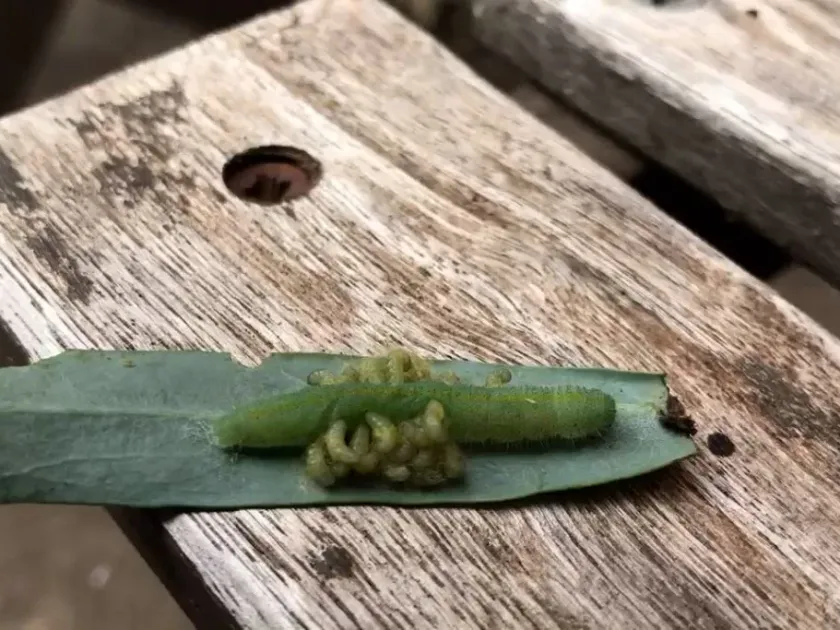
Identification is primarily based on the presence of its silken cocoons, which are often found attached to the remains of leafroller larvae.
As an endoparasitoid, the larva completes its development inside the host, feeding on its tissues until it emerges to pupate.
Although it belongs to a group of stinging wasps, it is completely harmless to humans and agricultural crops, acting exclusively against specific insect hosts.
What it damages
Apanteles adoxophyesi does not cause damage to plants; it is a beneficial natural enemy of several lepidopteran species.
Its primary host is the summer fruit tortrix moth (Adoxophyes orana), which is a known pest in orchards, including apples and pears.
By parasitizing these larvae, the wasp effectively prevents the host from causing further damage to foliage and developing fruit.
Mistaking this beneficial wasp for a pest can lead to unnecessary and harmful pesticide applications that disrupt the ecological balance of the orchard.
The presence of this insect is a sign of a healthy, functioning ecosystem where biological control mechanisms are actively reducing pest populations.
When it appears
The activity of adult Apanteles is closely linked to the lifecycle of its host, typically peaking during the spring and early summer months.
The wasp can produce multiple generations per season, depending on the climatic conditions and the availability of hosts in the environment.
Overwintering occurs as larvae inside the host or within the protective silk cocoons located in sheltered parts of the tree bark.
Mass emergence of adults often coincides with the peak infestation periods of leafroller moths, providing an immediate biological check.
Developmental rates are temperature-dependent, meaning warmer springs often lead to earlier and more rapid population increases of the parasitoid.
Signs of infestation
The most visible sign of Apanteles activity is the cluster of white or pale-yellow cocoons found near a dead or dying leafroller larva.
These cocoons are often hidden inside the rolled leaves created by the host, requiring close inspection of the canopy.
A reduction in the feeding activity of host larvae is a clear indicator that the parasitoids are successfully suppressing the pest population.
In the late stages of the parasitoid cycle, the host larva becomes sluggish and stops feeding entirely before eventually perishing.
Empty cocoon husks remaining on branches after the adult wasps have emerged indicate that the current generation has successfully completed its development.
Control measures
No control measures are needed for Apanteles adoxophyesi, as it is a beneficial organism that supports agricultural sustainability.
The best practice for managing orchards with this species is to avoid broad-spectrum insecticides that would kill the parasitoid along with the pests.
Integrating biological control involves using soft, selective pesticides that target only the specific pest species without harming natural enemies.
Providing flower strips and nectar sources in the vicinity helps sustain adult wasp populations throughout the season.
- Avoid non-selective insecticide spraying.
- Promote biodiversity around the orchard.
- Use integrated pest management strategies.
Taxonomy
- Latin name
- Apanteles adoxophyesi
- Order
- Hymenoptera
- Family
- Braconidae
- EPPO code
- APANAD
Discussion
No discussions yet — be the first.