
Apanteles
Apanteles
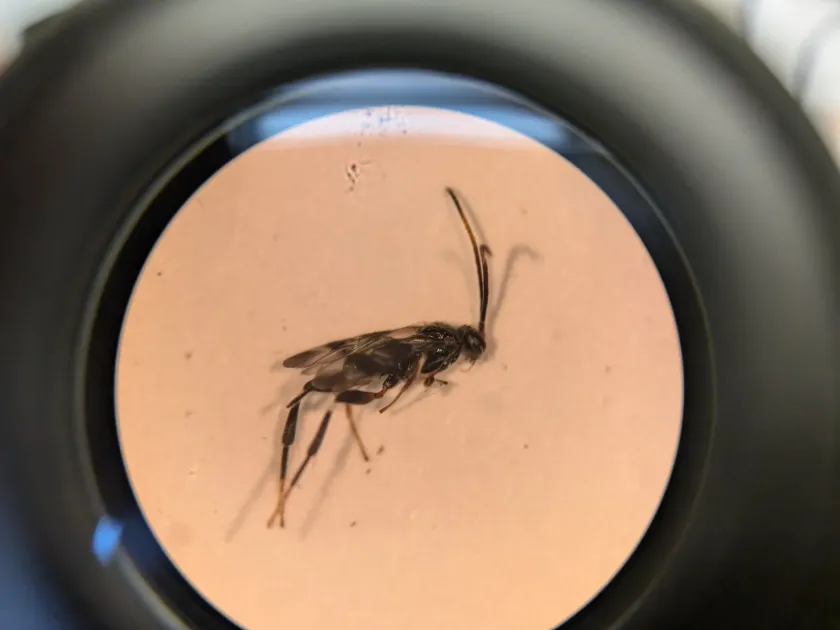
Description
How to identify
Apanteles is a genus of wasps within the family Braconidae (Order Hymenoptera). These insects are not pests but rather highly effective beneficial parasitoids.
The adults are small, slender wasps, typically measuring 2–5 mm in length. They are usually black or dark brown and have characteristic venation in their wings.
The larvae are endoparasitoids. They hatch inside the body of a host larva, usually a caterpillar, and feed on its internal tissues without immediately killing it.
The life cycle involves complete metamorphosis. Once the larvae finish developing, they emerge from the host and spin individual silken cocoons.
These cocoons are often visible as white or yellowish clusters on the skin of the dying caterpillar or on nearby plant leaves.
What it damages
Apanteles does not cause any damage to agricultural crops. In fact, it provides a valuable ecosystem service by suppressing populations of harmful caterpillars.
They target a wide variety of lepidopteran pests, including major agricultural threats like cabbage white butterflies and various species of armyworms.
By parasitizing host larvae, these wasps prevent them from reaching maturity and causing extensive damage to leaves, stems, or fruits of the host plants.
The reduction of pest populations through natural biological control agents like Apanteles leads to higher crop yields and lower chemical dependency.
The destruction of natural parasitoid populations via the overuse of broad-spectrum pesticides often leads to a resurgence of pest outbreaks in the field.
Control measures
Effective management strategies for Apanteles focus on conservation biological control to maintain and boost their population levels in the agroecosystem.
Farmers should minimize the use of harmful pesticides, especially when adult wasps are active, and opt for IPM-compatible crop protection methods.
Planting flowering strips or hedgerows that provide nectar sources is essential to ensure the longevity and fecundity of the adult wasp populations.
Preserving natural habitats surrounding fields provides overwintering sites for the wasps, ensuring a stable population for the next growing season.
Integrating these beneficial wasps into farming practices is a cornerstone of sustainable agriculture and long-term pest prevention strategies.
Taxonomy
- Latin name
- Apanteles
- Order
- Hymenoptera
- Family
- Braconidae
- EPPO code
- APANSP
Discussion
No discussions yet — be the first.