
Yellowish apple weevil
Anthonomus testaceosquamosus
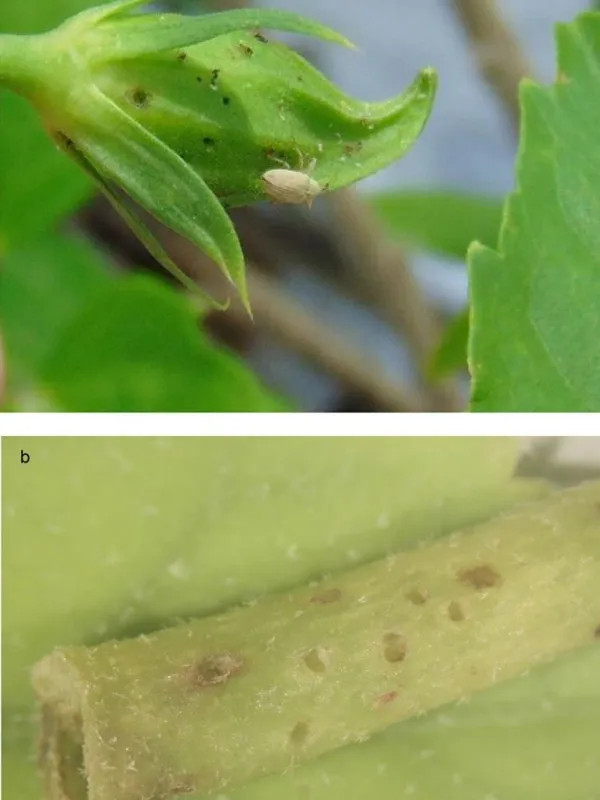
Description
How to identify
The yellowish apple weevil (Anthonomus testaceosquamosus) is a beetle species belonging to the Curculionidae family within the Coleoptera order.
The adult insect measures approximately 3 to 4 millimeters in length, characterized by its yellowish scales that provide excellent camouflage against tree bark.
Like other members of the Anthonomus genus, it possesses a prominent snout (rostrum) used for piercing plant tissues.
The larvae are small, legless grubs with a light-colored body and a distinct brown head, which develop sequestered within the host plant buds.
The species undergoes complete metamorphosis, including egg, larval, pupal, and adult stages, which is essential for its survival in orchard environments.
What it damages
The primary hosts for this pest are apple trees, where it targets the reproductive parts of the plant during the early stages of the growing season.
Adult weevils feed on expanding buds, often destroying the central parts of the bud and preventing the development of blossoms and foliage.
This feeding activity causes significant economic losses, as the destruction of flower buds directly translates to a reduction in fruit yield.
In addition to yield loss, severe infestations can stunt the growth of young trees and weaken established specimens, making them susceptible to stress.
The pest poses a particular threat in regions with favorable climate conditions where synchronization between bud development and weevil emergence is high.
When it appears
Adult weevils overwinter in protected microhabitats such as bark crevices, leaf litter, or the upper layer of soil around the tree trunk.
Activity resumes in early spring when air temperatures reach approximately 6°C to 8°C, marking the emergence of overwintered adults.
The most critical period for infestation is the "green tip" stage of apple development, when the buds start to swell and become attractive to the weevils.
Mating and egg-laying occur shortly after emergence, with females depositing eggs into the developing buds to ensure the offspring have immediate food access.
The new generation of adults typically appears in late spring or early summer, then enters a period of reduced activity before overwintering.
Signs of infestation
A telltale sign of infestation is the presence of small puncture holes in the buds, which are entry points for the feeding adults.
Infested buds often exhibit "weeping," where sap leaks from the feeding sites, leaving visible droplets on the branches.
As the season progresses, damaged buds turn brown and dry up without opening, creating a sparse appearance in the tree canopy.
Scouting during the morning hours using the beat-and-catch method (shaking branches over a sheet) can reveal the presence of adult beetles.
Reduced blossom density and poor leaf development on specific branches are clear indicators that the trees have been affected by this weevil.
Control measures
Integrated pest management strategies are crucial, focusing on both cultural and chemical control to minimize the population of the weevil.
Removing loose bark from tree trunks and clearing fallen leaves helps eliminate overwintering sites, significantly reducing spring emergence.
Chemical applications should be timed carefully, targeting the adult weevils before they have the opportunity to lay eggs in the buds.
Mechanical barriers, such as sticky bands around trunks, can help prevent weevils from ascending the tree to reach the buds.
- Good orchard hygiene including pruning and debris removal.
- Tilling soil under the canopy to disrupt overwintering insects.
- Targeted insecticide applications during the bud-swell phase.
- Use of pheromone monitoring traps to track population density.
- Promotion of natural predators such as predatory mites and birds.
Taxonomy
- Latin name
- Anthonomus testaceosquamosus
- Order
- Coleoptera (beetles)
- Family
- Curculionidae
- EPPO code
- ANTHTE
Discussion
No discussions yet — be the first.