
Apple blossom weevil
Anthonomus pedicularius
Description
How to identify
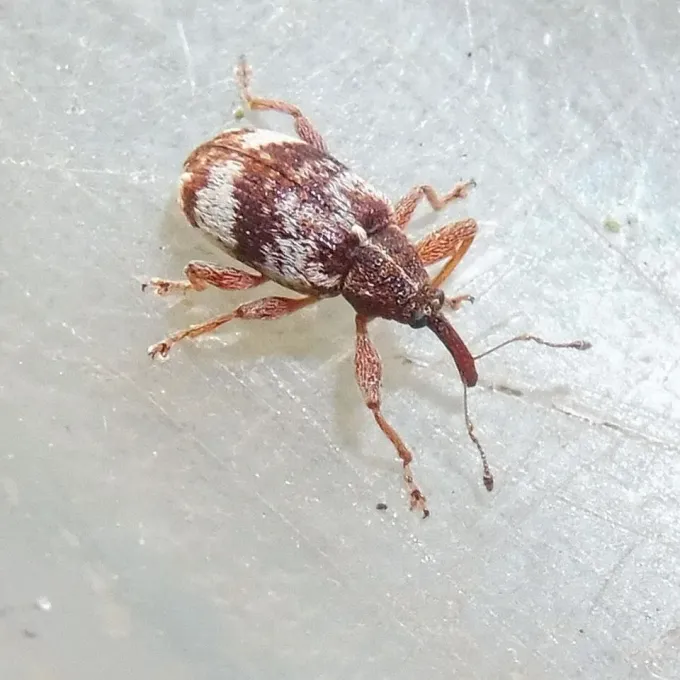
The apple blossom weevil (Anthonomus pedicularius) belongs to the order Coleoptera and the Curculionidae family. This small beetle is 3–4 mm long and features a characteristic elongated snout, which allows it to bore into plant tissues.
The coloration of the beetle ranges from brown to dark brown, with the body covered in fine light-colored hairs. A key identification mark is a light diagonal stripe on the elytra, which helps distinguish it from other weevil species.
Adult beetles are capable of active flight during warm weather, which facilitates the rapid infestation of new garden areas. They overwinter in sheltered locations, such as under tree bark, in cracks, within leaf litter, or in the topsoil layer.
The beetles emerge in early spring when air temperatures reach +6 to +10 degrees Celsius, moving actively into the tree canopy. At this stage, the population is highly vulnerable to protective treatments.
The life cycle includes a complete metamorphosis: egg, larva, pupa, and adult. The entire life of this pest is closely linked to the phenological development phases of fruit trees, making it extremely dangerous for the upcoming harvest.
What it damages
The primary hosts for feeding and reproduction are pome fruit trees, especially apples and, occasionally, pears. The pest prefers early-flowering varieties, as its development cycle must align with the bud formation period.
During years of high infestation, the insect can cause significant damage, affecting up to 80–90% of flower buds. This leads to direct loss of fruit set and a catastrophic reduction in orchard yield.
Upon hatching inside the bud, larvae feed on internal parts, including stamens, pistils, and the receptacle. As a result, the flower stops developing and dies without ever opening.
Damaged buds often dry out and remain hanging on branches as «brown caps.» This not only reduces production volumes but also weakens the tree, disrupting its normal physiological functions.
Beyond direct damage to fruit, the weevil facilitates the spread of fungal infections, as the puncture sites and larval entry points become entry gates for various pathogenic microorganisms.
Signs of infestation
The first visual sign of the pest's presence is the appearance of cloudy sap droplets on swelling buds, often called «weeping buds.» This occurs because adult beetles puncture the buds to feed on internal tissues.
During the budding phase, damage to the center of the inflorescence becomes evident. If an unopened bud is peeled back, a white, legless larva with a brown head or a pupa can be found inside.
Massive dropping or drying of unopened buds, which turn brown, indicates the peak of pest activity. These «caps» are often tightly glued together by the larva's excrement.
When inspecting trees in the early morning, one may observe the beetles themselves. When disturbed, they often freeze and fall to the ground to mimic death—a defensive behavior that complicates visual population monitoring.
An indirect sign of high population density is a significant decrease in the percentage of fruit set following the flowering period, which cannot be attributed to adverse weather conditions alone.
Control measures
Effective management requires a comprehensive approach, combining agrotechnical and chemical methods. Monitoring population levels using sticky traps or bands applied to the tree trunks is essential.
In smaller orchards, early morning shaking of the branches over a cloth is a practical method, as the beetles are sluggish at low temperatures. Collected pests must be promptly destroyed.
Chemical control using insecticides must be performed strictly before the flowering begins, specifically during the «green tip» or «bud burst» phase. At this time, beetles are actively colonizing the buds but have not yet laid eggs.
The use of systemic and contact-stomach insecticides registered for fruit trees is recommended. It is vital to rotate active ingredients to prevent the development of pesticide resistance.
Autumn cleanup of fallen leaves, cultivation of soil in the tree canopy area, and cleaning tree trunks of loose, dead bark effectively eliminate overwintering sites and reduce the pest population for the next season.
Taxonomy
- Latin name
- Anthonomus pedicularius
- Order
- Coleoptera (beetles)
- Family
- Curculionidae
- EPPO code
- ANTHPE
Discussion
No discussions yet — be the first.