
Strawberry bud weevil
Anthonomus musculus
Description
How to identify
The strawberry bud weevil (Anthonomus musculus) is a small beetle belonging to the Curculionidae family. Adult specimens typically measure 2–3 mm in length, feature a dark brown color, and possess a long, characteristic snout used for feeding and egg-laying.
The body is covered in fine, light-colored hairs, giving the insect a grayish appearance that helps it blend into the soil and foliage. Because they are shy and tend to drop to the ground when disturbed, they are often difficult to spot during routine inspections.
These pests overwinter in the soil under plant debris, leaf litter, or clods of earth. As soon as temperatures reach 10–12°C in the spring, the adults emerge from hibernation and begin their active feeding phase on young plant tissues.
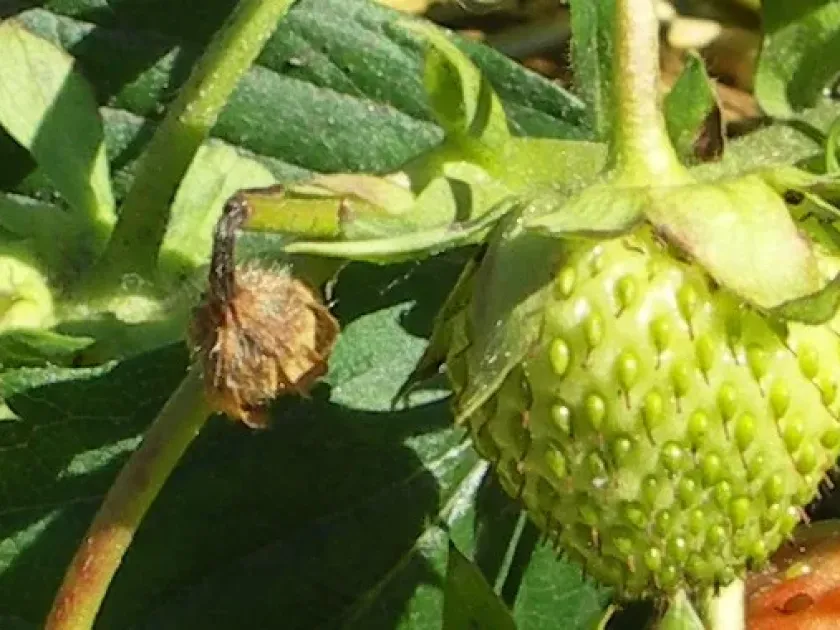
During the life cycle, females puncture the buds to lay a single egg inside. They then partially sever the pedicel, causing the bud to wilt and fall to the ground, which provides a safe environment for the larvae to develop and pupate.
The development from egg to adult takes place largely within the protective cover of the fallen bud. New adult beetles emerge in late spring or early summer, feeding briefly on leaves before searching for protected overwintering sites.
What it damages
The primary hosts of this pest are cultivated strawberries and wild strawberries. In some regions, other plants from the Rosaceae family may also be affected if they are located in close proximity to infested strawberry patches.
The most significant damage occurs when the larvae consume the interior of the flower buds. Because the pedicels are cut, the buds wither and break off, leading to direct and severe losses of potential fruit yield.
Adult beetles also cause secondary damage by feeding on young leaves and developing buds in early spring. These feeding punctures, which look like tiny holes, weaken the plant's overall health and photosynthetic capacity during the critical growth phase.
The extent of the damage varies depending on population density and weather conditions. A warm, dry spring often coincides with the peak activity of the overwintered adults, leading to increased pressure on early-flowering strawberry varieties.
Economic damage thresholds are typically met when 5% of buds are damaged or when a specific count of beetles is found per square meter. Growers must act before the flowering stage to avoid substantial financial losses.
Signs of infestation
The most visible sign of an infestation is the presence of numerous wilted, drooping, or severed buds hanging by a thin piece of stem. This symptom is often referred to as "clipping" of the buds.
Small, pin-prick holes on the leaves provide evidence of adult feeding. These marks are particularly noticeable on the youngest, most tender foliage as the plants start to emerge from winter dormancy.
If a wilted bud is carefully opened, the presence of a white, legless larva with a brown head confirms an infestation. Finding a pupa inside a fallen bud is also a definitive indicator of the pest's presence.
The clean cut on the pedicel is a distinct indicator of the weevil's activity, differentiating it from wind damage or other mechanical causes. Affected buds will quickly turn black and become brittle.
During early morning hours, particularly on overcast days, growers can sometimes spot adult beetles resting on the strawberry crowns or flower stalks, as they are less likely to fall to the ground when the air is cooler.
Control measures
Cultural control methods include regular cultivation of the soil between rows, which helps disrupt the pupal development stage. Removing and destroying all plant debris in the autumn is crucial for limiting overwintering sites.
Manual control, such as shaking the beetles from the plants onto a cloth or tray early in the morning, can be very effective in small garden plots. Collected beetles should be disposed of in soapy water to prevent them from returning.
Chemical control involves applying authorized insecticides just before the flower buds open. It is essential to choose products that are safe for use on berries and to respect pre-harvest intervals to ensure consumer safety.
Bio-pesticides or products containing natural extracts can be used when the flowers are starting to bloom and chemical applications are restricted due to the presence of pollinators like honeybees.
- Crop rotation to reduce localized pest buildup.
- Selecting early-maturing varieties that can escape the worst damage.
- Monitoring pest populations with sticky traps.
- Sanitation by removing damaged buds to stop the next generation of adults.
Taxonomy
- Latin name
- Anthonomus musculus
- Order
- Coleoptera (beetles)
- Family
- Curculionidae
- EPPO code
- ANTHMU
Discussion
No discussions yet — be the first.