
Pepper weevil
Anthonomus eugenii
Description
How to identify
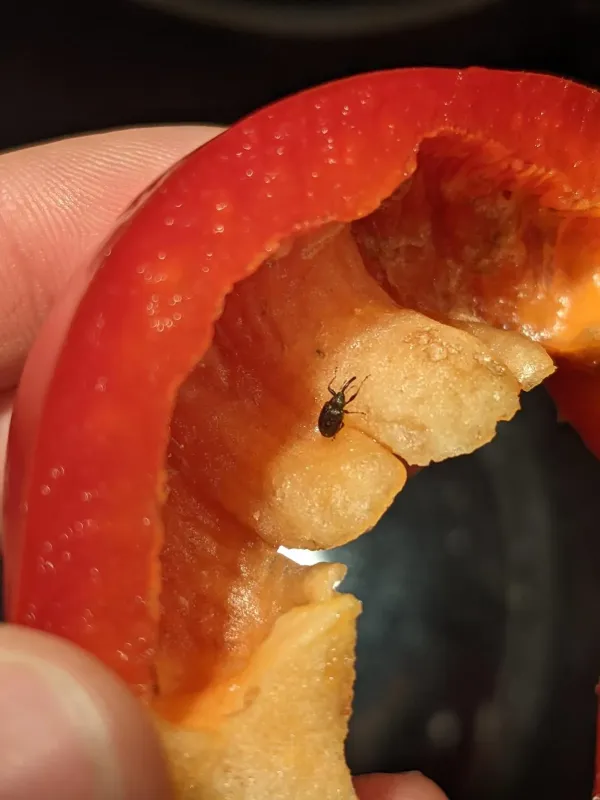
The pepper weevil (Anthonomus eugenii) is a significant coleopteran pest belonging to the Curculionidae family. Adult weevils are small, measuring approximately 2.5–3 mm in length, characterized by a long, curved snout typical of the family.
Their body color ranges from dark brown to black, covered with fine, sparse hairs. The larvae are creamy white, legless, and have a distinct brown head capsule, typically developing inside the flower buds or fruit.
The insect undergoes a complete metamorphosis: egg, larva, pupa, and adult. Each stage is adapted to survive within the protective tissues of the host plant.
These weevils are strong fliers, which allows them to migrate from infested fields or greenhouses to new, healthy crops throughout the growing season.
Identifying this pest in the early stages is challenging, as adults often drop to the ground and feign death when disturbed, making them difficult to spot during field inspections.
What it damages
The primary hosts of the pepper weevil are various types of peppers, including bell peppers, chili peppers, and jalapeños. It is capable of destroying the majority of the potential yield in an untreated field.
Secondary hosts include eggplants and several wild nightshade species, such as black nightshade, which act as reservoirs for the pest population between cropping cycles.
Damage occurs when female weevils feed on and oviposit into flower buds or developing fruit. This activity causes buds and fruit to drop prematurely, significantly reducing overall harvest volume.
Larvae feed exclusively inside the fruit or buds, which protects them from many contact insecticides, making chemical control difficult once the larvae are established.
Affected fruit often show signs of rot or secondary fungal infections, as the internal feeding creates pathways for pathogens to enter the plant tissues.
When it appears
Pepper weevils are most active in warm, humid conditions. In temperate regions, they may disappear during winter, but they thrive year-round in greenhouses or subtropical climates.
The developmental cycle is temperature-dependent; in optimal conditions (25–30°C), the entire lifecycle can be completed in approximately 15–20 days, leading to rapid population surges.
Peak infestation levels usually occur during the fruiting stage of the pepper crop, as the abundance of buds and fruit provides optimal sites for reproduction.
During the off-season, weevils can survive in plant debris or on alternate weed hosts, which serves as the starting point for infestation in the following season.
Proper monitoring must start early, as soon as the first buds appear, to prevent the pest from establishing a foothold in the field.
Signs of infestation
The most common sign of a pepper weevil infestation is the presence of small, round punctures on flower buds and young fruit, which are caused by female feeding and egg-laying.
A classic symptom is the yellowing and subsequent shedding of flower buds, which may drop off before they even open, indicating larvae are developing inside.
Adult weevils cause minor scarring on leaves and stems through feeding, although these are rarely the primary cause of plant death compared to the destruction of fruit.
Infested fruit may appear distorted, develop stunted growth, or exhibit premature ripening patches, often leading to total crop loss if left unmanaged.
In greenhouses, sticky traps will often capture adult weevils, serving as an early warning system before visible damage to the fruit becomes widespread.
Control measures
Sanitation is the most critical management strategy; all crop residues must be removed and destroyed immediately after harvest to eliminate overwintering sites.
Maintaining a clean field by removing nightshade weeds is essential to prevent weevils from surviving in the absence of a primary pepper crop.
Chemical control focuses on applying insecticides during the adult stage, before females begin laying eggs inside the buds, where they are protected from sprays.
Integrated Pest Management (IPM) programs often incorporate pheromone traps to monitor adult populations and determine the precise timing for insecticide applications.
- Systemic insecticides for protecting buds and developing fruit.
- Biological control using entomopathogenic nematodes applied to the soil.
- Crop rotation to break the pest's reproductive cycle.
- Use of row covers during the early stages of plant growth.
Taxonomy
- Latin name
- Anthonomus eugenii
- Order
- Coleoptera (beetles)
- Family
- Curculionidae
- EPPO code
- ANTHEU
Discussion
No discussions yet — be the first.