
Blossom weevils
Anthonomus
Description
How to identify
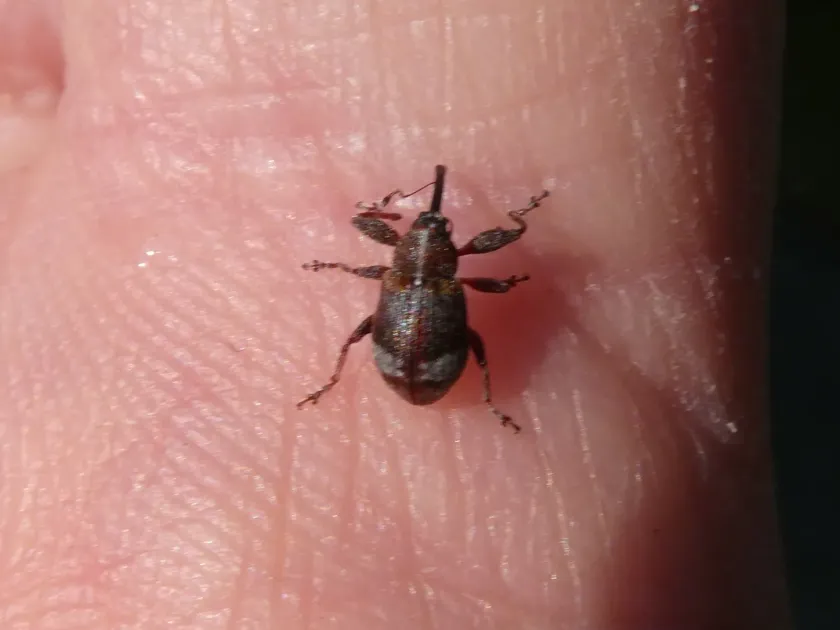
Blossom weevils (genus Anthonomus) are small beetles belonging to the Curculionidae family. Adult specimens typically measure between 3 to 5 mm in length, characterized by a distinctively elongated rostrum or snout used for feeding and oviposition.
The body is usually brownish in color, often featuring light-colored markings or stripes on the elytra. Larvae are legless, curved, and whitish with a dark brown head capsule, developing specifically inside the floral buds of their host plants.
The life cycle encompasses a complete metamorphosis: egg, larva, pupa, and adult. Adults hibernate under leaf litter, bark crevices, or in the topsoil, emerging in early spring as temperatures rise above 6-8°C.
These pests are highly synchronized with the phenology of their host plants, particularly pome fruit trees. Their resilience allows them to thrive in various temperate climates, making them a recurring challenge for orchard management.
Due to their cryptic behavior and effective hiding spots, monitoring populations requires attention to detail during the early stages of bud development.
What it damages
Blossom weevils primarily attack pome fruit crops, including apples and pears. While they have a preference for certain Rosaceae species, they can also affect a variety of stone fruits if host populations are available.
Adult weevils cause initial damage by puncturing swelling buds to feed on the inner sap. This action, known as "weevil weeping," prevents the buds from opening properly, leading to desiccation and failure of the blossom.
The most significant damage occurs when larvae feed internally on the essential parts of the flower, such as the stamens, pistils, and receptacle. This renders the flower sterile and incapable of fruit production.
In scenarios of high infestation, blossom weevils can devastate a large portion of the potential harvest, causing economic losses ranging from 50% up to nearly 100% of the bloom on affected trees.
Secondary damage includes a general reduction in the tree's vigor, as the loss of blossoms and associated foliage creates an imbalance that can make the tree susceptible to further environmental or pathological stress.
When it appears
The season begins in early spring, specifically during the "green tip" stage of fruit tree development. Once temperatures consistently exceed 6°C, overwintering adults emerge from their shelters to seek food and mating partners.
The most critical window for activity is the period from bud burst to the pink bud stage. During this time, females actively deposit eggs inside the developing buds, which effectively protects the developing larvae from external threats.
New adults emerge from the dried-out buds in late May or June. They feed on leaves, creating characteristic small, circular holes, which is a common indicator that the next generation has completed its development.
Throughout the hot summer months, the adult weevils enter a state of aestivation, retreating into protected areas. This summer diapause allows them to survive until the onset of autumn cooling.
As temperatures drop, the weevils prepare for winter diapause, seeking out deep crevices in the bark or leaf debris on the ground to survive until the following spring.
Signs of infestation
The first sign of infestation is the appearance of translucent sap droplets on the buds, colloquially called "weeping buds." This indicates that adult beetles have punctured the tissues to feed.
Damaged buds turn brown and remain closed, appearing shriveled and scorched. These buds, often called "caps," fail to develop into flowers and persist on the branches for some time.
Upon examination, one can find a single white, legless larva or a pupa inside the "capped" bud. The petals are often glued together by the insect’s excreta, forming a protective chamber for the larva.
Leaf damage is a secondary sign appearing later in the season. Small, irregular holes in the foliage confirm the presence of the new generation of adults feeding before they move to their summer shelters.
A lack of blossoms or a scattered, uneven distribution of bloom in the lower canopy is a clear indicator that the tree has suffered from a significant weevil infestation.
Control measures
Integrated pest management (IPM) is essential for controlling blossom weevils. Cultural practices such as cleaning rough bark and removing leaf debris significantly reduce the number of successful overwintering sites.
Mechanical control, such as shaking beetles off the branches onto a tarp during cool morning hours, is highly effective for smaller orchards or home gardens.
- Applying sticky bands or traps to the tree trunk can intercept adults as they migrate from the ground to the canopy.
- Chemical control is most effective when applied at the "green tip" stage to eliminate adults before they lay eggs.
- Manual removal and destruction of the "capped" (browned) buds can help interrupt the life cycle and prevent the emergence of new adults.
Strict adherence to timing is crucial; chemical applications must be completed before the tree enters the full bloom stage to avoid harming essential pollinators like honeybees and bumblebees.
Taxonomy
- Latin name
- Anthonomus
- Order
- Coleoptera (beetles)
- Family
- Curculionidae
- EPPO code
- ANTHSP
Discussion
No discussions yet — be the first.