
Cereal anthomyzid fly
Anthomyza gracilis
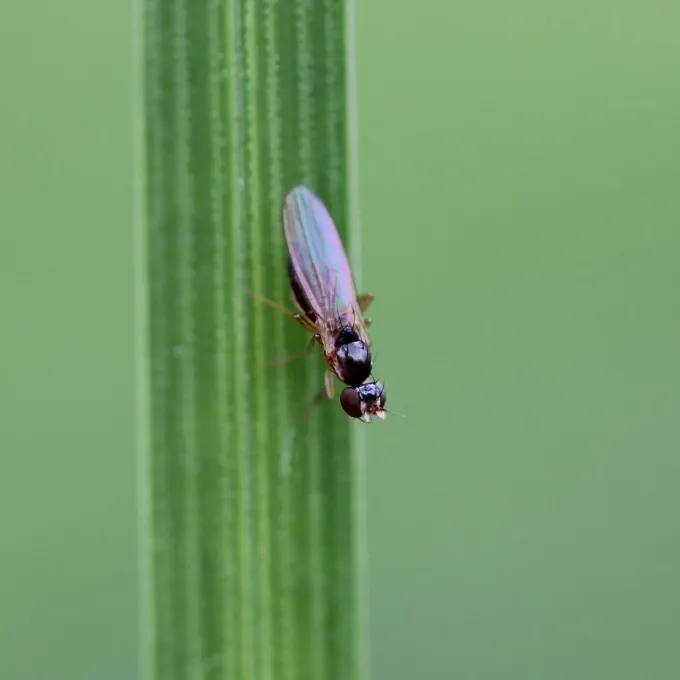
Description
How to identify
The cereal anthomyzid fly (Anthomyza gracilis) is a member of the Anthomyzidae family, order Diptera. It is a small, slender fly often found in dense grassy habitats and agricultural fields.
Adult flies are generally yellowish-brown with narrow bodies and well-developed wings, often showing a slight brownish tint, which aids them in moving between host plants.
The larvae are small, legless, and yellowish, specialized for living inside the stems of grasses and cereals. Their cryptic lifestyle protects them from many environmental pressures and traditional surface-applied pesticides.
The life cycle is closely tied to humidity levels. Population spikes are common in years with wet spring conditions and in areas with lush, dense vegetation that provides shelter for the adults.
Overwintering typically occurs as adults in crop residues or dense leaf litter, where they wait for temperatures to rise before emerging to initiate the next generation.
What it damages
The pest primarily targets cereal crops such as wheat, barley, and oats. Additionally, various wild grasses serve as reservoir hosts, maintaining the population when crops are not available.
Larvae bore into the plant stems, feeding on inner tissues and vascular bundles. This damage interferes with the plant's nutrient transport, leading to stunted growth or total death of the affected tiller.
The most severe damage occurs during the tillering and stem elongation stages. If the main shoot is attacked, it usually fails to produce a viable ear, leading to significant yield reduction.
By damaging the inner tissue, the larvae also create entry points for opportunistic fungi, which may cause secondary rot and further stress the plant, reducing overall crop quality.
Fields affected by high infestations may appear patchy, with localized areas of yellowed and stunted plants, significantly complicating the uniform harvesting of the field.
Signs of infestation
The most notable symptom is the yellowing and wilting of the central leaf of the shoot, often referred to as the 'flag leaf' or the youngest developing leaf in early stages.
Upon closer inspection, one can find entry holes on the stem where the larva has bored inside. These areas often appear darkened or necrotic as a result of the larval feeding activity.
When the central leaf is pulled, it often detaches easily from the stem, revealing the damage caused at the base of the leaf sheath inside the plant's structure.
The plants exhibit signs of stress, such as lagging behind in growth compared to non-infested neighbors and having a generally unhealthy, brownish-yellow appearance.
- Yellowing of the central leaf.
- Wilting of the shoot tip.
- Visible entry holes in the stems.
- Internal tissue decay within the stem.
Control measures
Effective cultural control is based on deep plowing after harvest, which buries crop residues and destroys the overwintering habitat of the flies, significantly reducing the starting population.
Crop rotation and the management of wild grasses surrounding the field edges are crucial to breaking the pest's cycle and limiting their ability to migrate into the grain crop.
Chemical control involving systemic insecticides is effective when applied during the peak flight of adult flies, targeting them before they can deposit eggs on the young plants.
Monitoring the fields using yellow sticky traps is a recommended practice to time insecticide applications accurately, ensuring maximum efficacy and reducing unnecessary chemical usage.
Encouraging vigorous plant growth through proper fertilization can help crops tolerate minor infestations, allowing for better compensation and recovery from larval damage.
Taxonomy
- Latin name
- Anthomyza gracilis
- Order
- Diptera (flies)
- Family
- Anthomyzidae
- EPPO code
- ANMZGR
Discussion
No discussions yet — be the first.