
Anthomyzid fly
Anthomyza
Description
How to identify
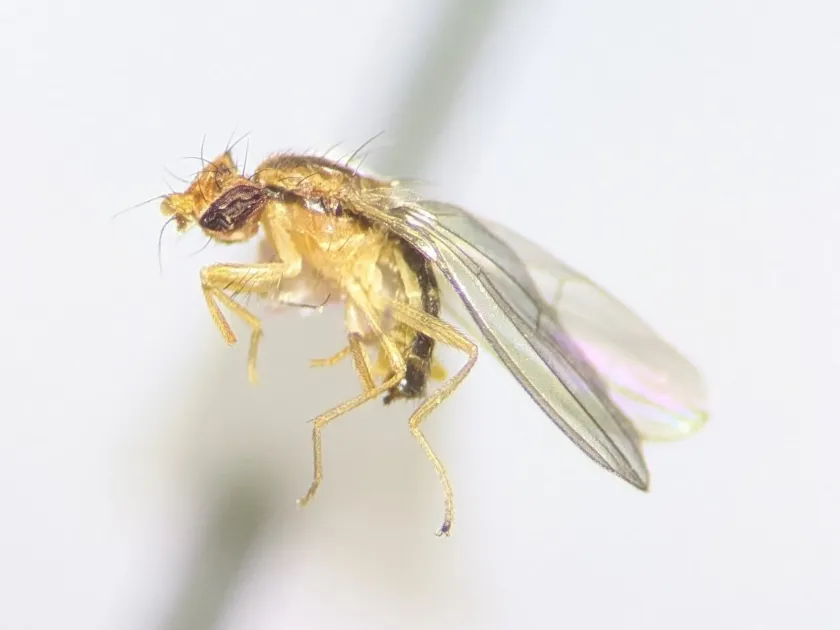
The Anthomyzid fly belongs to the Anthomyzidae family of Diptera. These are small insects, typically measuring between 2 and 4 mm in length, with a slender and fragile body structure.
They generally exhibit a coloration that ranges from yellowish to brown or black. The wings are held flat over the abdomen when at rest, which is a key morphological feature.
Larvae of these flies are typically pale, legless, and worm-like, adapted for an internal life cycle within the stems of host plants, particularly grasses and cereals.
Their life cycle is highly dependent on environmental humidity. They favor dense vegetation where moisture levels remain high enough for larval survival and development.
Taxonomically, they are identified by specific chaetotaxy on the head and thorax, which distinguishes them from other closely related families of small acalyptrate flies.
What it damages
Anthomyzid flies primarily attack various grass species and cereal crops, including wheat, barley, oats, and rye. Wild grasses often serve as the initial host before the pest moves to commercial fields.
The damage is caused by larvae that feed within the stems of the plants. This feeding activity disrupts the plant's vascular system, leading to stunted growth and reduced vigor.
Infested plants exhibit poor tillering and often fail to produce a healthy ear. In severe cases, the entire plant may die before reaching maturity, leading to significant yield losses.
Furthermore, the damage caused by larvae creates entry points for fungal pathogens, which can lead to secondary infections that further devastate the crop yield.
The economic impact of this pest is most pronounced during cool, moist spring conditions that promote larval development and extended host plant availability.
Signs of infestation
The most characteristic sign of infestation is the yellowing and wilting of the central leaf of the plant, often referred to as a "dead heart" symptom.
Careful examination of the stem reveals internal galleries or tunnels carved by the larvae. In some cases, the larvae themselves can be found feeding inside these tunnels.
Fields infested with Anthomyzids often show patches of uneven growth where damaged plants are noticeably shorter or discolored compared to the healthy crop.
Late-stage symptoms include the formation of white, unfilled heads, which occur if the stem was severely compromised during the crucial developmental phases of the plant.
Adult flies may be observed resting on vegetation or flying low over the field during their mating and egg-laying periods, serving as a warning for potential outbreaks.
Control measures
Effective management requires a combination of cultural practices and targeted chemical interventions to disrupt the life cycle of the pest.
Cultural control is centered on sanitation, such as removing grassy weeds and volunteer plants that bridge the gap between harvest and the next planting season.
Chemical control should be timed to target the adult flies before they deposit eggs. Systemic seed treatments provide early-season protection for seedlings against emerging larvae.
Crop rotation is essential to prevent the accumulation of the pest in the soil and surrounding environment, breaking the cycle of recurring infestation.
- Strict weed management in field margins.
- Utilization of systemic seed treatments.
- Strategic timing of planting to avoid peak adult flight.
- Monitoring adult population with yellow sticky traps.
Taxonomy
- Latin name
- Anthomyza
- Order
- Diptera (flies)
- Family
- Anthomyzidae
- EPPO code
- ANMZSP
Discussion
No discussions yet — be the first.