
Anisandrus maiche
Anisandrus maiche
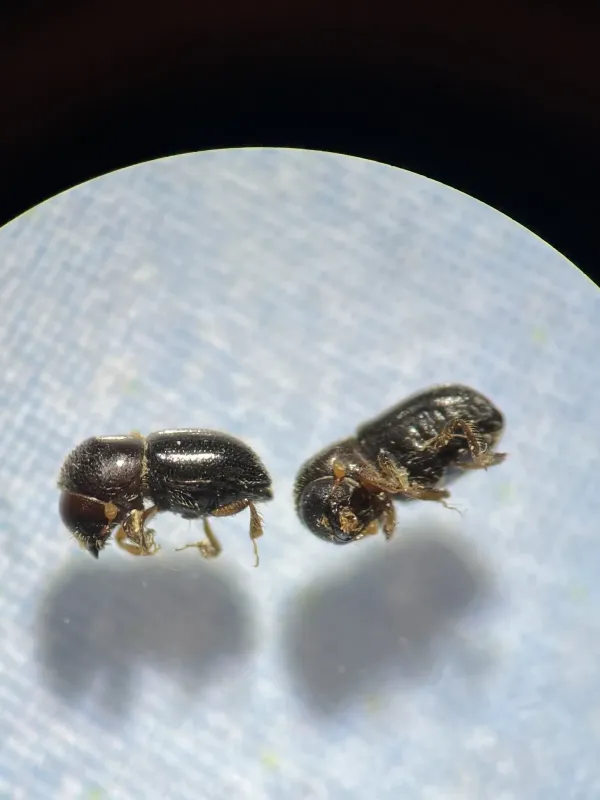
Description
How to identify
Anisandrus maiche is an invasive species of ambrosia beetle belonging to the Curculionidae family and the Scolytinae subfamily. It has become a significant pest in several regions globally due to its cryptic nature and wood-boring behavior.
Adult beetles are small, cylindrical, and dark brown or black in color, typically measuring around 3 millimeters in length. Their body structure is perfectly adapted for drilling deep tunnels into woody plants.
The beetle shares a unique symbiotic relationship with ambrosia fungi. Adult females carry fungal spores in specialized organs called mycangia and inoculate the walls of their galleries to cultivate food for their larvae.
Larvae are legless, white grubs with distinct head capsules. Unlike other bark beetles, they do not consume the wood tissue directly but feed exclusively on the fungal mycelium grown inside the galleries by the adults.
As an invasive insect, it is highly adaptable and has successfully established populations in various temperate climates, moving beyond its native range through wood transport.
What it damages
This beetle attacks a wide variety of deciduous tree species, including major forestry trees like oak and beech, as well as high-value fruit trees such as apples, pears, and walnuts.
Damage is caused when female beetles bore into the heartwood or sapwood. These galleries act as entry points for pathogens and disrupt the tree's internal water and nutrient transport, leading to physiological stress.
The fungus introduced by the beetles can cause localized necrosis of the wood, which further weakens the tree structure and accelerates the colonization by other opportunistic pathogens.
In orchards, heavy infestation can lead to rapid decline and mortality of fruit-bearing trees, resulting in substantial losses for commercial farmers and nursery owners.
Once a tree is heavily infested, it becomes difficult to save, as the beetle population thrives deep within the woody tissues, making contact insecticides ineffective.
When it appears
The seasonal activity of Anisandrus maiche is highly temperature-dependent. The primary flight and colonization period typically begins during the spring as temperatures rise.
During the warmer months, beetles emerge from their overwintering sites to seek out new host plants, especially those already under physiological stress from drought or previous damage.
The species is capable of completing multiple generations per year under favorable environmental conditions, which contributes to its status as a rapid colonizer.
Overwintering occurs primarily in the adult stage within the galleries made in the tree wood, providing them protection from extreme cold and desiccation.
Monitoring efforts should focus on the early spring through late autumn to capture the flight peak and implement management actions before massive damage occurs.
Signs of infestation
The most visible sign of an attack is the presence of small, circular exit holes on the tree trunk, usually accompanied by fine, light-colored wood dust or frass.
Frass often accumulates in crevices of the bark or near the base of the tree, providing a clear indication of recent beetle activity inside the trunk or branches.
Darkened, stained tissue on the surface of the bark surrounding the entry holes is a common secondary symptom caused by the symbiotic fungi colonizing the sapwood.
Infected trees often show canopy symptoms, including wilting leaves, yellowing, and premature leaf drop, as the xylem vessels become blocked or damaged.
If the bark is carefully peeled back around an entry hole, the tunnels will appear as complex galleries leading deep into the wood, often showing fungal growth.
Control measures
Management requires a combination of strict phytosanitary measures, such as controlling the movement of infested firewood and nursery stock to prevent spread.
Orchard hygiene is paramount; removing and destroying infested trees promptly reduces the local population pressure and prevents the further spread of the beetle.
Chemical control is most successful when applied during the spring flight period using persistent contact insecticides, aiming to kill the adults before they penetrate the wood.
Maintaining tree vigor through proper irrigation, fertilization, and pruning is an essential preventative measure, as healthy trees are less attractive to the beetles.
- Removal and burning of infested wood material.
- Installation of pheromone-baited traps for population monitoring.
- Application of insecticides during peak flight times.
- Strategic irrigation to mitigate drought-induced tree stress.
- Strict quarantine on the transport of untreated logs and wood.
Taxonomy
- Latin name
- Anisandrus maiche
- Order
- Coleoptera (beetles)
- Family
- Curculionidae
- EPPO code
- ANIDMA
Discussion
No discussions yet — be the first.