
Anhinga
Anhinga
Description
How to identify
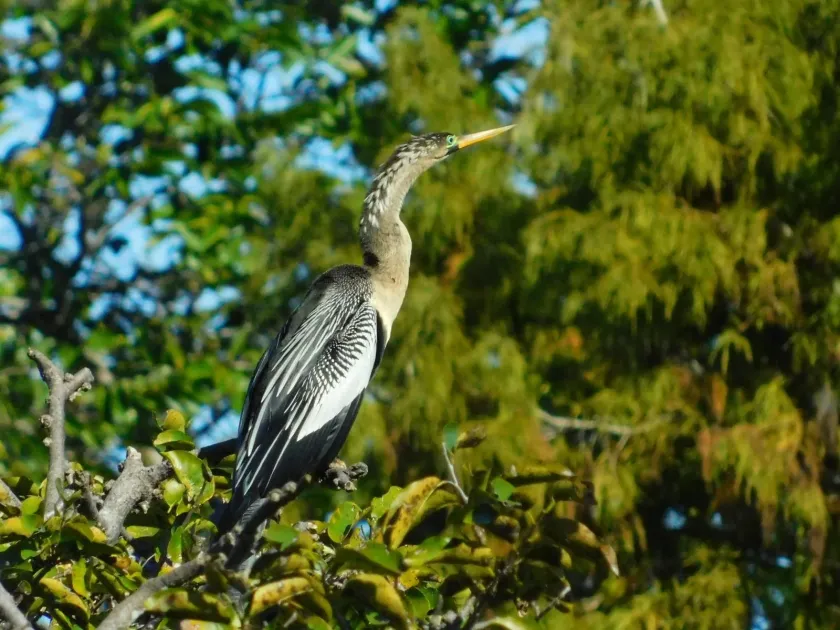
The Anhinga (genus Anhinga) is a type of water bird belonging to the family Anhingidae. They are commonly referred to as snakebirds due to their long, slender necks, which appear snake-like while the body remains submerged.
These birds possess sharp, pointed bills, which are specialized tools for spearing fish under the water. Their plumage is dark, often with silver or white markings on the wings, and they have large wing spans.
A unique physiological trait of the Anhinga is the lack of oily, waterproof feathers compared to other water birds. As a result, they must spend significant time drying their wings in the sun after hunting.
They are highly skilled divers, capable of stalking and pursuing fish with great agility beneath the surface of freshwater lakes and ponds.
The Anhinga usually nests in colonies, often selecting secluded trees overhanging water bodies to build their nests, providing protection from terrestrial predators.
What it damages
While the Anhinga is not a threat to standard agricultural crops, it is considered a major pest in the aquaculture industry due to its heavy reliance on fish.
The primary damage is caused by the large volume of juvenile fish they consume, which can lead to significant economic losses for commercial fish farms.
Beyond the direct loss of stock, Anhingas often injure fish they do not successfully swallow. These puncture wounds can lead to secondary infections or fungal diseases that propagate through the pond population.
Constant hunting pressure from a colony of Anhingas induces chronic stress in fish, leading to reduced feed conversion ratios and slower growth rates for the aquaculture business.
In addition to biological impacts, these birds may interfere with physical infrastructure by tearing netting or damaging sensors placed in the water for monitoring purposes.
When it appears
The most active period for Anhinga predation coincides with the peak growth season of fish. In temperate climates, this is typically during the warmer months of spring and summer.
Nesting season requires a high caloric intake for the parents to feed their chicks, leading to an intensification of hunting activities on surrounding water bodies.
Seasonal migration patterns can cause sudden population spikes in specific areas, creating concentrated periods of damage that require intensive management.
The temperature of the water influences the diving frequency, as warmer conditions generally boost both the metabolic needs of the birds and the activity levels of the fish.
Daylight hours determine the total hunting window, meaning long summer days allow for more successful foraging sessions and higher cumulative losses for fish farmers.
Signs of infestation
The most obvious sign of an Anhinga presence is the sight of birds perched on branches or poles, holding their wings out in a spread-eagle fashion to dry their feathers.
Frequent, sudden splashes in the pond or the observation of long, snake-like necks moving just above the water surface are clear indicators of their hunting activity.
A noticeable decline in fish population densities that cannot be attributed to water chemistry or diseases is a common red flag for predator intervention.
Finding fish with distinct, narrow puncture marks on their sides suggests that predators with sharp, dagger-like bills have been attacking the population.
Locating nests in trees located within or immediately adjacent to the aquaculture facility confirms the presence of a localized, permanent threat that requires control.
Control measures
The most effective method for controlling Anhingas is the physical exclusion through the installation of netting or overhead wires that prevent birds from diving into the ponds.
Bio-acoustic deterrents that broadcast distress calls or the sounds of natural avian predators can create a hostile environment, encouraging the birds to relocate.
Visual deterrents, including reflective tape, holographic devices, and life-sized predator decoys, can be used to discourage birds from settling in the immediate vicinity.
Habitat modification, such as trimming trees or removing elevated perches along the banks, can make the pond site less attractive for drying off and resting.
Integrated pest management (IPM) strategies for aquaculture often involve combining physical barriers with rotating deterrent methods to prevent birds from becoming accustomed to a single defense measure.
Taxonomy
- Latin name
- Anhinga
- Family
- Anhingidae
- EPPO code
- ANHISP
Discussion
No discussions yet — be the first.