
Angiostrongylus
Angiostrongylus
Description
How to identify
Angiostrongylus is a genus of parasitic nematodes belonging to the order Strongylida and the family Angiostrongylidae. While these organisms are primarily known as animal parasites, their biological cycle involves gastropod mollusks, which act as intermediate hosts.
Morphologically, these are thread-like worms with a complex internal structure typical of nematodes. They are difficult to detect without specialized microscopic analysis, requiring lab equipment for identification in soil samples or mollusks.
Systematically, they are classified under parasitic helminths that utilize intermediate hosts found in agricultural ecosystems, making their presence a significant concern for sanitary regulations.
Identification is based on the extraction of larvae from mollusks collected in fields. Agronomists must monitor the population density of these gastropods to mitigate the risk of parasite transmission.
Proper diagnostic procedures involve washing techniques and staining protocols designed to visualize the nematodes in samples collected from infected garden plots.
What it damages
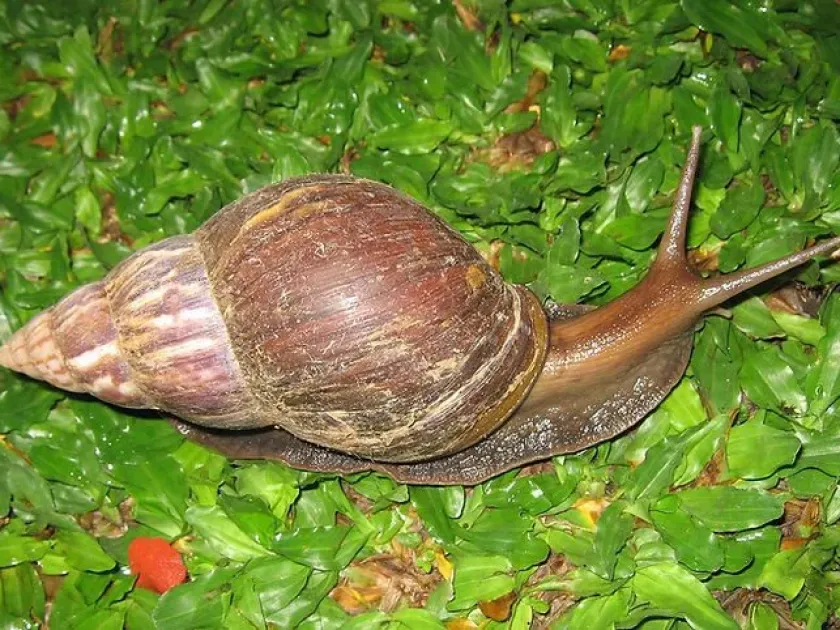
Angiostrongylus causes agricultural damage indirectly through its hosts: garden slugs and snails. These mollusks are notorious pests, consuming a wide variety of leafy vegetables, fruits, and nursery seedlings.
The damage manifests as irregular holes in leaves, significantly reducing the marketability of crops like lettuce, cabbage, and spinach. In many cases, entire seedlings can be destroyed overnight.
Beyond direct feeding, mollusks contaminate vegetables with their mucus, which may carry invasive larvae. This poses a sanitary hazard, as consumption of contaminated raw vegetables can be dangerous.
Root crops are also susceptible, with slugs creating deep erosions and holes in potatoes, carrots, and beets, which often facilitates secondary decay and bacterial infections during storage.
The severity of damage is closely linked to high moisture conditions and the presence of abundant plant cover, which provides an ideal environment for the snail population to thrive.
Signs of infestation
The most reliable sign of pest activity is the observation of slugs and snails during humid, cloudy weather or at night. They leave shiny, dried-up trails of mucus on surfaces.
Visible symptoms on foliage include ragged edges and large, irregular holes in the leaves. In extreme cases, only the main leaf veins remain, indicating a high-density mollusk population.
Root vegetables often display pits or galleries on the surface, which are symptomatic of snail feeding. These areas may appear wet and discolored due to slime and excrement.
The presence of clusters of mollusks under mulch, wooden boards, or organic debris is a strong indicator that the area is being used as a breeding ground for these vectors.
In nursery environments, young plants may show signs of sudden wilting due to stem damage, providing clear evidence of nocturnal feeding activity by intermediate hosts.
Control measures
Cultural control is the most effective approach. This includes reducing weeds, clearing organic debris, and keeping the field clean to eliminate hiding spots for slugs and snails.
Chemical control involves the application of molluscicides, such as iron phosphate or metaldehyde-based baits, which specifically target slugs and snails during peak activity periods.
Mechanical barriers, including copper tape, crushed eggshells, or fine gravel, can be placed around sensitive garden beds to physically block the path of mollusks into the crop area.
Biological control methods encourage the presence of natural predators, such as hedgehogs, ground beetles, and toads, which help keep mollusk populations below the economic damage threshold.
Proper water management is essential; using drip irrigation minimizes surface moisture, creating a less hospitable environment for slugs, thereby reducing the risk of parasite circulation.
Taxonomy
- Latin name
- Angiostrongylus
- Order
- Nematodes
- Family
- Metastrongylidae
- EPPO code
- ANSGSP
Discussion
No discussions yet — be the first.