
Lesser leafroller
Ancylis nebeculana
Description
How to identify
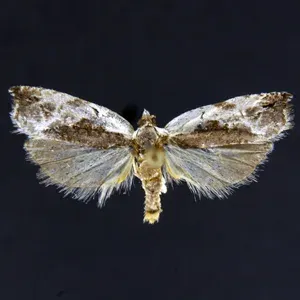
The lesser leafroller Ancylis nebeculana is a moth species belonging to the family Tortricidae. Adults have a wingspan of approximately 15–18 mm and feature a distinct pattern of brown and gray wing markings, providing camouflage against tree bark.
The larvae, or caterpillars, reach lengths of 12–15 mm and have a yellowish-green body with a dark brown head. They are primarily nocturnal or shade-seeking, often hiding within rolled-up leaves to avoid predators and environmental stress.
Pupae develop inside cocoons constructed from silk and folded leaves. Their dark brown color allows them to blend in with their surroundings, making them difficult to detect without careful inspection of the foliage.
The life cycle encompasses four stages: egg, larva, pupa, and adult. Depending on the local climate and temperature trends, the pest can complete one or two generations per year, impacting the population density.
Accurate identification is aided by the use of pheromone traps, which are specific to the species. These tools help growers monitor flight patterns and determine the optimal timing for control interventions.
What it damages
This pest primarily attacks fruit trees of the Rosaceae family, with apples being the most common host. While primarily a leaf feeder, the larvae can significantly impact the tree's health when populations are high.
Larval feeding involves skeletonizing the leaf surface and folding leaves into protective tubes. This activity disrupts the photosynthesis process, leading to reduced vigor and stunted growth in affected branches.
Severe infestations result in premature leaf drop, which can stress the tree and reduce its ability to store energy for the dormant winter period. This weakens the tree's overall resilience against diseases.
In addition to foliage, larvae may occasionally damage young fruitlets, causing malformations or premature fruit drop. This directly affects both the quantity and the commercial quality of the orchard yield.
Damaged leaves often serve as entry points for secondary pathogens, such as fungi. This interaction creates a compounded negative effect, where the initial pest injury facilitates further decline of the plant health.
When it appears
The lesser leafroller overwinters as a larva in a silk cocoon, usually tucked away in bark crevices or among leaf litter on the ground. As spring temperatures rise, the larvae prepare for pupation.
Adult moth activity typically commences in late spring or early summer. Females lay eggs on the undersides of leaves, ensuring that the emerging larvae have immediate access to food sources upon hatching.
The peak feeding period for larvae occurs during the summer months. Regular monitoring of the orchard is crucial during this time to catch early signs of rolling leaves before damage becomes widespread.
By late summer or early autumn, the final generation prepares for overwintering. They seek out protected micro-habitats to survive the winter, marking the end of the active feeding season.
Understanding these phenological markers allows orchard managers to time their control efforts effectively, ensuring they target the most vulnerable stage of the pest's life cycle.
Signs of infestation
The most prominent sign of infestation is the presence of rolled or folded leaves bound together by silk threads. These structures are easily visible upon close inspection of the canopy.
Skeletonized leaf patches that turn brown and necrotic are clear indicators of larval feeding. When leaves are held against the light, these translucent areas are highly noticeable.
Unexpected, early leaf drop during the peak summer months is a warning sign of heavy infestation. It suggests that the larval population has caused sufficient structural damage to induce abscission.
Frass (larval excrement) found within the rolled leaf tubes is a definitive sign of active infestation. Finding these traces helps distinguish leafroller damage from other leaf-folding organisms.
Stunted growth of new shoots may occur if the larvae target the tender terminal buds. This results in poor architectural development of the young branches and can alter the tree's growth habit.
Control measures
Cultural control is a cornerstone of management. Removing and composting or burning leaf litter during autumn destroys overwintering sites, significantly reducing the pest pressure for the following year.
Springtime practices, such as clearing debris and cleaning the tree trunks, disrupt the life cycle. Whitewashing trunks can also deter pests and help manage population levels in the orchard.
Biological control options, including the application of Bacillus thuringiensis, offer an eco-friendly way to target young larvae without harming the populations of beneficial predatory insects.
When economic thresholds are exceeded, chemical insecticides may be necessary. It is critical to select products that are effective against Tortricidae and to alternate them to avoid resistance development.
An integrated pest management (IPM) approach is recommended, combining monitoring, cultural practices, and targeted chemical applications to keep the lesser leafroller populations under control.
Taxonomy
- Latin name
- Ancylis nebeculana
- Order
- Lepidoptera (butterflies)
- Family
- Tortricidae
- EPPO code
- ANCYNE
Discussion
No discussions yet — be the first.