
Strawberry leaf roller
Ancylis comptana
Description
How to identify
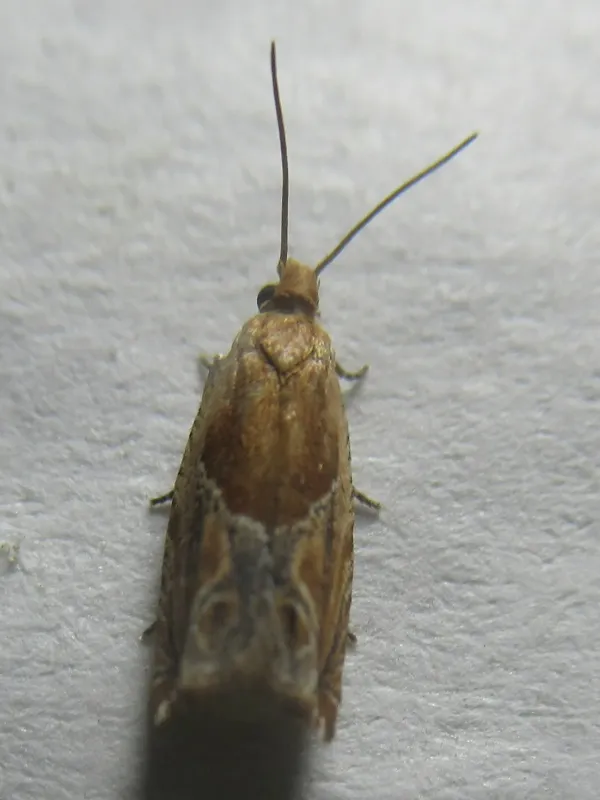
The strawberry leaf roller (Ancylis comptana) is a lepidopteran pest belonging to the Tortricidae family. The adult moth has a wingspan of approximately 10 to 15 mm, with brownish-colored forewings adorned with intricate white, streak-like patterns that provide excellent camouflage.
The life cycle consists of four distinct stages: egg, larva, pupa, and adult. The larvae are the primary damaging stage; they are active, pale green to yellowish caterpillars that typically feature a dark-colored head capsule.
Wintering occurs primarily in the pupal stage, with the insects hiding within folded leaves or in the soil debris under host plants. This dormant period makes autumn sanitation a critical component of integrated pest management in strawberry fields.
Adult moths emerge in early spring, triggered by rising temperatures. After mating, females deposit their eggs on the underside of leaves. The duration of the egg stage is highly dependent on ambient temperature, often lasting about one to two weeks.
Depending on the climatic zone, the strawberry leaf roller can complete two to three generations per year. This high reproductive rate necessitates continuous monitoring from early spring until harvest to prevent population explosions.
What it damages
This species primarily attacks cultivated strawberries (Fragaria). However, it is a polyphagous pest capable of infesting various other plants in the Rosaceae family, such as raspberries, blackberries, and certain ornamental shrubs, making it a significant threat to diverse gardens.
Signs of infestation
The most characteristic sign of an infestation is the presence of rolled or folded leaves. Larvae use silk threads to tie the leaf margins together, creating protected shelters where they remain hidden while consuming the leaf tissue.
Affected areas of the foliage exhibit yellowing and necrosis as the chlorophyll is consumed. In severe cases, the entire leaf turns brown and dries up, leading to a significant reduction in the plant's photosynthetic capacity and overall health.
Webbing on the leaves or stems is a reliable indicator of larval activity. Growers should inspect their patches frequently, as the presence of silk and leaf deformation is often the first visible symptom before extensive damage occurs.
Continued feeding by a large population of larvae can severely weaken the strawberry crowns. Weakened plants are less productive and show increased susceptibility to secondary fungal diseases, which can further impact fruit quality and yield.
Control measures
Cultural control practices are the first line of defense. Keeping the planting area free of weeds and removing old leaves after the harvest season significantly reduces the number of overwintering pupae available to emerge the following spring.
For home gardens, manual removal of infested leaves during the early stages of the season is highly effective. If an infestation is spotted, collecting the rolled leaves and disposing of them away from the garden can prevent the spread of the next generation.
Biological control using formulations of Bacillus thuringiensis (Bt) or other entomopathogenic agents can manage larval populations without harming beneficial insects. These products are most effective when applied early in the larval development stage.
Chemical control should be used judiciously as a last resort. Applications must be timed correctly to target larvae before they successfully construct their protective leaf-roll shelters. Always follow safety labels and pre-harvest intervals to ensure food safety.
- Use of pheromone traps for monitoring moth flight patterns.
- Promoting biodiversity to encourage natural predators like parasitic wasps.
- Avoiding excessive nitrogen fertilization, which can make leaves more attractive to larvae.
Taxonomy
- Latin name
- Ancylis comptana
- Order
- Lepidoptera (butterflies)
- Family
- Tortricidae
- EPPO code
- ANCYCF
Discussion
No discussions yet — be the first.