
Grape thrips
Anaphothrips vitis
Description
How to identify
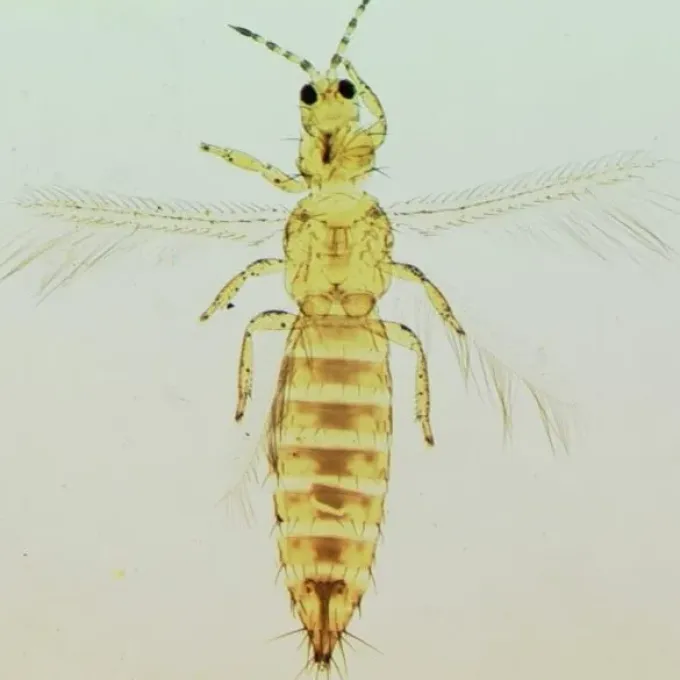
The grape thrips (Anaphothrips vitis) is a small insect belonging to the order Thysanoptera and the family Thripidae. These tiny pests measure about 1 mm in length and feature a slender, yellowish-brown body.
Adults possess two pairs of narrow, fringed wings folded flat along their backs. Larvae resemble adults but are wingless, smaller, and typically lighter in color, making them difficult to detect without a magnifying glass.
Their life cycle consists of egg, larva, prepupa, pupa, and adult stages. This species exhibits rapid reproductive rates, allowing for several generations to emerge within a single growing season under favorable conditions.
Grape thrips overwinter as adults in the soil, among leaf litter, or within cracks in the grapevine bark. They emerge in the spring to begin feeding on the newly flushed vine tissue.
Due to their secretive nature, they often aggregate in protected areas such as young leaf buds or floral structures, which shields them from environmental stress and makes early detection crucial.
What it damages
Grape thrips are primarily sap-sucking insects that target the tender parts of the grapevine, including young leaves, shoot tips, and inflorescences. This feeding disrupts the plant's physiological processes.
By draining sap from leaf cells, thrips cause the collapse of tissue, leading to distinct chlorotic patches and silvery discoloration. Severely infested leaves often curl and stop expanding normally.
Damage to the inflorescences is particularly detrimental, often resulting in flower drop or poor berry set. This directly affects yield potential, reducing both the quality and quantity of the harvest.
Furthermore, these insects are known vectors for certain plant viruses and phytoplasmas. The combined stress of mechanical injury and potential disease transmission significantly weakens the overall vigor of the grapevine.
In cases of heavy infestation, chronic damage can stunt shoot growth, leading to reduced wood maturity and compromised cold tolerance in the following winter season.
When it appears
Active development begins in early spring as temperatures rise. Adult thrips emerge from their overwintering sites as soon as the vines start to sprout, seeking out fresh green growth.
The peak activity and population growth typically coincide with the blossoming period. Warm, dry weather conditions accelerate their metabolism, leading to a surge in the number of generations.
The infestation pressure persists throughout the summer months. Multiple, overlapping generations are common, meaning that the pest can be present in vineyards from early spring through to late harvest.
As autumn approaches and temperatures decrease, the metabolic rate of the thrips slows. Adults gradually migrate toward their wintering grounds in the soil or protected crevices of the plant.
Agricultural monitoring is vital during hot, dry spells, as these conditions are optimal for rapid population expansion, potentially leading to widespread damage across the vineyard block.
Signs of infestation
The first visual signs of an infestation include small, light-colored stippling or spotting on the leaf surface. These spots eventually merge, creating broader silvery or bronze patches.
Leaves affected by high thrips populations show significant curling and deformation. On the undersides of the leaves, one can often find small black fecal spots left behind by the feeding insects.
When the inflorescences are attacked, they appear withered and eventually fall off. Berries that develop after thrips damage may show skin cracking or exhibit irregular, stunted growth patterns.
- Silvery or metallic luster on leaves caused by cell collapse.
- Distorted and stunted shoot tips or apical buds.
- Yellowish chlorotic spots marking feeding sites.
- Premature abortion of flower clusters during the blooming phase.
If left unmanaged, the damage pattern is often mistaken for nutrient deficiencies or water stress, but the presence of the active insects can be confirmed by gently shaking a shoot over a piece of paper.
Control measures
Integrated pest management begins with cultural practices, such as removing weeds and cleaning up vineyard debris, which eliminates important refuge sites for overwintering thrips.
Biological control can be implemented by fostering populations of natural enemies, including predatory mites (phytoseiids), lacewings, and pirate bugs, which feed on thrips larvae.
When chemical intervention is necessary, insecticides should be applied based on economic threshold levels. Rotating different modes of action is critical to preventing the development of insecticide resistance.
It is essential to ensure thorough coverage during spraying, especially targeting the undersides of leaves and floral structures where the insects congregate and hide.
Post-harvest practices should focus on reducing the population density that will transition into the wintering phase, thus lowering the risk of a major outbreak for the following season.
Taxonomy
- Latin name
- Anaphothrips vitis
- Order
- Thrips
- Family
- Thripidae
- EPPO code
- ANAPVI
Discussion
No discussions yet — be the first.