
Anadenobolus
Anadenobolus
Description
How to identify
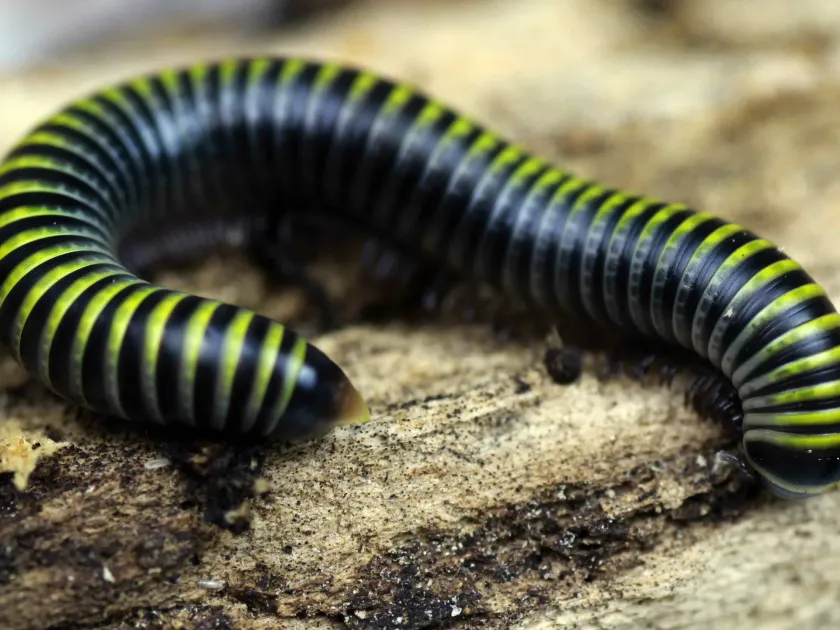
Anadenobolus is a genus of millipedes belonging to the family Rhinocricidae. Adult individuals resemble small worm-like creatures with a rigid chitinous exoskeleton, typically characterized by dark or striped color patterns.
The body of these millipedes is composed of numerous segments, each bearing two pairs of legs, providing them with a distinct undulating gait. In moist soil conditions, they can grow to several centimeters in length.
The biology of this genus is closely linked to damp environments and the presence of decaying organic matter. Unlike predatory insects, they lead a cryptic lifestyle, preferring to move through surface soil layers or beneath debris.
Reproduction occurs within the soil, where females deposit their eggs. The life cycle involves several molting stages, during which the millipedes are most vulnerable and require high humidity for successful development.
A primary identification characteristic is their defense mechanism: when threatened, Anadenobolus frequently coils into a tight spiral, effectively protecting its soft ventral side.
What it damages
This pest poses a significant threat to young seedlings and plants with tender root systems. When preferred food sources, such as decaying plant debris, are scarce, they readily shift to feeding on living plant tissues.
The greatest damage is observed in protected cultivation environments, where Anadenobolus feeds on tender roots, cotyledons, and young shoots, often causing plant death in early development stages.
Damage symptoms include small, irregular gouges on the root collar or roots, which create entry points for secondary pathogens like root rots, Fusarium, and various bacterial infections.
Millipede activity frequently peaks during periods of soil saturation, when plants are physiologically stressed and environmental conditions become optimal for pest multiplication.
In ornamental horticulture and greenhouse production, heavy infestations can lead to significant stand reduction and a severe decline in the aesthetic value of the plants.
Signs of infestation
A key indicator of infestation is the sudden wilting or collapse of seedlings under normal soil moisture levels, which is often misdiagnosed as damping-off disease.
During the inspection of the root zone or soil surface at night or during twilight, the millipedes can be observed as they emerge to forage.
The soil surface may show characteristic winding tracks or shallow grooves left by the millipedes, which are particularly visible on moist greenhouse growing media.
The presence of abundant frass (excrement) in the form of small, granular pellets around the base of the plant serves as indirect evidence of high millipede population density.
Discovery of seeds or young plant parts with ragged edges and epidermal abrasions confirms the presence of these millipedes within the growing medium.
Control measures
The primary management strategy is agrotechnical: ensuring proper soil drainage to avoid over-saturation and timely removal of plant debris that serves as a food source for Anadenobolus.
It is recommended to sterilize or heat-treat growing media prior to transplanting to eliminate eggs and early-stage larvae of the pest.
For monitoring and reduction of population density, bait traps using sliced vegetables (such as potatoes or carrots) can be placed on the soil surface and checked regularly.
In cases of severe infestation, insecticides with contact and stomach action, approved for use in greenhouse environments, may be employed as a remedial measure.
- Optimizing irrigation scheduling
- Strict crop rotation practices
- Usage of sterile growing substrates
- Manual collection and removal of adults
Taxonomy
- Latin name
- Anadenobolus
- Family
- Rhinocricidae
- EPPO code
- ANDBSP
Discussion
No discussions yet — be the first.