
Anacentrinus deplanatus
Anacentrinus deplanatus
Description
How to identify
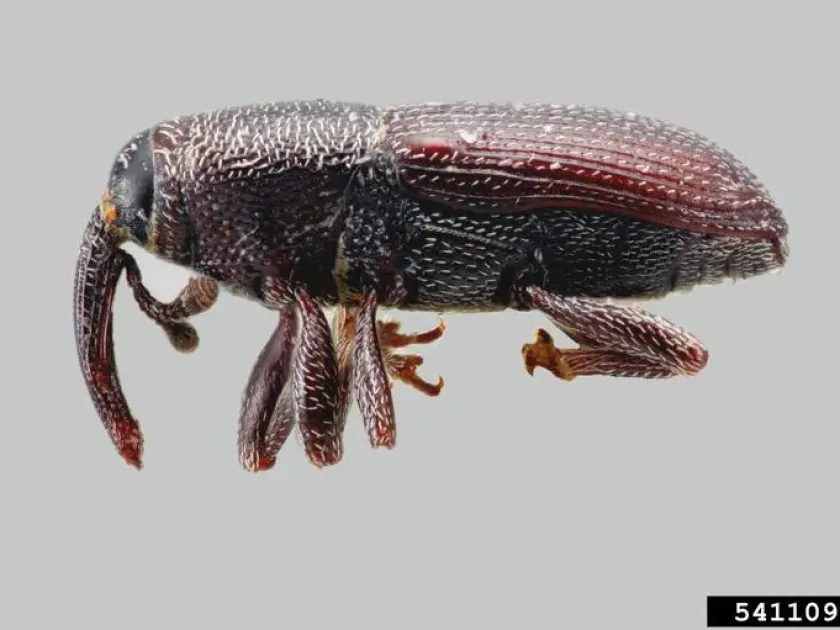
Anacentrinus deplanatus is a small species of weevil belonging to the family Curculionidae. Its body is characterized by a distinct flattened shape, which gives the species its name and allows it to navigate through the tight spaces of plant tissues.
The adult beetle typically exhibits a dark brown to black coloration. The elytra display a noticeable sculptural pattern with longitudinal grooves, which serves as a primary diagnostic feature for entomologists and agronomists during field inspections.
The rostrum (snout) is of moderate length and slightly curved, typical of the Baridinae subfamily. The elbowed antennae are attached to the middle of the rostrum, assisting in the visual differentiation of this species from other similar weevils inhabiting agricultural fields.
The larvae are legless, cream-colored, and possess a well-defined, darker head capsule. They live a cryptic lifestyle, tunneling deep within the stems or roots of host plants, which makes them difficult to spot during routine scouting.
Pupation occurs within the plant tissue in a specially constructed chamber. Once the metamorphosis is complete, the adult beetle chews a small exit hole through the plant's epidermis, leaving a characteristic sign of its presence.
What it damages
This pest primarily targets cereal crops. It has been reported to cause significant damage to crops such as millet, sorghum, and maize, where both adults and larvae can impede normal plant development.
The species also thrives on wild grasses, which act as natural reservoirs for the pest between cultivation cycles, ensuring a persistent population that can migrate to agricultural fields.
Damage to cereal stems results in reduced biomass and diminished vigor. In severe infestations, the overall photosynthetic capacity of the plant is hampered, leading to lower grain quality and total yield loss.
Beyond the physical destruction of tissues, the beetle acts as a vector or an entry point for secondary pathogens. Fungal and bacterial infections often exploit the damaged stems, exacerbating the decline of the host plant.
Economic damage is most critical during the active vegetative growth phase. Infestations occurring during the early stages can stunt the plant growth significantly, affecting the final development of the reproductive organs.
When it appears
Adult activity typically begins in the spring as soil temperatures rise, signaling the end of the overwintering period. The timing of emergence is highly dependent on the regional climate and local soil conditions.
The flight period for the adults can be extended, often spanning several weeks. This makes the timing of preventative chemical applications challenging, as populations may emerge in staggered waves throughout the season.
Summer months represent the peak of activity, as adults actively feed and migrate across fields. During this time, they reproduce and seek out fresh host plants to lay eggs, continuing the cycle.
As temperatures drop in the autumn, the beetles transition into a quiescent state. They seek shelter in the topsoil, under crop residues, or within the base of perennial grasses to survive the winter frosts.
Phenology is strongly linked to moisture levels and heat accumulation. A warm and wet spring often leads to a more rapid population buildup, increasing the pressure on emerging cereal seedlings.
Signs of infestation
The first visual signs of an infestation are small, distinct feeding punctures on the stems. These are created by adults as they graze on the plant epidermis to access nutrient-rich sap.
Plants affected by larval feeding often show premature wilting. Specific leaves may turn yellow and dry out as the internal vascular system of the stem is disrupted by the boring activities of the larvae.
Internally, the stems reveal tunnels carved out by the larvae. These galleries are often filled with frass, leading to localized tissue necrosis and, eventually, the weakening of the stem's structural integrity.
Stems damaged by the pest are prone to lodging. This physical fragility is a major concern at harvest, as damaged crops are likely to break under windy conditions or during the passage of harvesting machinery.
Irregular growth patterns or clusters of stunted plants within a field are strong indicators of an infestation, necessitating a thorough check of the stem bases for entrance holes or tunneling.
Control measures
- Implement strict crop rotation patterns to break the life cycle of the weevil.
- Perform deep autumn plowing to bury crop residues and destroy the overwintering sites of the beetles.
- Control weed hosts in the surrounding areas of the field to eliminate natural breeding grounds.
- Apply contact or systemic insecticides during peak adult activity if the economic threshold is exceeded.
- Use vigorous, high-quality seeds to ensure rapid crop establishment, which can help the plants better withstand minor infestations.
Taxonomy
- Latin name
- Anacentrinus deplanatus
- Order
- Coleoptera (beetles)
- Family
- Curculionidae
- EPPO code
- ANCEDE
Discussion
No discussions yet — be the first.