
Amphicranus
Amphicranus
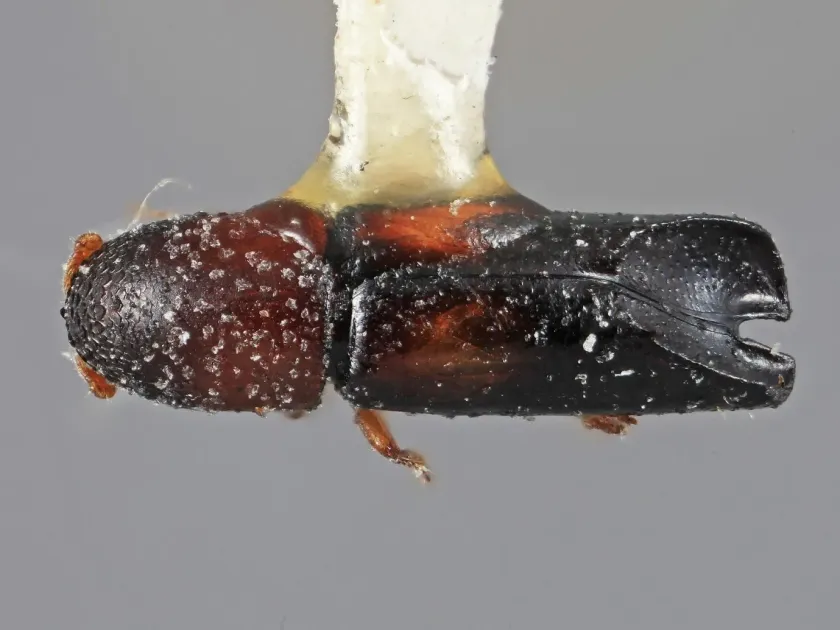
Description
How to identify
Amphicranus is a genus of beetles belonging to the Curculionidae family, specifically the Scolytinae subfamily (bark beetles). These insects are morphologically adapted for life within woody tissues, possessing cylindrical bodies and specialized head structures for tunneling.
The adult beetles are generally small, typically measuring just a few millimeters in length. Their coloration ranges from dark brown to black, providing camouflage against the bark of host trees during dispersal and initial colonization.
The life cycle of Amphicranus is closely linked to the physiological status of the host tree. They are known for colonizing weakened or dying woody plants, utilizing olfactory signals to locate suitable breeding sites.
Larvae are legless, grub-like, and develop within the phloem and cambium layers. The gallery systems created by these larvae are often distinctive and diagnostic for the genus, showing complex branching patterns underneath the bark surface.
Populations are highly sensitive to environmental factors like temperature and humidity, which regulate the speed of their development and the emergence of new generations throughout the growing season.
What it damages
Amphicranus primarily attacks deciduous trees, targeting the trunk and larger branches. While they often colonize stressed or damaged trees, high population densities can lead to the successful invasion of relatively healthy individuals.
The larval stage causes significant damage by excavating galleries in the vascular tissue, effectively girdling the tree. This disruption of nutrient and water flow causes leaves to wilt, branches to die, and can ultimately lead to total tree mortality.
By breaking the structural integrity of the bark, the beetles create entry points for various phytopathogenic fungi. These infections accelerate the decay process and further weaken the host's natural defense systems.
In forest management and commercial nurseries, the presence of these beetles can lead to significant economic losses, as colonized wood loses its commercial value and affected trees must often be removed.
Widespread infestations can alter the local ecosystem balance, particularly if the pest targets specific endangered or economically important tree species within a forest stand.
Signs of infestation
A primary indicator of infestation is the presence of frass (fine wood dust) near the base of the tree or caught in bark crevices. This is the result of beetles boring into the wood during their initial colonization phase.
Small, circular entrance holes, typically 1-2 mm in diameter, are visible on the outer bark. In some cases, the tree may exhibit resin or sap weeping from these holes as an attempt to expel the invaders.
Crown symptoms are often the most noticeable, with yellowing or premature browning of leaves. As the infestation progresses, specific branches may die back, eventually resulting in the decline of the entire canopy.
Under the bark, one can observe elaborate gallery systems engraved into the sapwood. These galleries are the definitive sign of larval feeding activity and are often filled with packed frass and larvae themselves.
Increased woodpecker activity on specific trees can also be an indirect sign, as birds feed on the larvae and adults residing within the wood, signaling a hidden infestation.
Control measures
The most effective strategy for managing Amphicranus is maintaining high tree vigor through proper silvicultural practices, including adequate watering and soil nutrient management, to reduce tree stress.
Sanitation is critical; all heavily infested or dead trees must be removed and destroyed before the new generation of adults emerges to prevent the spread of the population to neighboring healthy trees.
Chemical control involving systemic or contact insecticides can be applied to tree trunks during peak adult flight periods. This provides a protective barrier and helps reduce the success rate of new colonizations.
Pheromone trapping is a valuable tool for monitoring, allowing for the precise timing of interventions and reducing the need for broad-spectrum pesticide applications in sensitive areas.
- Regular forest health surveys to detect early colonization.
- Timely removal of storm-damaged or fallen wood.
- Encouraging natural predators and parasitoids.
- Application of entomopathogenic fungi as a biological control agent.
Taxonomy
- Latin name
- Amphicranus
- Order
- Coleoptera (beetles)
- Family
- Curculionidae
- EPPO code
- AMPCSP
Discussion
No discussions yet — be the first.