
Grape curculio
Ampeloglypter sesostris
Description
How to identify
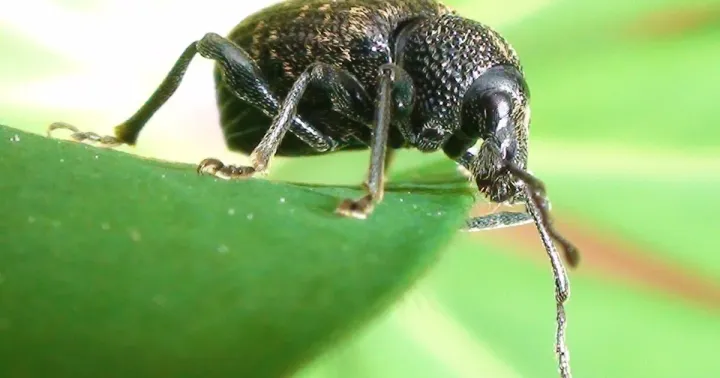
The grape curculio (Ampeloglypter sesostris) is a small beetle belonging to the weevil family, characterized by a slender body and a dark brown or black coloration.
Adult insects typically measure about 3 to 4 millimeters in length and possess a distinct elongated snout, which is a hallmark of the Curculionidae family.
The larvae are legless, fleshy, and C-shaped, usually exhibiting a creamy-white color as they develop within the plant tissues of the host vine.
Identifying these beetles is challenging as they are elusive, often feigning death and dropping to the ground when disturbed by vibrations or movement.
Field scouting during the early stages of vine growth is crucial, focusing on the succulent terminal shoots where the beetles are most active.
What it damages
The primary host for this pest is the grape vine (Vitis vinifera), though it can occasionally be found on related wild species within the Vitaceae family.
Adult beetles feed on leaves and young stems, leaving small punctures and causing cosmetic damage that can eventually affect the plant's vigor.
The most significant damage is caused by the larvae, which bore galleries inside the young shoots, disrupting the flow of water and essential nutrients.
Affected shoots often become brittle and break under the weight of foliage or during moderate winds, leading to significant yield loss and vine structural damage.
Chronic infestation weakens the overall vine health, making the plants more susceptible to environmental stress and decreasing their overwintering capabilities.
When it appears
The life cycle of the grape curculio is synchronized with the phenological development of grapevines, emerging in early spring as temperatures rise.
Adults overwinter in the soil or under leaf litter, emerging when the buds begin to break and initial green shoots emerge for feeding and mating.
Females deposit eggs within the young shoots by creating small cavities in the stem, which serves as a protected environment for the developing larvae.
Larvae feed and develop within the stems for several weeks before pupating, either inside the damaged shoot or within the soil at the base of the vine.
Depending on regional climate conditions, multiple generations can occur during a single season, necessitating ongoing vigilance throughout the growing period.
Signs of infestation
A primary symptom of infestation is the sudden wilting of terminal shoot tips, which appear limp even when soil moisture is adequate for the vine.
Careful inspection reveals small, circular entry or feeding punctures on the surface of the green shoots where the beetles have been active.
The stem may develop noticeable swelling or irregular curvature, often turning necrotic or brownish in areas where the internal larvae are feeding.
Dissecting a wilting shoot typically reveals an internal gallery filled with larval frass, confirming the presence of the destructive larvae.
Frequent breakage of shoots following windy conditions is a strong indicator of internal damage caused by previous larval tunneling activity.
Control measures
Effective management requires an integrated pest management (IPM) approach that combines cultural practices with targeted chemical interventions.
- Regular pruning and removal of infested shoot tips to physically reduce the pest population.
- Cultivation of the soil beneath the vines during late autumn to expose and destroy overwintering pupae and adults.
- Application of systemic or contact insecticides during peak beetle emergence to prevent egg-laying.
- Utilization of pheromone traps for monitoring and early detection of infestation hotspots in the vineyard.
Insecticide timing is critical; applications should align with the period when adults emerge and before the larvae enter the protective internal tissues of the stem.
Maintaining vineyard hygiene by removing dead plant debris significantly reduces the available overwintering sites for the population to survive until the next season.
Taxonomy
- Latin name
- Ampeloglypter sesostris
- Order
- Coleoptera (beetles)
- Family
- Curculionidae
- EPPO code
- AMPGSE
Discussion
No discussions yet — be the first.