
Grape cane gallmaker
Ampeloglypter ater
Description
How to identify
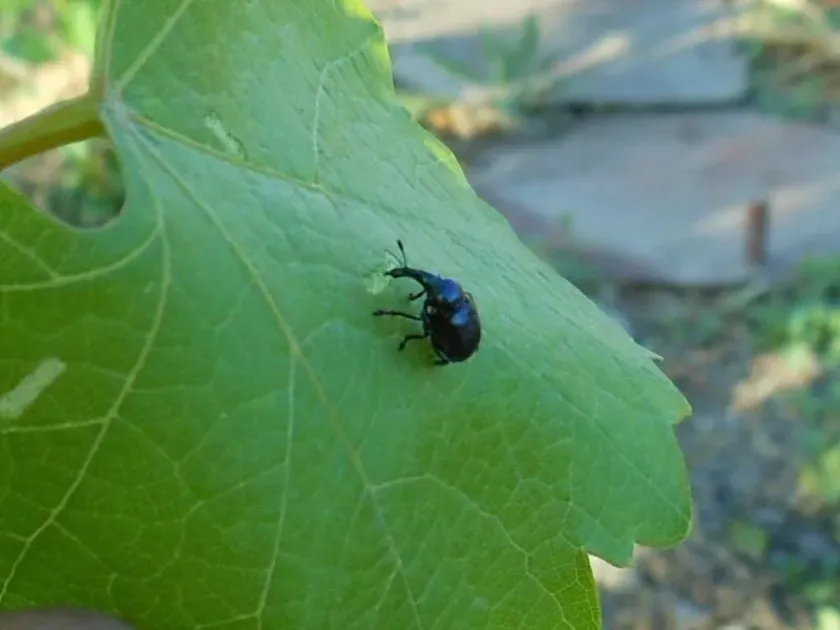
The Grape cane gallmaker (Ampeloglypter ater) is a small weevil belonging to the Curculionidae family, order Coleoptera. Adult beetles are typically black, shiny, and measure about 3-4 millimeters in length.
They possess a long, distinct snout used for feeding on plant tissue. The body is covered with fine punctures, providing camouflage against the woody vines and bark of the grapevine.
Larvae are legless, cream-colored, and C-shaped, living primarily inside the vine canes. This internal habitat protects them from environmental stressors and many types of pesticides.
Adults overwinter in protected areas, such as bark crevices, leaf litter, or under the soil surface near the vine trunk, emerging when spring temperatures begin to rise.
Due to their small size and cryptic coloration, these beetles are often overlooked until physical damage to the vine becomes clearly visible during the growing season.
What it damages
The primary host for this pest is the cultivated grapevine. Both adults and larvae contribute to damage, though the most significant impact comes from the larvae boring into the canes.
Adults feed on young buds and leaves, causing minor tissue loss, but the larvae create tunnels inside the green shoots, which severely disrupts the plant's vascular system.
Affected shoots often show stunted growth, wilting, and may eventually break off at the point of infestation, leading to a loss of vine vigor and potential yield reduction.
The cumulative effect of larval damage can lead to the death of entire shoots, which is particularly detrimental to young or newly grafted grapevines that are still establishing.
Severe infestations can also weaken the overall vine, making it more susceptible to other diseases and reducing its cold hardiness for the following winter season.
When it appears
The activity of the Grape cane gallmaker starts in early spring, coinciding with bud break and the beginning of shoot growth as temperatures reach roughly 12-15 degrees Celsius.
Feeding and mating activity peaks during late spring and early summer, which is when females deposit eggs into the soft tissues of the new vine shoots.
The lifecycle is tightly coupled with the phenology of the grapevine, ensuring the larvae have ample nutrition within the green shoots as they develop throughout the summer.
By mid-summer, adult activity wanes as the beetles prepare for diapause. They seek out winter refuge sites to survive until the following spring.
While there is typically one generation per year, environmental conditions such as mild winters can influence the survival rate and population density in subsequent seasons.
Signs of infestation
The first indicator of an infestation is the presence of small feeding punctures on developing buds and young leaves caused by adult beetles upon emergence.
Shoots often exhibit localized swellings or necrotic rings where eggs were deposited, followed by a noticeable drooping or flagging of the shoot tip.
In later stages, infested shoots turn yellow, then black, and are prone to breaking off under light wind, revealing the larval exit holes or internal tunnels.
When an infested shoot is opened longitudinally, one can find the larval gallery, which is often packed with frass (insect excrement) and may contain the larva itself.
- Flagging or wilting of the tips of green shoots.
- Small, circular holes on bud scales or leaves.
- Abnormal swelling on cane joints.
- Premature loss of foliage on affected branches.
Control measures
Cultural control is the most effective approach; it involves pruning and destroying infested shoots as soon as wilting or flagging is observed to kill the larvae inside.
Sanitation practices such as removing leaf litter and pruning debris from the vineyard floor help reduce the number of overwintering adults in the soil or bark.
Chemical control should be applied during the early spring when adult beetles are active but before they have the chance to lay eggs inside the canes.
Maintaining vigorous plant health through balanced fertilization and irrigation helps vines better tolerate or recover from the damage caused by the gallmaker.
Integrated pest management (IPM) programs utilize regular scouting to identify the presence of adults early, ensuring that chemical interventions are applied only when necessary.
Taxonomy
- Latin name
- Ampeloglypter ater
- Order
- Coleoptera (beetles)
- Family
- Curculionidae
- EPPO code
- AMPGAT
Discussion
No discussions yet — be the first.