
Amorbia emigratella
Amorbia emigratella
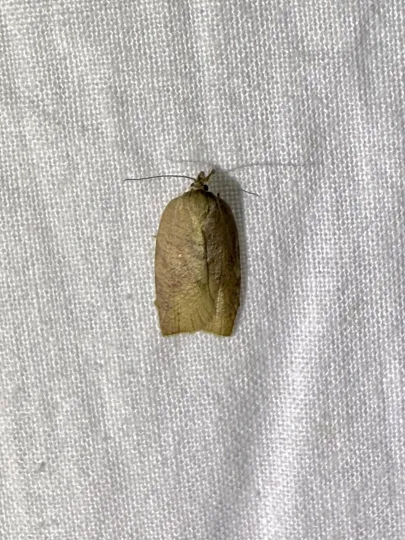
Description
How to identify
Amorbia emigratella is a species of moth belonging to the Tortricidae family, order Lepidoptera. Adult moths typically have a wingspan ranging from 20 to 25 mm with mottled brown or yellowish-tan forewings.
The larvae progress through several instars, varying in color from pale yellowish-green to a vibrant emerald green. A characteristic feature is their dark head capsule and high sensitivity to physical disturbance.
Females deposit eggs in flattened, scale-like clusters, primarily on the underside of leaves. These masses are often covered in a protective transparent secretion, blending in with the leaf surface.
Developmental rates are heavily dictated by temperature. In tropical climates, the species is multivoltine, meaning it can produce multiple overlapping generations annually.
In greenhouses or controlled environments, this pest can maintain a stable population year-round, making it a persistent threat to indoor ornamental and vegetable crops.
What it damages
This species is highly polyphagous, attacking a wide variety of economically important plants. Both broad-leaved crops and woody perennials fall within its primary host range.
Key hosts include citrus trees, avocado, and mango, as well as various greenhouse crops like tomatoes, peppers, and beans. It is frequently observed in plant nurseries.
The larvae feed on young foliage, buds, and developing fruits. Such feeding habits result in growth retardation and significant structural damage to the plant canopy.
In ornamental floriculture, the presence of these larvae renders plants unsellable due to disfigurement, shredded foliage, and the presence of webbing on flower heads.
Uncontrolled infestations cause severe economic loss by reducing fruit quality and quantity, often leading to secondary infections via feeding wounds.
Signs of infestation
The most diagnostic sign is the webbing together of leaves to form a retreat for the larvae. These folded or rolled leaves are typical of the Tortricidae family.
Feeding damage often manifests as skeletonization, where the softer leaf tissues are consumed while the tougher veins remain, giving the plant a scorched or lace-like appearance.
Larval feeding on fruit surface results in shallow, irregular, and scarred wounds. These lesions can become focal points for fungal or bacterial rot development.
The presence of fine silken webbing across shoots, flowers, and fruit clusters is a clear indicator that a larval population is established on the host.
Dark granular frass (excrement) deposited near the larval feeding sites within the rolled leaves confirms the active presence of the pest.
Control measures
Integrated Pest Management (IPM) for this species relies heavily on pheromone monitoring to track flight patterns and determine the optimal timing for intervention.
Biological control agents, particularly specific parasitoid wasps and Bacillus thuringiensis sprays, are highly effective against early larval stages while minimizing chemical impact.
Cultural control measures include regular pruning of infested branches and the removal of alternative host weeds from the perimeter of the crop area.
Chemical applications should be reserved for periods of high pressure, using selective insecticides that preserve natural enemy populations whenever possible.
- Implementation of strict quarantine protocols for imported plant stock.
- Manual removal of larval leaf-nests in small-scale gardens.
- Use of light traps as a supplemental monitoring tool.
Taxonomy
- Latin name
- Amorbia emigratella
- Order
- Lepidoptera (butterflies)
- Family
- Tortricidae
- EPPO code
- AMOBEM
Discussion
No discussions yet — be the first.