
Amorbia cuneana
Amorbia cuneana
Description
How to identify
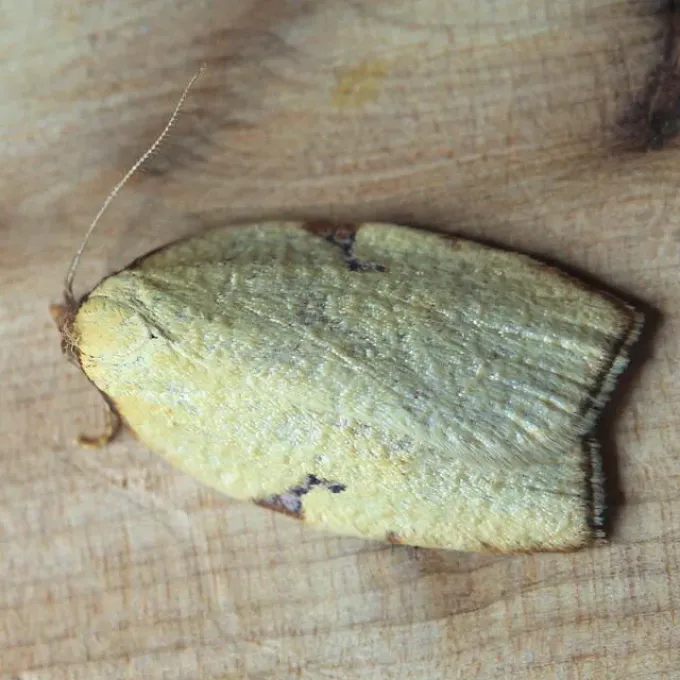
Amorbia cuneana, commonly known as the western avocado leafroller, is a moth species belonging to the family Tortricidae.
Adult moths have a wingspan of approximately 20–25 mm, with forewings typically showing a mottled brown pattern and a distinct wedge-shaped mark.
The larvae progress through several instars, starting as small yellowish caterpillars and eventually reaching a brighter green color with a dark head capsule.
Eggs are deposited in masses on the upper surface of leaves, resembling fish scales, which is a key diagnostic feature for field identification.
The life cycle encompasses four distinct stages: egg, larva (caterpillar), pupa, and adult, with the larval stage being the most damaging to crops.
What it damages
This pest is highly polyphagous but is primarily recognized for causing significant economic losses in avocado and citrus orchards.
Larvae feed on foliage, creating irregular holes and consuming large areas of the leaf surface, which reduces the plant's overall photosynthetic capacity.
Feeding on flowers and developing fruit leads to scarring, deformities, and premature fruit drop, substantially lowering the marketable yield.
Superficial feeding on the rind of mature fruit creates entry points for secondary pathogens like fungi, leading to rot during storage.
In cases of severe infestation, the cumulative damage can result in terminal shoot dieback and weakened tree vigor.
When it appears
Amorbia cuneana is active throughout the growing season, with the number of generations per year depending heavily on regional climate.
Early spring marks the appearance of the first generation, which coincides with the emergence of new vegetative growth and blossoms.
During the warmer months, the life cycle shortens, allowing for overlapping generations that maintain a constant pressure on the orchard.
Pupation occurs within the protective folds of spun leaves, providing the insect with a stable environment during its transformation.
The pest remains active until temperatures drop significantly, at which point it enters a period of reduced activity or diapause in protected sites.
Signs of infestation
The most prominent sign of infestation is the presence of webbed or rolled leaves, which serve as shelter for the feeding larvae.
Scars and irregular indentations on the skin of developing fruits are reliable indicators of larval feeding activity in the canopy.
Finding egg masses on the adaxial (upper) surface of leaves is an early warning sign that requires immediate monitoring and intervention.
Accumulated larval excrement (frass) visible on the leaf surface or caught in silk webbing confirms the presence of an active infestation.
Wilting of terminal shoots and the appearance of skeletonized foliage are typical symptoms of an established pest population in the orchard.
Control measures
Integrated Pest Management (IPM) programs prioritize the use of pheromone traps to accurately time insecticide applications based on moth flights.
Biological control agents, including parasitic wasps such as Trichogramma species, are effective at controlling egg masses and early-stage larvae.
Insecticides based on Bacillus thuringiensis are commonly utilized as a target-specific and eco-friendly control measure for young larvae.
Proper orchard sanitation, including the removal of infested canopy material and weed control, limits the availability of host sites for the pest.
Regular scouting and threshold-based decision-making are essential to avoid unnecessary chemical applications and maintain a balance in the ecosystem.
Taxonomy
- Latin name
- Amorbia cuneana
- Order
- Lepidoptera (butterflies)
- Family
- Tortricidae
- EPPO code
- AMOBES
Discussion
No discussions yet — be the first.