
Four-tubercled weevil
Amnemus quadrituberculatus
Description
How to identify
The four-tubercled weevil (Amnemus quadrituberculatus) belongs to the Curculionidae family. It is a significant pest primarily affecting perennial legume crops like clover and alfalfa.
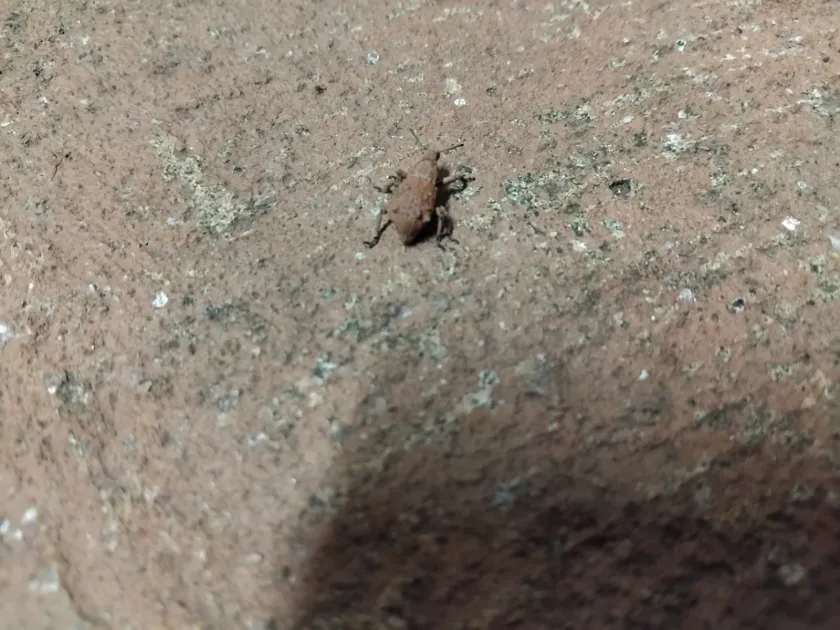
Adult beetles are approximately 6–8 mm in length. They are characterized by four distinct tubercles on their elytra, which serves as a key identifying feature for this specific species.
The body is covered in dense, earthy-colored scales that provide excellent camouflage against the soil and debris, allowing the insect to remain hidden during daylight hours.
Larvae are white, C-shaped, and possess a well-developed, dark-colored head capsule. They reside exclusively in the soil, feeding on the root systems of host plants throughout their development.
The life cycle involves complete metamorphosis. Depending on the environmental conditions, the pest completes its development in the soil environment, which protects it from many predators.
What it damages
The primary damage is caused by the larvae, which feed on the roots and root crowns of alfalfa and clover plants. This feeding destroys the plant's ability to absorb nutrients and water.
Adult weevils feed on the foliage, creating notched patterns along the leaf edges. While this reduces photosynthetic area, the root damage caused by larvae is significantly more critical.
Severe infestations lead to stunted growth, yellowing, and eventually the death of entire plants. This results in patchy field stands and reduced biomass production for forage or hay.
Root system damage creates openings for soil-borne pathogens. This makes the weakened plants highly susceptible to root rots and other secondary diseases, further accelerating crop loss.
Economic losses can be substantial, as the cumulative impact of larval root feeding and adult leaf damage significantly reduces the overall vigor and longevity of the legume stand.
Signs of infestation
Notched or ragged leaf edges are the primary visual sign of adult activity. These markings indicate that the beetles are actively feeding on the crop canopy at night.
Plants that appear wilted or yellowed despite adequate moisture levels suggest significant root system impairment, which is a classic indicator of larval presence in the soil.
The appearance of bare patches in the field where plants are easily uprooted is a major red flag. Upon closer inspection, these plants often show heavily chewed root systems.
Digging into the soil around the base of affected plants typically reveals the white, C-shaped larvae, confirming the cause of the poor plant health and reduced growth rates.
A general decline in the quality and quantity of the forage harvest is an indirect sign of a long-term infestation, as the pest population gradually depletes the crop's vitality over time.
Control measures
Crop rotation is the most effective cultural practice for managing this pest. Avoiding the planting of host legumes in the same field for at least 3-4 years breaks the cycle of the weevil.
Deep plowing during the fall helps to disturb the soil, exposing the larvae and pupae to predators and adverse weather conditions, which significantly reduces the surviving population.
Planting resistant varieties and ensuring optimal soil fertility helps the crop withstand damage. A healthy, vigorous plant is always more resilient to pest-induced stress than a weak one.
Chemical control using systemic or contact insecticides can be applied when beetle populations reach economic thresholds. Evening application is preferred as the adults are nocturnal.
Integrated Pest Management (IPM) programs should involve regular monitoring and soil sampling to determine the population density and decide on the most cost-effective timing for intervention.
Taxonomy
- Latin name
- Amnemus quadrituberculatus
- Order
- Coleoptera (beetles)
- Family
- Curculionidae
- EPPO code
- AMNEQU
Discussion
No discussions yet — be the first.