
Amnemus
Amnemus
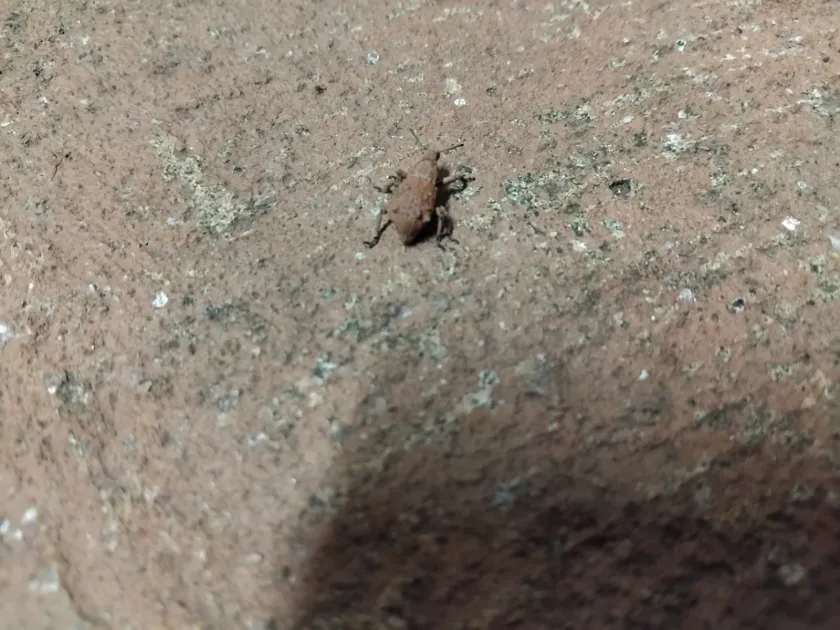
Description
How to identify
Amnemus is a genus of insects belonging to the order Coleoptera and the family Curculionidae (weevils). These insects are often overlooked in the field due to their cryptic behavior and soil-dwelling life stage.
Adults possess the typical weevil morphology with a prominent rostrum (snout). Their coloration is generally cryptic, featuring shades of brown or gray, which allows them to blend in with soil and plant debris effectively.
The larvae develop within the soil; they are legless, white-bodied grubs with a well-defined, sclerotized head capsule. They resemble larvae of other soil-inhabiting curculionids found in similar habitats.
The genus taxonomy comprises several species, with Amnemus quadrituberculatus being one of the most noted species. It represents a significant threat to specific forage and technical crops in favorable climatic regions.
Accurate species identification requires professional entomological analysis of morphological traits, as their similarity to related genera makes field identification challenging for non-specialists.
What it damages
Leguminous crops, particularly alfalfa and clover, are the primary hosts for Amnemus. The pest is capable of causing substantial economic damage during periods of rapid vegetative growth.
The larvae are particularly destructive as they feed on the root system, severing fine roots and gnawing at the taproot. This disruption significantly impairs the plant's nutrient and water uptake capabilities.
Adult beetles feed on the aerial parts of plants, creating characteristic semi-circular notches along the leaf margins. This type of damage is often described as «notching» or «scalloping» of the leaf edge.
During outbreaks, the pest can lead to thinning of plant stands and a reduction in the overall productivity of perennial grasses, which is especially critical for young stands in their first year.
Plants damaged by this weevil become more susceptible to secondary fungal and bacterial infections that enter through root wounds, thereby reducing both the biomass yield and the nutritional quality of the forage.
When it appears
Adult activity typically commences in the spring when average daily temperatures reach optimal thresholds for emergence from overwintering sites.
The pest's life cycle is closely linked to soil moisture levels and temperature regimes. Eggs are laid in the root zone or on the soil surface, after which the emerging larvae immediately begin feeding.
The most severe damage from larvae occurs during the summer months when they develop rapidly within the soil profile. This period requires consistent monitoring of root health.
Pupation generally takes place in the soil, followed by the emergence of a new generation of adults. Depending on the geographical region, the life cycle may be univoltine or exhibit extended generations.
In the autumn, the insects prepare for winter, seeking refuge in the upper soil layers or beneath plant residue, which provides essential protection against freezing temperatures.
Signs of infestation
The first diagnostic sign of infestation is the appearance of characteristic feeding marks on leaves, specifically semi-circular notches along the edges, caused by adult beetle activity.
Gradual wilting of individual plants despite adequate irrigation suggests damage to the root system by larvae, which interferes with the plant’s normal physiological functions.
Excavating plants with a block of soil often reveals larvae near the root collar or directly among the root mass, providing definitive proof of the pest's presence.
Patchy development of the crop, where certain areas look stunted or have reduced plant density, is an indicator of larval pressure; these patches often expand over time if left unmanaged.
A noticeable decrease in the regrowth rate after harvesting or cutting is an indirect sign that the root system has been compromised by larval feeding during the previous growing season.
Control measures
Agrotechnical management includes strict crop rotation, which is effective in disrupting the pest's life cycle and reducing population density within the field.
Proper soil tillage, including deep plowing, helps destroy a significant portion of the larval and pupal populations residing in the upper soil horizons.
Chemical control measures are justified during periods of peak beetle population. Registered insecticides with contact or systemic activity are utilized to protect forage crops.
- Monitoring beetle population density using specialized pitfall traps.
- Timely cutting or harvesting of the canopy to remove food sources.
- Balanced fertilization to improve plant vigor and recovery capacity.
Biological control strategies include the use of entomopathogenic fungi and bacteria, which can successfully reduce larval density in the soil without negative environmental impacts.
Taxonomy
- Latin name
- Amnemus
- Order
- Coleoptera (beetles)
- Family
- Curculionidae
- EPPO code
- AMNESP
Discussion
No discussions yet — be the first.