
Lewis ambrosia beetle
Ambrosiodmus lewisi
Description
How to identify
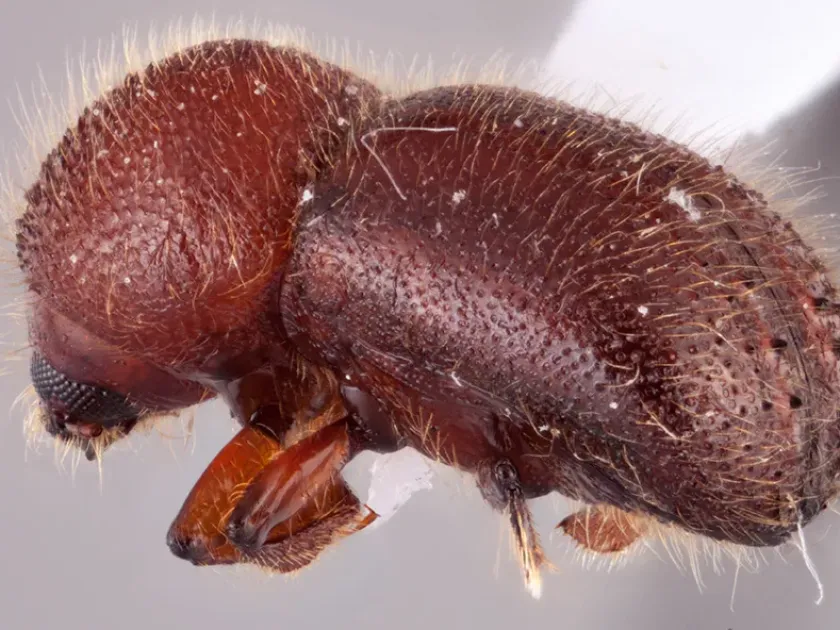
The Lewis ambrosia beetle (Ambrosiodmus lewisi) is a small wood-boring insect belonging to the subfamily Scolytinae (bark and ambrosia beetles) within the family Curculionidae. Adult beetles are characterized by a cylindrical body shape and typically have a dark brown or black coloration.
A defining characteristic of this species is its symbiotic relationship with fungi. Females possess specialized organs called mycangia, which they use to carry fungal spores. When they bore into wood, they inoculate the walls of their galleries with these fungi.
The biology of this beetle is inextricably linked to the cultivation of its nutritional fungus. The fungus serves as the primary food source for both the adult beetles and their developing larvae, distinguishing them from true bark beetles that feed directly on wood tissues.
Unlike many other wood-boring species, the Lewis ambrosia beetle exhibits high ecological plasticity. This allows it to successfully colonize both stressed and relatively healthy trees when population densities reach high levels.
The life cycle consists of four stages: egg, larva, pupa, and adult. The entire development process occurs deep within the wood, which creates significant challenges for early diagnosis and the implementation of effective chemical control measures.
What it damages
This species is a polyphagous pest, capable of attacking a wide range of deciduous tree species. Common hosts include various trees from the oak, maple, and beech genera, as well as several species of fruit-bearing trees.
While the beetle does not consume wood, its boring activities cause significant structural damage to the tree. The radial tunnels it creates disrupt the vascular system, effectively hindering the transport of water and nutrients throughout the tree.
The primary threat is the introduced fungal pathogen rather than the mechanical tunnels themselves. The fungal infection spreads through the plant's vascular tissue, causing blockages that lead to branch dieback or the eventual death of the entire tree.
In cases of heavy infestation, this pest can cause the rapid decline and death of large stands of trees. Trees already suffering from environmental stress, such as drought or physical damage, are particularly vulnerable to successful colonization.
Beyond natural ecosystems, the Lewis ambrosia beetle poses a serious threat to decorative nurseries and commercial orchards, where high-density planting facilitates rapid spread throughout the site.
Signs of infestation
The most prominent external sign of infestation is the presence of small entry holes on the bark of the trunk or branches. These are often accompanied by piles of "frass" (wood dust), which is pushed out by the beetles as they carve their galleries.
Under close inspection, one may observe thin, tooth-pick-like strands of wood fiber protruding from the entry holes. These are formed from the compacted waste material ejected by the beetles.
Foliage on affected branches may begin to yellow, wilt, or drop prematurely. This occurs because the fungal infection disrupts the flow of essential water and nutrients to the canopy, causing a decline in the tree's overall health.
In response to the attack, trees may exhibit sap or gum bleeding at the entry points. This is a defensive reaction as the tree attempts to push out the invaders and contain the spread of the fungus within the wood.
- Small entry holes typically 1-2 mm in diameter.
- Accumulation of frass at the base of the tree or on branches.
- Wilting or dieback of specific branches or the tree canopy.
- Discoloration or fungal staining visible on cross-sections of infested wood.
Control measures
Sanitation is the most effective management strategy. This involves the immediate removal and destruction of infested trees. It is crucial to transport infested material away from the site or treat it with heat to prevent the emergence of new adult beetles.
Preventive maintenance is key to minimizing risk. Ensuring trees are well-watered, properly fertilized, and protected from mechanical injury helps maintain their natural vigor and resistance to pest colonization.
The use of pheromone-based traps is highly recommended for monitoring local population levels. This helps identify the timing of peak beetle activity, allowing for more precise and effective timing of any necessary chemical applications.
During periods of mass flight, trunk sprays with systemic contact insecticides can be effective. However, these treatments generally provide temporary relief and require consistent application to protect valuable specimens.
Biological control methods, such as the deployment of entomopathogenic fungi or specific natural predators, are currently under investigation but are not yet widely available for general agricultural use.
Taxonomy
- Latin name
- Ambrosiodmus lewisi
- Order
- Coleoptera (beetles)
- Family
- Curculionidae
- EPPO code
- AMBDLE
Discussion
No discussions yet — be the first.