
Ambrosiodmus
Ambrosiodmus
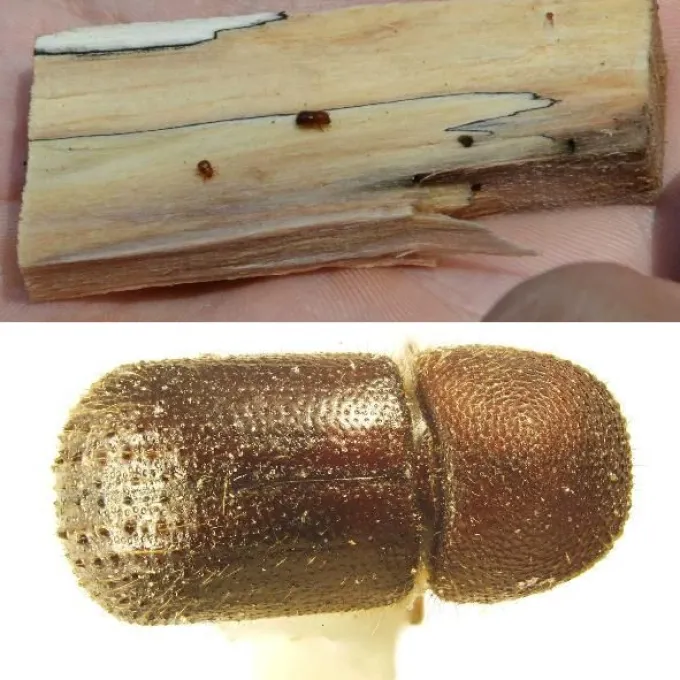
Description
How to identify
Ambrosiodmus is a genus of bark and ambrosia beetles belonging to the family Curculionidae, subfamily Scolytinae. These insects are relatively small, typically measuring 2–3 mm in length.
The body of the beetle is cylindrical and generally colored in shades of dark brown or black, often with a slightly polished appearance.
As true ambrosia beetles, they maintain a symbiotic relationship with specific fungi, which they cultivate within their tunnels for nutritional purposes.
Unlike traditional bark beetles, they do not consume the wood tissue directly but rely on the fungal garden growing on the walls of their galleries.
Precise species identification within the genus often requires specialized entomological examination of the pronotum and elytral structure under magnification.
What it damages
Ambrosiodmus species infest a wide variety of woody plants, including both forest trees and important agricultural crops in temperate and tropical zones.
They are particularly problematic in fruit orchards, including stone fruits like peaches, as well as pome fruits and various ornamental tree species.
The beetles bore deep galleries into the xylem of the trunk and branches, which effectively disrupts the water and nutrient transport systems of the tree.
While they often target stressed or weakened trees, high population densities can lead to aggressive attacks on apparently healthy, vigorous host plants.
Severe infestations cause branch dieback, reduced fruit yields, and can eventually lead to the death of the entire tree if the infestation is not managed.
When it appears
Adult beetles typically emerge in the spring once the ambient temperature reaches a threshold favorable for their flight and mating activities.
The infestation period is often extended, with multiple generations possible per season depending on the geographical location and climatic conditions.
Peak flight periods often occur during the warmest months of the year, facilitating the dispersal of beetles to new potential host trees.
The development cycle is rapid, allowing the beetle to establish new fungal gardens and produce offspring in relatively short periods of time.
During the winter months, adult beetles remain within their galleries in the host wood, effectively insulating themselves against low temperatures.
Signs of infestation
The most reliable indicator of an infestation is the appearance of small, round entry holes on the bark surface, usually accompanied by fine wood debris.
This wood debris, or "frass," looks like small piles of sawdust and is pushed out of the galleries by the beetles as they continue their excavations.
Crown thinning, leaf yellowing, and sudden wilting of branches are common symptoms of an established gallery system hindering the plant's vascular flow.
When cutting into the wood, characteristic dark staining can be observed, which is caused by the growth of the symbiotic fungi introduced by the beetles.
In some tree species, the presence of the beetle may trigger an excessive flow of sap or gum from the entry points as a natural defense mechanism.
Control measures
The most effective strategy involves cultural management, such as maintaining overall tree health and promptly pruning and destroying infested wood.
Removing and burning infected material is critical to prevent the emergence of new generations and the spread of the beetle to nearby trees.
Chemical control can be challenging because the beetles spend most of their life cycle protected within the tree trunk, shielded from contact insecticides.
Applications of systemic insecticides may offer some protection, but they should be used as part of an integrated pest management (IPM) program.
- Regular inspection of trunks and branches for entry holes during spring and summer.
- Use of trap logs or pheromone-based monitoring tools to detect early activity.
- Sanitation measures to eliminate potential breeding sites within the orchard.
Taxonomy
- Latin name
- Ambrosiodmus
- Order
- Coleoptera (beetles)
- Family
- Curculionidae
- EPPO code
- AMBDSP
Discussion
No discussions yet — be the first.