
Amasa truncata
Amasa truncata
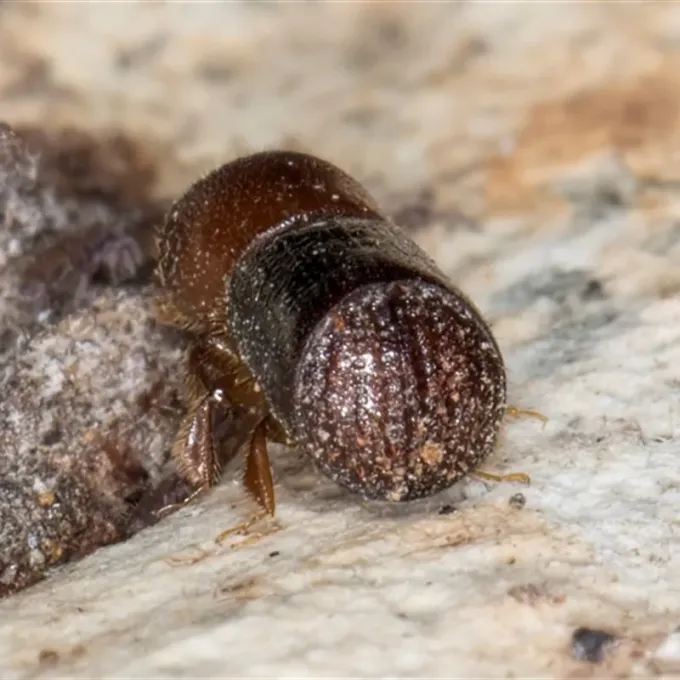
Description
How to identify
Amasa truncata belongs to the family Curculionidae, subfamily Scolytinae. It is a small wood-boring beetle, easily identified by the specific truncated morphology of the posterior end of its elytra.
Adult specimens have a small, cylindrical body, typically ranging from reddish-brown to almost black in color. These beetles are cryptic, spending the majority of their life cycle deep inside the host wood.
The life cycle is closely associated with symbiotic ambrosia fungi, which serve as the primary food source for both larvae and adults. Females create tunnels within the wood to facilitate the growth of this fungus.
As a typical member of the ambrosia beetle group, they do not consume the wood itself. Instead, they use it as a scaffold to cultivate a nutrient-rich mycelium that lines their extensive gallery systems.
Accurate identification requires professional inspection of the entry holes, which are perfectly circular, and analysis of microscopic morphological features by an entomologist to distinguish it from related species.
What it damages
Amasa truncata causes significant damage to a wide range of deciduous and fruit trees. Both natural forest stands and valuable orchard crops in tropical and subtropical regions are at risk.
This pest primarily attacks stressed or weakened trees, but under high population pressure, it can also infest relatively healthy specimens. It bores deep radial tunnels that compromise the structural integrity of the xylem.
Wood damage leads to a loss of commercial value, the development of secondary rots, and the onset of fungal infections. This renders the timber unsuitable for woodworking or construction purposes.
Severe infestation disrupts the flow of sap within the trunk. In advanced cases, this leads to the progressive dieback of branches and eventually the death of the entire tree.
A major concern is the beetle's role as a vector for phytopathogenic fungi. Even a small number of beetles can introduce infections that quickly spread throughout the tree's vascular system.
When it appears
The activity period of Amasa truncata is heavily dependent on regional climatic conditions. In its natural range, beetles can be active throughout most of the year, particularly during warm seasons.
Mass dispersal and flight of adults seeking new host plants often coincide with periods of consistently high temperatures. They are attracted to chemical cues, such as ethanol emitted by stressed trees.
The processes of egg-laying and larval development occur internally within the wood, meaning that ambient weather conditions have an indirect influence, primarily by affecting the vigor of the host plant.
During drought or periods of environmental stress, the density of Amasa truncata colonization increases significantly, as the tree's immune system becomes unable to resist beetle entry.
Adults typically overwinter within their galleries inside the wood. In temperate climates, the pest's activity ceases during significant cold snaps, resuming only when temperatures rise again.
Signs of infestation
The first visual sign of infestation is the appearance of tiny entry holes on the bark. These are often accompanied by "frass" — fine sawdust or borings ejected by the beetles during tunnel construction.
Gradual wilting of leaves on individual branches or the entire canopy indicates critical damage to the tree's conducting tissues. The tree may appear sickly and stressed despite adequate care.
Exposing the wood on affected areas often reveals a network of tunnels lined with fungal growth (ambrosia). The wood inside these galleries often changes color due to the metabolic activity of the symbiotic fungi.
Sap flow or gummosis in stone fruit trees may serve as an indirect sign of the tree's attempt to seal the beetle's entry points, though this rarely succeeds when infestation pressure is high.
In neglected cases, patches of dead bark appear on the trunk. The tree becomes brittle, and branches may break under wind pressure due to the deep structural degradation caused by the beetle galleries.
Control measures
Proactive management is the most effective approach. Maintaining orchard health through proper pruning, adequate irrigation, and balanced fertilization reduces the susceptibility of trees to colonization.
Sanitary logging and the removal/destruction of heavily infested trees are mandatory to prevent the pest from spreading to neighboring healthy plants. Do not leave woody debris on-site.
Systemic insecticides may provide control if applied during the early stages of infestation. However, the chemicals must have high penetrative capabilities to reach beetles deep within the galleries.
- Regular monitoring of bark condition and tree health.
- Deployment of pheromone-based traps to monitor and reduce adult populations.
- Sealing mechanical bark injuries with tree wound paint.
- Utilization of natural entomophages where ecologically feasible.
Chemical intervention must follow strict regulations, as many contact pesticides are ineffective against beetles shielded deep within the wood, necessitating timing that aligns with adult dispersal.
Taxonomy
- Latin name
- Amasa truncata
- Order
- Coleoptera (beetles)
- Family
- Curculionidae
- EPPO code
- XYLBTR
Discussion
No discussions yet — be the first.