
Alder bark beetle
Alniphagus
Description
How to identify
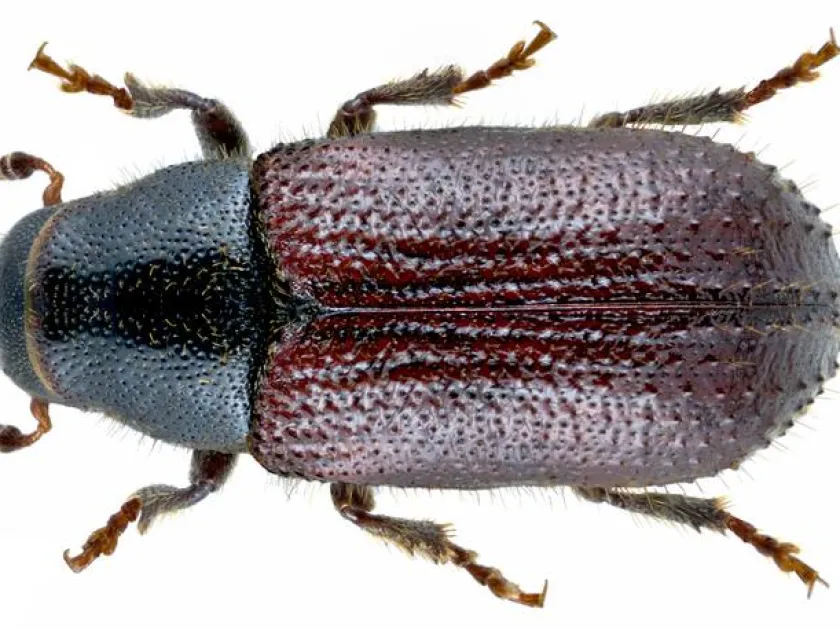
The alder bark beetle (Alniphagus) belongs to the order Coleoptera and the family Curculionidae (subfamily Scolytinae). These are small beetles, typically 3–4 mm in length, with a cylindrical, dark brown or black body covered in fine setae.
The larvae are white, legless, and curved, with a well-developed head capsule specialized for boring through bark and sapwood. They develop in intricate galleries beneath the bark, which are distinct for the species.
Adult beetles possess specific thoracic and elytral features that allow them to maneuver within the narrow channels of the sub-cortical layer. Identification is primarily confirmed by the shape of the gallery patterns found under the bark.
This pest is highly host-specific, primarily targeting species of alder (Alnus). Its entire biological cycle is dependent on the health status and physiological condition of the host tree.
Once the maturation process is complete, the adult beetles bore exit holes through the bark, which are the most common visible evidence of an infestation.
What it damages
The primary host for this beetle is the alder tree. It predominantly attacks weakened, diseased, or recently felled trees, playing a dual role in the ecosystem as a decomposer and a destructive pest.
Both adults and larvae cause significant damage. Larval boring disrupts the cambium and phloem layers, effectively cutting off the tree's nutrient supply and leading to crown dieback and eventual mortality.
In forest stands, mass outbreaks of the alder bark beetle can lead to rapid and widespread decline of alder populations. This is particularly problematic in areas already stressed by environmental factors like drought.
Secondary damage occurs through the introduction of wood-decay fungi into the galleries. These fungi accelerate the rotting process and further compromise the structural integrity of the wood.
For forestry operations, the presence of these beetles reduces timber value and often necessitates urgent sanitary measures to prevent the spread of the infestation to surrounding healthy trees.
When it appears
The emergence of overwintered adults typically occurs in spring when temperatures consistently rise, usually in April or May. This period is dedicated to searching for suitable host trees for colonization.
Depending on the climatic region, one or two generations can occur within a single year. Warm, dry summers provide optimal conditions for rapid larval development under the bark.
By autumn, the new generation of adults reaches maturity. They either remain in the host tree to overwinter or relocate to the forest floor litter, depending on the environmental temperature.
Activity levels are highly dependent on humidity and temperature. Periods of extreme weather can inhibit flight, while stable, mild conditions facilitate successful colonization and population growth.
Monitoring for the pest is most effective during the spring flight period using pheromone-based traps to track population density and determine the timing of necessary management actions.
Signs of infestation
The primary sign of infestation is the presence of "frass" or boring dust — small piles of wood shavings accumulated at the base of the tree or caught in bark crevices.
Small, perfectly round exit holes (about 1–1.5 mm in diameter) on the surface of the bark are a definitive indicator that the beetles have matured and left the tree.
Visual symptoms in the canopy include yellowing leaves, foliage thinning, and premature leaf drop, which indicate that the tree's vascular system has been severely compromised.
Increased woodpecker activity on the stems is a significant indirect sign. These birds feed on the larvae, and their pecking can create large, localized wounds on the bark.
- Presence of boring dust (frass) on the trunk
- Circular exit holes on the bark surface
- Yellowing and wilting of the foliage
- Bark damage caused by woodpeckers
Control measures
Sanitary logging is the most effective management strategy. Infested trees should be identified and removed from the site before the new generation of beetles emerges and spreads.
Maintaining forest health is key to prevention. A well-managed, vigorous stand is significantly more resistant to bark beetle attacks than a stressed or neglected one.
In ornamental or park settings, targeted insecticide applications can be utilized during the peak flight season to prevent beetles from successfully boring into the bark of high-value trees.
Pheromone traps serve as an essential tool for monitoring. They allow foresters to track the activity of the beetle and make informed, data-driven decisions regarding control operations.
Encouraging natural predators, such as insectivorous birds and parasitic wasps, can help keep beetle populations in check and prevent small infestations from escalating into large-scale outbreaks.
Taxonomy
- Latin name
- Alniphagus
- Order
- Coleoptera (beetles)
- Family
- Curculionidae
- EPPO code
- ALNISP
Discussion
No discussions yet — be the first.