
Alloxysta
Alloxysta
Description
How to identify
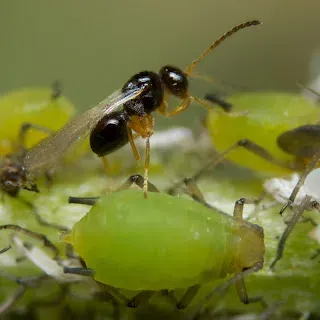
Alloxysta is a genus of parasitic wasps belonging to the Figitidae family within the order Hymenoptera. These are minute insects acting as hyperparasitoids in agricultural ecosystems.
The biology of Alloxysta is specialized, as they target the larvae and pupae of primary aphid parasitoids (such as Aphidiinae) living inside aphid mummies.
Adult Alloxysta are small, dark-colored wasps, often overlooked in the field due to their microscopic size and rapid movement across infested foliage.
Taxonomic identification requires careful microscopic examination of wing venation and body morphology, as they can be easily confused with other small wasps.
Understanding their role as hyperparasitoids is essential for agronomists aiming to maintain stable biological control programs in various cropping systems.
What it damages
Alloxysta does not feed directly on plant tissues; however, its economic impact is significant due to the disruption of natural aphid population control.
By parasitizing beneficial primary wasps that keep aphid populations in check, Alloxysta indirectly promotes the growth of aphid pests.
This indirect damage can occur on a wide range of crops, including cereals, vegetables, and horticultural plants, wherever aphids and their parasitoids are present.
In high-density agricultural environments, the presence of these hyperparasitoids can lead to the failure of integrated pest management strategies.
Growers often find that aphids become difficult to manage biologically when Alloxysta populations reach critical levels, necessitating supplementary pesticide use.
When it appears
The seasonal activity of Alloxysta is closely tied to the cycles of aphids and their primary parasitoids throughout the growing season.
They typically emerge in late spring when temperatures are sufficient for their development and the activity of host insects increases.
Peak populations are usually observed in mid-summer, corresponding with the highest aphid density and the subsequent abundance of primary parasitoid mummies.
As the season progresses into autumn, their developmental rate slows, and they enter dormancy within the host mummy to survive the winter period.
The number of generations per season is determined by regional climate conditions and the ongoing availability of suitable host organisms.
Signs of infestation
The primary indication of Alloxysta presence is a noticeable reduction in the emergence of beneficial parasitoids from aphid mummies in the field.
When investigating aphid mummies, researchers may observe structural abnormalities or unusual patterns in the emergence holes of the wasps.
An unexpected rebound or surge in aphid colonies, despite the prior presence of primary parasitoid activity, serves as a key indicator of hyperparasitism.
Visual surveys that fail to yield the expected count of healthy aphid parasitoids suggest that hyperparasitoids are suppressing the beneficial population.
Laboratory dissection of collected aphid mummies remains the most accurate method to confirm the presence and infection rate of Alloxysta larvae.
Control measures
Management of Alloxysta is complex because these insects are part of the natural balance; therefore, complete eradication is neither feasible nor desirable.
- Prioritize selective insecticides that minimize mortality rates of beneficial parasitoid wasps.
- Maintain field margins and flower strips to support stable populations of all natural enemies.
- Implement periodic monitoring of the hyperparasitism rate to assess the overall health of the biological control system.
- Avoid broad-spectrum pesticide applications unless aphids reach an economic threshold that threatens crop viability.
- Foster ecological diversity within the farm landscape to buffer the influence of hyperparasitoids on the aphid control process.
Taxonomy
- Latin name
- Alloxysta
- Order
- Hymenoptera
- Family
- Charipidae
- EPPO code
- ALXYSP
Discussion
No discussions yet — be the first.